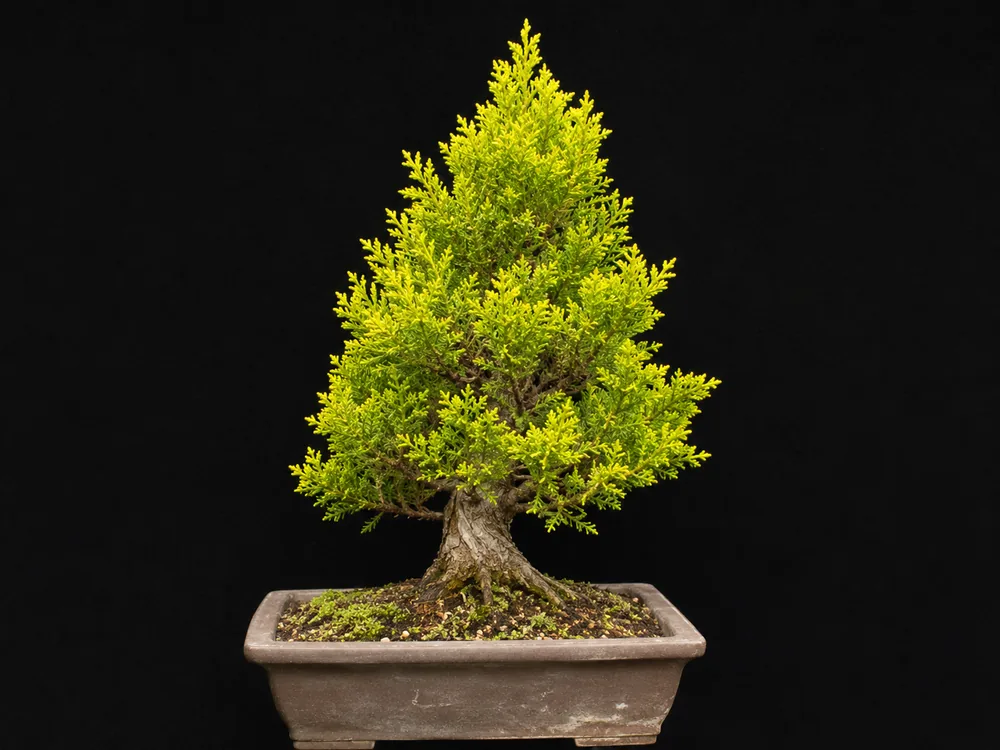
Lemon Cypress Bonsai Care
Cupressus macrocarpa
1 Lemon Cypress bonsai in stock, from $54.95 Shipped direct from our nursery partners, with a 48-hour live-arrival guarantee. See the trees
A golden-foliaged cultivar of the Monterey Cypress. Most are lost to overwatering.
Cupressaceae · Tender evergreen conifer with soft, lemon-scented, golden-yellow/chartreuse foliage
Lemon Cypress quick reference
| USDA zones | Roughly 7–10; tender, frost-sensitive — must be protected from hard freezes |
|---|---|
| Indoor / outdoor | Wants cool, bright, airy outdoor conditions; often sold as an indoor novelty but struggles indoors long-term |
| Light | Full sun / maximum bright light (6–8 hours direct). Cannot tolerate shade — gets leggy and browns |
| Water | Moderate / dry-leaning. Water when the soil surface dries; drench thoroughly but never leave it soggy — overwatering is the #1 killer |
| Soil | Free-draining bonsai mix; good aeration is essential |
| Repot | Every 2–3 years, in spring |
| Frost | Poor — tender; protect below freezing, bring under cover before frost in zones colder than 7 |
| Mature height (as bonsai) | 5-10m wild; 20-45cm as bonsai |
| Growth rate | Fast; lemon-scented lime foliage |
| Season of interest | Bright chartreuse evergreen all year |
| Leaf reduction | Foliage tightens with finger pinching only |
| #1 cause of death | Overwatering / root rot (roots suffocate and rot from soggy soil — Phytophthora/Fusarium) |
Overview & Character
Lemon Cypress is a golden-foliaged cultivar of the Monterey Cypress, instantly recognizable for its bright chartreuse-yellow foliage and the strong lemon scent released when the foliage is brushed or crushed. The dwarf form, 'Goldcrest Wilma', stays small and is the one usually sold as a potted novelty (often as a "mini Christmas tree").
A note on naming: Buyers frequently ask for "lemon juniper," which is not a real species. It is almost always a mislabeling of Lemon Cypress (Cupressus macrocarpa 'Goldcrest'). Despite the confusion, this is a cypress, not a juniper — though care is broadly similar to other dry-loving, sun-hungry conifers, so the same general principles apply.
Lemon Cypress is somewhat tender (roughly USDA zones 7–10). It is widely marketed as an indoor plant, but it really wants cool, bright, airy outdoor conditions and tends to decline as a warm, dim houseplant. It is best treated as an outdoor conifer that is sheltered or brought under cover only when frost threatens.
Identification
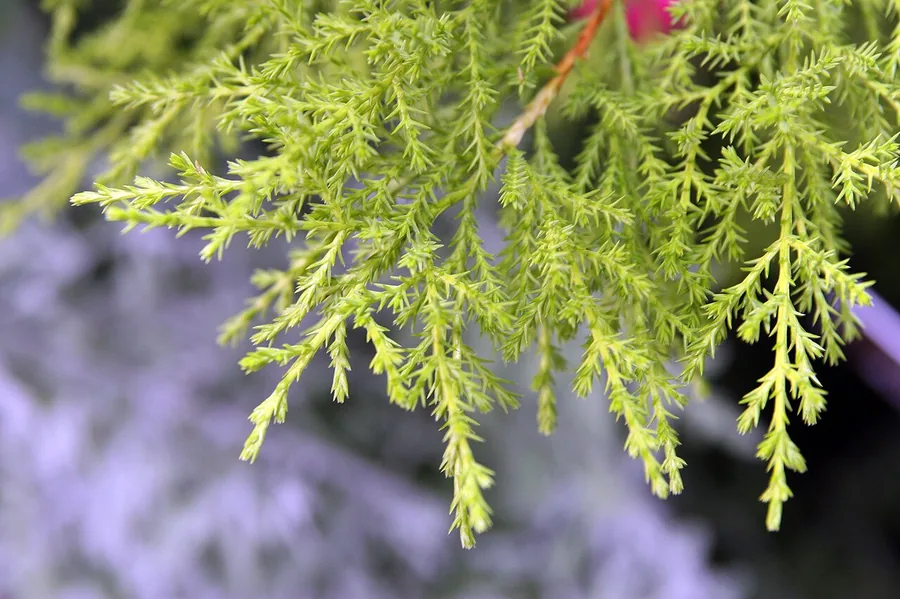
Foliage (the giveaway): Soft, fine, scale-like leaves in a striking golden-yellow to chartreuse color (brightest in full sun), arranged densely around upright shoots. The unmistakable trait: crush or brush the foliage and it releases a strong, fresh lemon scent. Evergreen. (This is a cypress, not a juniper — the lemon scent plus golden color are the tell.)
Bark & trunk: Thin, reddish-brown, becoming fibrous and stringy with age, like other cypresses.
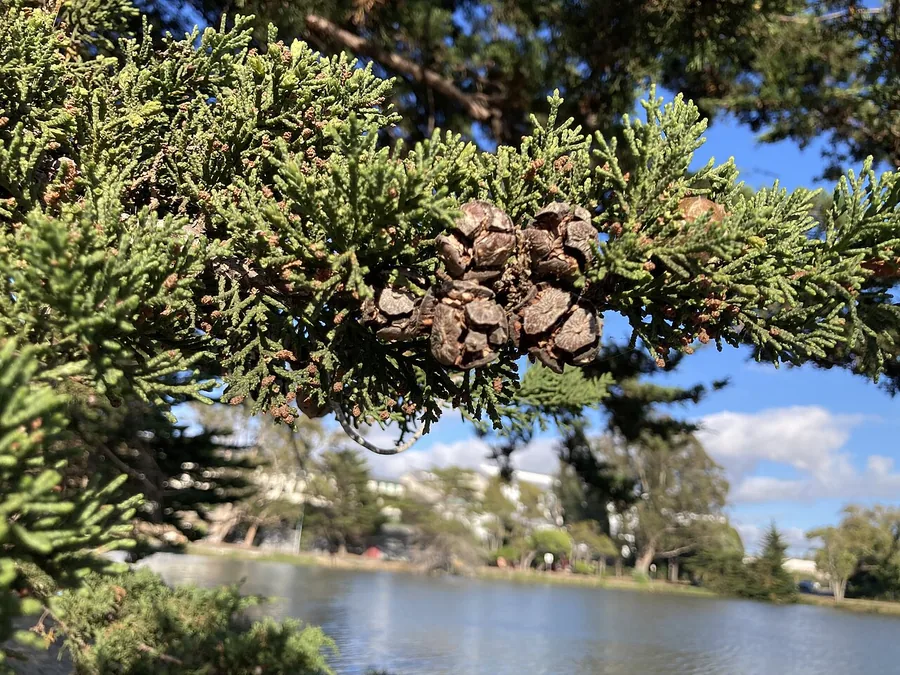
Growth habit / form: Naturally a narrow, upright, columnar conifer; the dwarf 'Goldcrest Wilma' stays compact and is the form usually sold (often as a "mini Christmas tree"). Cones: The parent Monterey Cypress bears large, woody, globular cones 2–4 cm across, but potted dwarf specimens rarely cone.
Look-alikes & how to tell them apart: Frequently mislabeled "Lemon Juniper," which is not a real species — junipers do not smell of lemon and have prickly awl needles or grey-green scale foliage. Hinoki Cypress has green (not golden) flattened sprays with white Y/X marks beneath and no lemon scent. The golden foliage + lemon fragrance combination is diagnostic.
Climate & USDA Zone
Hardy in roughly USDA zones 7–10. In those zones it can live outdoors year-round in a sunny spot; outside that range it must be protected from frost and brought under cover (a cold but frost-free, bright location) for winter. It dislikes hard freezes, prolonged cold, and also struggles in hot, stuffy, stagnant indoor air. Its ideal is bright, breezy and on the cool side — cool indoor temperatures (low 60s °F) if kept inside over winter.
Light
Light is the make-or-break factor. Lemon Cypress demands maximum light — 6–8 hours of direct sun. Outdoors, give it the sunniest spot available; it cannot survive shade and will go sparse, leggy and brown without enough light. Indoors, the chief difficulty is providing enough light: place it at the brightest available window and rotate it regularly so all sides receive sun. Inadequate light is one of the most common reasons indoor specimens fail.
Watering
Moderate, leaning dry — but consistent. This is a balance: Lemon Cypress will not forgive a missed deep watering (you will quickly see brown foliage), yet overwatering kills more Lemon Cypress than anything else. The roots suffocate in soggy soil, which displaces air and promotes root-rot pathogens (Phytophthora, Fusarium).
Practical rule: water thoroughly so the whole root mass is wetted when the soil surface has dried, then let it drain freely and approach dryness again before the next drench — never leave it standing wet, and never let it bone-dry to the point of browning. In the first growing season after potting, it needs more frequent water (roughly twice a week); thereafter water whenever the soil is dry. Warmth and dry air (especially indoors near heating) increase its thirst, so check often.
Soil & Root Care
Use a free-draining bonsai mix with good aeration (an inorganic-leaning blend such as akadama/pumice/lava, or a quality gritty conifer mix). Drainage is the priority because the species is so prone to root suffocation. Avoid dense, peaty, water-retentive media that stay wet.
Repot every 2–3 years in spring, refreshing the soil and maintaining excellent drainage. Remove no more than about a third of the roots, work gently, and keep the freshly repotted tree sheltered (bright but out of harsh sun/wind, and frost-free) while it recovers.
Feeding
Feed through the active growing season (spring through early autumn) with a balanced fertilizer to maintain the bright golden foliage and steady growth; reduce or stop in winter, especially if the tree is being held cool/dormant indoors. Avoid heavy feeding, which produces soft, weak growth; consistent, moderate feeding supports good color.
Pruning & Styling
Like other Cupressaceae, Lemon Cypress is best shaped by trimming and pinching new growth, and it is risky to cut back hard into old, bare wood — like its relatives it does not reliably regenerate from leafless old wood, leaving permanent bare patches.
- Pinch/trim new growth regularly through the growing season to maintain shape and density; light, frequent trimming beats occasional hard cuts. Use fingers where possible, as cut foliage tips can brown.
- Keep the interior open so light and air reach inner and lower foliage; shaded interior growth thins and dies.
- Avoid cutting into bare old wood — work within the green, foliated zone.
- Wiring: the soft shoots can be wired gently to set movement, but the foliage is easily disturbed and marks; check wire so it does not bite in. This fast, soft-wooded cultivar is more often shaped by clip-and-grow than heavy wiring.
Propagation & Cuttings
Ease: Easy (roots from cuttings). Best method: cuttings.
The golden 'Goldcrest' form of Cupressus macrocarpa is propagated from cuttings to keep its colour and habit — take semi-hardwood cuttings in autumn to winter, dip in IBA, and keep humid; rooting is reliable but slow. Seed grows the green species, not the gold cultivar. It doesn't layer readily. For bonsai, cutting-grown stock preserves the bright foliage; this cypress back-buds poorly on bare old wood, so keep interior growth and shape while foliage is young.
Pests
- Spider mites — the most common problem, especially in warm, dry indoor air; cause stippling, bronzing and webbing.
- Aphids — on soft new growth.
- Scale insects — sap-suckers on stems and foliage.
- Mealybugs — possible on indoor specimens.
Indoor, dry, stagnant conditions strongly favor mites, so improve airflow, keep humidity reasonable, inspect often, and treat early with horticultural oil or an appropriate insecticide/miticide.
Disease, Fungus & Infection
- Root rot (Phytophthora, Fusarium): the primary killer, caused by soggy, poorly aerated soil. Roots suffocate and rot; foliage browns and the tree collapses. Prevention via drainage and correct watering is the only reliable control.
- Foliar browning / dieback: often a symptom of overwatering, root rot, drought, or low light rather than a distinct disease — diagnose the cultural cause first.
- Fungal tip/foliage blights: favored by wet, stagnant conditions; improve ventilation and avoid keeping foliage constantly wet; treat with fungicide if needed.
Most Common Causes of Death
1. Overwatering / root rot. The top killer; keep lightly moist in a free-draining mix — soggy soil rots it fast. 2. Sold as an indoor novelty. It's really an outdoor cool-bright-airy conifer; hot, dim, stuffy indoor air causes browning and decline. 3. Drying out. Conversely it browns irreversibly if it bone-dries — keep evenly, lightly moist. 4. Cutting into bare old wood. Like many cypresses it won't back-bud on bare wood — never cut beyond green foliage. 5. Frost / heat extremes; pests. Tender (~zones 7–10); protect from hard freeze and scorching heat; watch spider mites and aphids.
Seasonal Calendar
- Spring: Repot if due; resume feeding; light pinching/thinning (never into bare wood).
- Summer: Bright, cool, airy conditions (outdoors in mild weather); keep lightly moist; watch spider mites.
- Autumn: Taper feeding/water; move to a cool bright spot if frost threatens.
- Winter: Cool, bright, airy (frost-protected in cold zones); water sparingly but never bone-dry.
Close-up photo reference
Compare your tree against these to confirm the species and spot problems early.


Sources
Buy a Lemon Cypress bonsai
- All species
- Shop bonsai trees, tools & supplies
- How to Water a Bonsai (Without Killing It)
- Bonsai Soil: What to Buy, What to Mix, and What It Costs
- Why Bonsai Die After Repotting: Diagnosing a Failed Repot
- Pruning vs. Pinching: Shaping Your Bonsai
- Overwintering Bonsai: Cold-Season Care
- Indoor Bonsai Light and Humidity: Making a Windowsill Actually Work
- Root Rot on bonsai
- Overwatering on bonsai
- Underwatering (Drought Stress) on bonsai
- Winter / Frost Damage on bonsai
- Leaf Scorch / Sunburn on bonsai
- Leyland Cypress bonsai care
- Blue Atlas Cedar bonsai care
- Bristlecone Pine bonsai care
- Cedar bonsai care