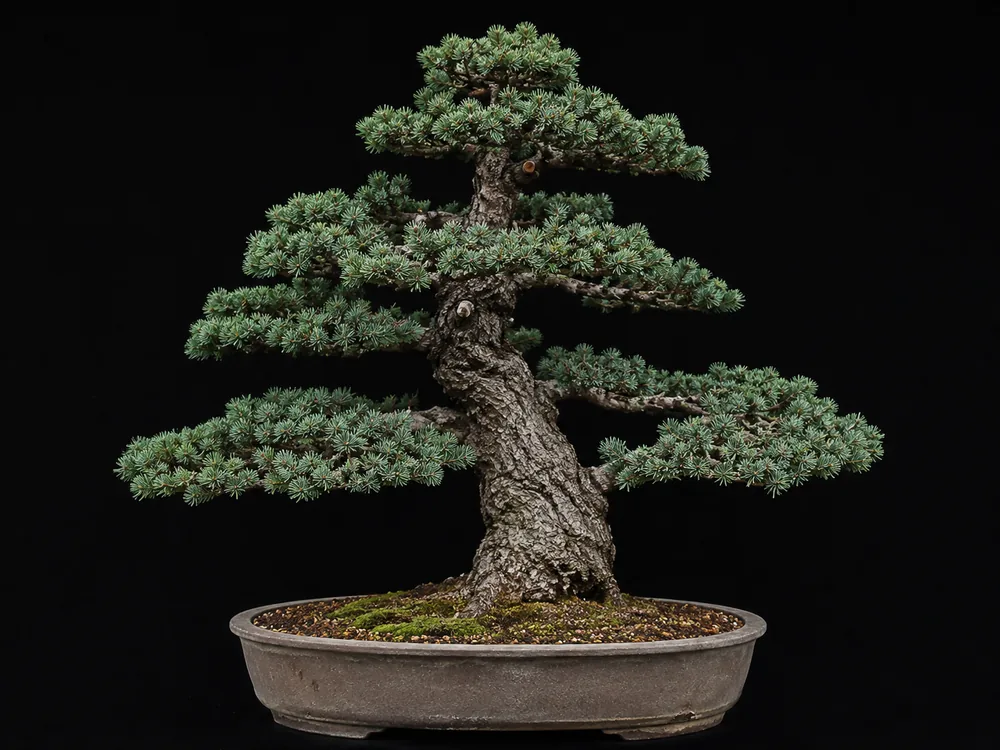
Cedar Bonsai Care
Cedrus libani
These are the true cedars, the genus Cedrus, and that distinction matters. Most are lost to overwatering.
Pinaceae · Evergreen coniferous tree
Cedar quick reference
| USDA zones | Roughly 6–9 (C. libani ~5b–10a; C. deodara 'Kashmir' to ~zone 5 with protection) |
|---|---|
| Indoor / outdoor | Strictly outdoor, year-round |
| Light | Full sun |
| Water | On the dry side — drought-tolerant; keep soil free-draining and let it dry between waterings. Will not tolerate wet feet. |
| Soil | Very free-draining mix; resents waterlogging |
| Repot | Every 2–4 years (slow-growing; infrequent for mature trees) |
| Frost | Good in temperate climates; generally no winter protection needed in zone 6+ |
| Mature height (as bonsai) | Tree to 40 m; kept 30-80 cm as bonsai |
| Growth rate | Slow-moderate |
| Season of interest | Year-round evergreen, tiered branching |
| Leaf reduction | Moderate - needle length shortens with technique |
| #1 cause of death | Root rot from overwatering / poor drainage |
Overview & Character
These are the true cedars — the genus Cedrus — and that distinction matters, because "cedar" is one of the most misused names in horticulture (see Look-alikes). True cedars are majestic, long-lived conifers of the Mediterranean and Himalayan mountains, famous for their flat-topped, tiered, architectural silhouettes and their evergreen, drought-hardy constitution. For bonsai they offer dramatic, powerful trunks, layered horizontal pads, and short needles borne in dense rosettes.
Cedars are slow, deliberate, somewhat exacting subjects: they want full sun, sharp drainage and a dry-side watering regime, and they punish overwatering and root disturbance. They do not back-bud reliably on bare old wood, so structure must be planned and built from existing foliage rather than recovered from stubs. Atlas cedar (especially the silvery-blue 'Glauca') and deodar are the most commonly grown; Cedar of Lebanon is the classic, characterful choice.
Identification
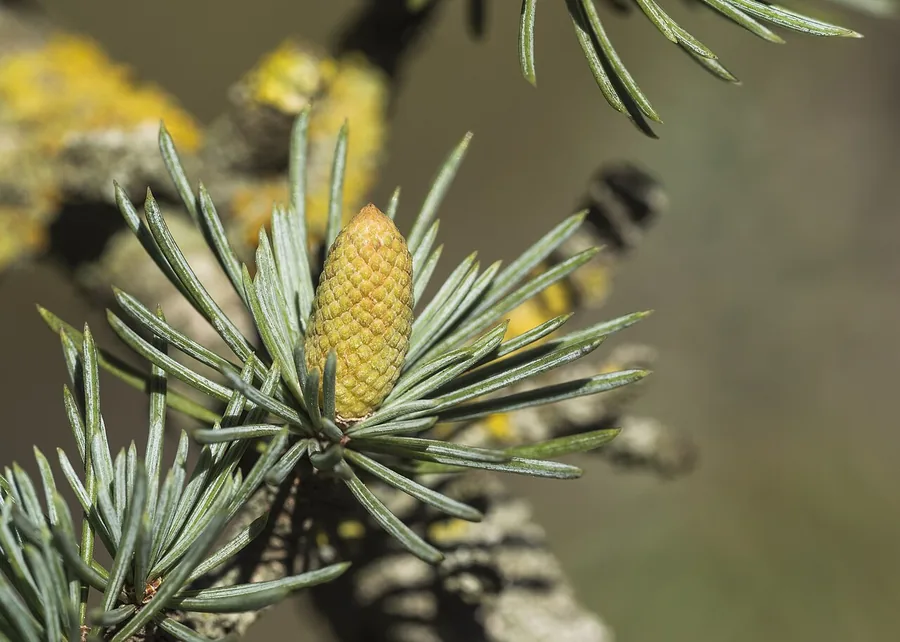
FOLIAGE: Short, stiff, needle-like leaves borne in two ways — singly and spirally on long new shoots, but in dense rosettes (clusters of 15–45 needles) on short woody spur shoots on older wood. This rosette-on-spur arrangement is the genus's signature. Color ranges from deep green (deodar, Lebanon) to striking silvery-blue (Atlas 'Glauca').
BARK & TRUNK: Dark gray, smooth when young, becoming fissured and platey/scaly with age. Mature trunks are massive and characterful.
GROWTH HABIT/FORM: Distinctive flat-topped, tiered, horizontally layered crown in Lebanon and Atlas cedars; deodar is more pyramidal with gracefully drooping branch tips and a nodding leader. Strongly architectural.
FLOWERS/FRUIT/CONES: Large, barrel-shaped, upright cones that sit erect on the branches and disintegrate on the tree at maturity (they don't fall whole) — a key true-cedar trait shared with firs.
Look-alikes & how to tell them apart: The biggest confusion is with the "cedar" misnomers — Western red cedar (Thuja), Eastern red cedar (Juniperus virginiana), and incense cedar (Calocedrus) are not true cedars at all; they have scale-like or awl-like foliage (flat sprays or whippy juniper foliage), not needles in rosettes, and bear small berry-like or tiny woody cones. If it has scale foliage, it's not Cedrus. Among true conifers, distinguish Cedrus from **Larch (Larix) — both bear needles in rosettes on spurs, but larch is deciduous (needles turn gold and drop in autumn) while cedar is evergreen. Distinguish from true firs (Abies) — firs also have upright disintegrating cones, but fir needles are flat, soft and attached singly along the shoot, never in dense rosettes. The decisive cedar mark: evergreen needles in rosettes on woody spurs + upright barrel cones that fall apart on the tree.**
Climate & USDA Zone
Generally hardy in USDA zones 6–9. Cedrus libani is the hardiest (about 5b–10a); C. atlantica sits around 6–9; C. deodara is the least cold-hardy of the three, though selected cultivars like 'Kashmir' push into zone 5 with protection. As temperate-climate trees they usually need no special winter protection at zone 6 and warmer, but bonsai in shallow pots benefit from root shelter in hard freezes. They dislike cold, wet winter soil far more than dry cold. Grow outdoors year-round.
Light
Full sun. Cedars are high-light mountain trees and need full sun for compact growth, good color (especially the blue of Atlas 'Glauca'), and to keep interior foliage alive. Insufficient light produces sparse, weak growth and loss of inner needles.
Watering
Cedars like to be kept on the dry side. They are genuinely drought-tolerant (Cedar of Lebanon especially) and demand a free-draining mix; they do not tolerate wet soil. Let the soil dry appreciably between thorough waterings. Overwatering and poor drainage are the principal cause of death. Water when the surface and just below has dried; in winter water sparingly. As always, "dry-side" does not mean letting the rootball desiccate completely — find the balance of dry-leaning but not bone-dry.
Soil & Root Care
Use a very free-draining, predominantly inorganic mix (akadama/pumice/lava). Drainage is the single most important factor for cedar survival. They are slow-growing and need infrequent repotting — every 2–4 years for younger trees, less for mature specimens — in early spring. Cedars resent root disturbance: reduce roots conservatively, never bare-root, and keep humidity high around repotting time, as root disturbance can trigger shedding of the previous season's needles (notably in Atlas 'Glauca') — high humidity at repotting helps prevent that drop.
Feeding
Feed modestly through the growing season (spring to early autumn). Cedars are not heavy feeders; over-feeding produces long, coarse new shoots and loose growth that spoils the tiered character. Use a balanced fertilizer, easing nitrogen in late summer. Slow, steady feeding suits their slow growth.
Pruning & Styling
- Build from existing foliage. Cedars do not reliably back-bud on bare old wood; if you cut a branch back past all foliage you usually won't get regrowth there. Plan structure before removing branches.
- New-shoot pinching: In spring/early summer, pinch back extending new shoots to maintain the pads and encourage budding on the spurs. Pinch by hand on soft growth.
- Structural pruning: Do larger cuts in late winter to early spring; seal larger wounds (cedar can bleed resin).
- Emphasize the tiers: Style to enhance the natural flat-topped, horizontally layered architecture — clean negative space between pads, downswept tips for deodar.
- Wiring: Best in autumn/winter; branches are fairly brittle, so bend carefully and watch for wire bite — set major bends on younger, flexible wood.
- Deadwood: Jin and shari suit cedar's rugged mountain character; treat the wood to preserve it.
Propagation & Cuttings
Ease: Difficult from cuttings. Best methods: seed; grafting for selections.
True cedars (Cedrus libani and kin) are grown from seed: give a short cold-moist stratification (2–4 weeks) and sow in spring in gritty, free-draining mix; germination is fair and seedlings are slow. Cuttings root poorly, so they're seldom used. Named and weeping/blue forms are side-veneer grafted onto Cedrus seedling understock under glass in winter. For bonsai, seedlings or young grafted nursery plants are the practical start; cedars resent heavy root disturbance, so repot and transplant conservatively.
Pests
- Aphids — including conifer/cedar aphids that cause needle drop; check shoots.
- Scale insects — on needles and bark.
- Spider mites — in hot, dry conditions; dull, bronzed foliage.
- Deodar weevil / bark beetles — can attack stressed trees, causing tip and branch dieback.
- Mealybugs occasionally on new growth.
Disease, Fungus & Infection
- Root rot (Phytophthora) from wet soil — the dominant threat and the main killer; prevent with sharp drainage and dry-side watering.
- Honey fungus (Armillaria) — cedars are susceptible; attacks roots and lower trunk and can be lethal. Treat/ remove affected material promptly; keep trees unstressed.
- Needle cast / needle blight — yellowing and shedding of needles in damp, stagnant, high-humidity conditions; keep airflow good, avoid wet foliage, ensure free-draining soil.
- Tip blight / canker on stressed or wounded trees.
Most Common Causes of Death
1. Root rot from overwatering or poor drainage. The leading killer; cedars hate wet feet. Prevention: very free-draining mix; dry-side watering; never let the pot stay soggy. 2. Honey fungus (Armillaria). Cedars are particularly vulnerable. Prevention: avoid contaminated soil/wood, keep trees healthy and unstressed, treat outbreaks immediately. 3. Needle cast from high humidity / stagnant air. Prevention: full sun, good airflow, dry foliage, sharp drainage. 4. Over-aggressive repotting / root disturbance. Can trigger needle shedding and decline; cedars don't recover roots quickly. Prevention: repot infrequently and conservatively; never bare-root; keep humidity up afterward. 5. Cutting into bare old wood expecting back-budding. It won't break and the branch is lost. Prevention: build from existing foliage; plan before cutting. 6. Insufficient light. Weak, sparse growth and inner-foliage loss. Prevention: full sun year-round. 7. Cold, wet winter soil (especially deodar). Prevention: sharp drainage, root shelter in hard freezes, choose the right species/cultivar for your zone.
Seasonal Calendar
- Spring: Repot if due (early spring), conservatively, with high humidity afterward. Begin modest feeding. Structural pruning before strong growth. Pinch new shoots as they extend.
- Summer: Full sun; water on the dry side. Continue pinching to hold the pads. Watch for spider mites, aphids and scale.
- Autumn: Ease off nitrogen. Best season for wiring and refinement. Tidy foliage and clean out interior.
- Winter: Dormant outdoors. Water sparingly. Protect roots in hard freezes (especially deodar and shallow pots). Continue wiring on dormant wood.
Close-up photo reference
Compare your tree against these to confirm the species and spot problems early.



Sources
- Bonsai Empire — Cedar (Cedrus) care
- Bonsai4Me — Cedrus / Cedar Bonsai
- Bonsai BCI — Cedrus libani
- Evergreen Gardenworks — Cedars for Bonsai
Where to buy a Cedar bonsai
We don’t stock Cedar at the moment. These species need similar care and we have them now — they are the closest match in our catalogue.
- Deodar Cedar — similar care, in stock now
- Chinese Juniper — similar care, in stock now
Browse all bonsai trees for sale or find a species matched to your climate and space.
- All species
- Shop bonsai trees, tools & supplies
- How to Water a Bonsai (Without Killing It)
- Bonsai Soil: What to Buy, What to Mix, and What It Costs
- Why Bonsai Die After Repotting: Diagnosing a Failed Repot
- Pruning vs. Pinching: Shaping Your Bonsai
- Overwintering Bonsai: Cold-Season Care
- Indoor Bonsai Light and Humidity: Making a Windowsill Actually Work
- Root Rot on bonsai
- Overwatering on bonsai
- Winter / Frost Damage on bonsai
- Insufficient Light (Etiolation) on bonsai
- Spider Mites on bonsai
- Blue Atlas Cedar bonsai care
- Deodar Cedar bonsai care
- Bristlecone Pine bonsai care
- Chinese Juniper bonsai care