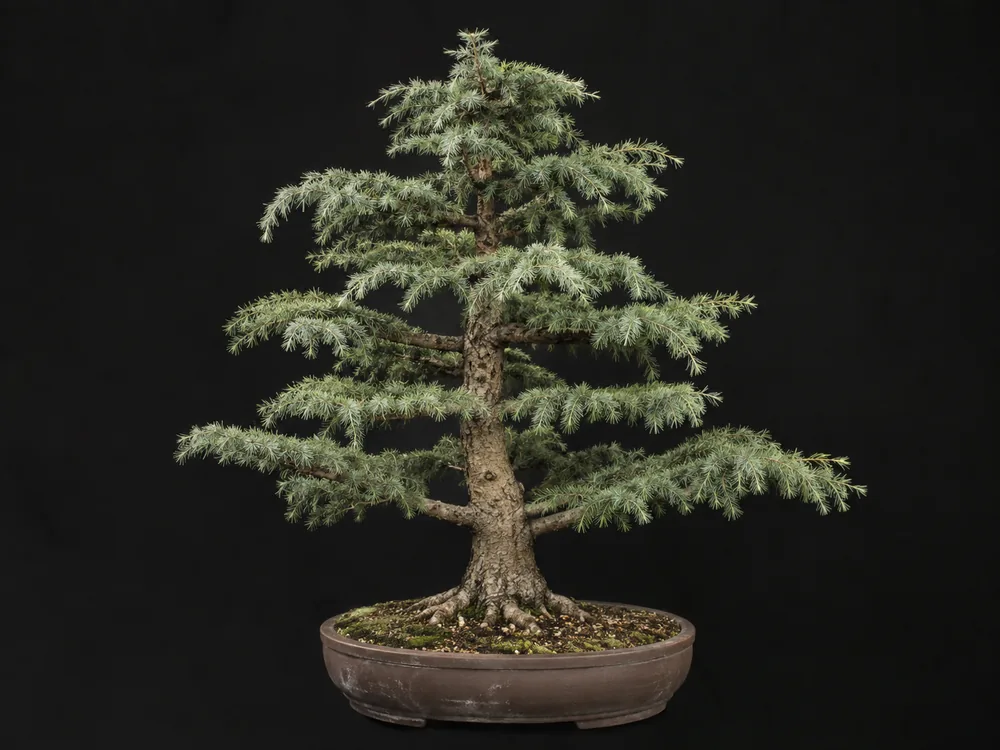
Deodar Cedar Bonsai Care
Cedrus deodara
1 Deodar Cedar bonsai in stock, from $39.95 Shipped direct from our nursery partners, with a 48-hour live-arrival guarantee. See the trees
Zones 7 to 9. The Himalayan true cedar, native to the western Himalayas of Pakistan, India, Afghanistan and Nepal. Most are lost to overwatering.
Pinaceae (pine family) · Evergreen coniferous tree — a true cedar (genus *Cedrus*); outdoor bonsai
Deodar Cedar quick reference
| USDA zones | 7–9 (a touch more tender than Atlas Cedar; some cultivars to zone 6) |
|---|---|
| Indoor / outdoor | Strictly outdoor — needs full sun, real seasons and winter dormancy |
| Light | Full sun (6+ hours direct) for compact, healthy growth |
| Water | Dry-leaning. Drought-tolerant once established; let the soil dry before watering. Intolerant of wet feet. |
| Soil | Fast-draining, gritty, slightly acidic mix (e.g. akadama + lava + pumice) |
| Repot | Every 2–4 years; cedars resent heavy root disturbance, so work conservatively |
| Frost | Less cold-hardy than Atlas Cedar; protect roots and shelter from drying winter wind in a pot |
| Mature height (as bonsai) | Tree to 50 m; kept 40-90 cm as bonsai |
| Growth rate | Moderate |
| Season of interest | Year-round evergreen, weeping habit |
| Leaf reduction | Moderate - short needle clusters |
| #1 cause of death | Root rot from overwatering / wet soil (Deodar is especially intolerant of soggy roots) |
Overview & Character
The Deodar Cedar is the Himalayan true cedar, native to the western Himalayas of Pakistan, India, Afghanistan and Nepal. Where the Blue Atlas Cedar is stiff and architectural, the Deodar is graceful and flowing: soft, longer needles, gently drooping branch tips, and a characteristic nodding leader that bows over at the top. As a bonsai it gives an elegant, slightly weeping, mature-conifer feel, with a softer blue-green to gray-green color.
It is a slow-growing, long-lived tree that rewards patience. The flowing branch habit makes it expressive, but the same softness and springiness makes it a touch more challenging to wire and hold in shape than stiffer conifers. Its defining cultural requirement is the same as all true cedars — sun, air, sharp drainage, and dry-leaning watering — but the Deodar is, if anything, even less tolerant of wet roots than its Atlas cousin.
Identification
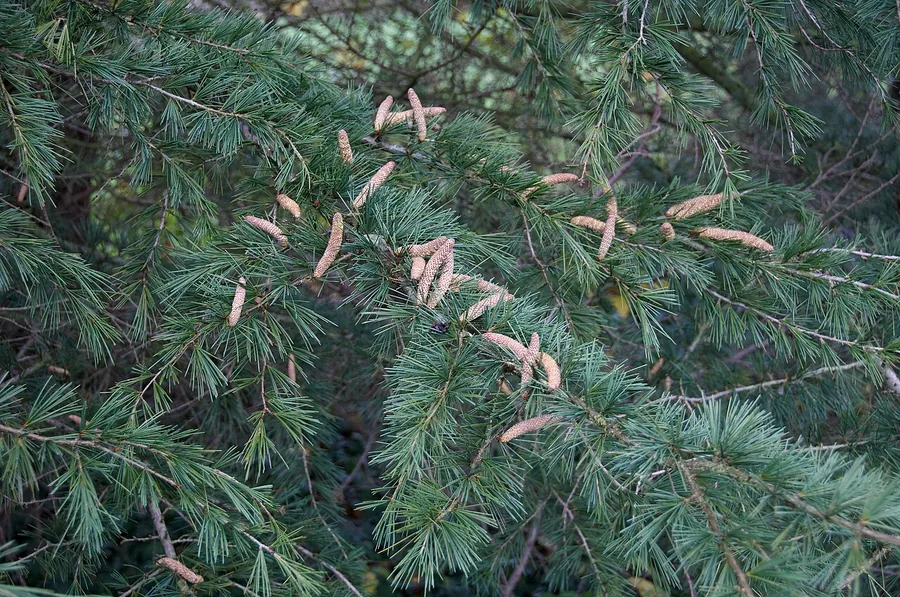
FOLIAGE: Needles in dense spiral rosettes on short woody spurs (the true-cedar pattern), but longer and softer than Atlas Cedar — typically 2.5–5 cm — and colored soft blue-green to gray-green. The longer, more pendulous needles give the whole tree a feathery, flowing look.
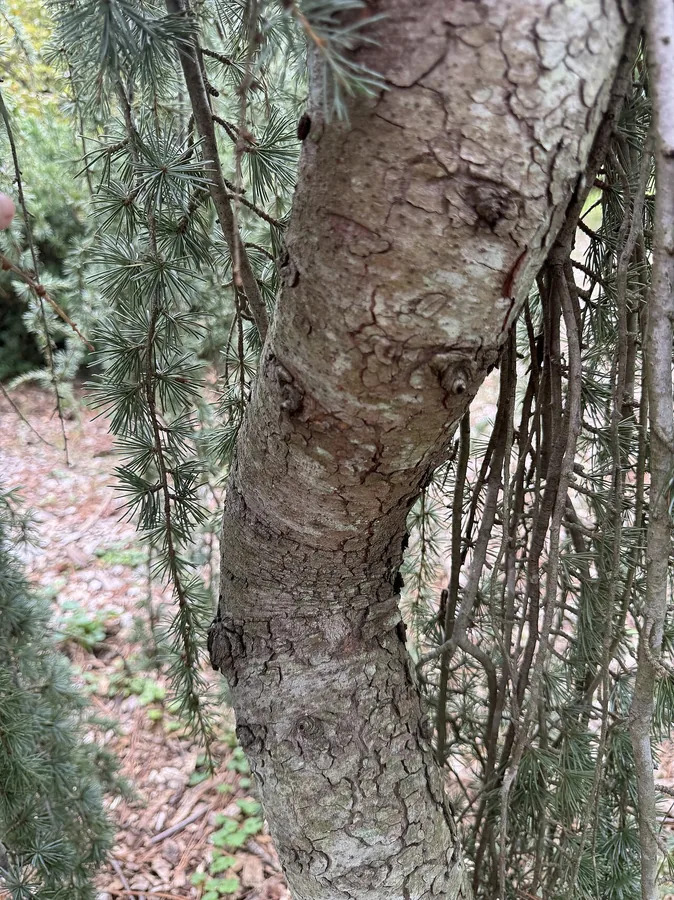
BARK & TRUNK: Grayish-brown bark, smooth when young, becoming fissured and scaly-plated with age.
GROWTH HABIT / FORM: Distinctly graceful and drooping — the branch tips weep downward and, most tellingly, the central leader nods over at the top (a bent, pendulous apex) rather than standing stiffly upright. This drooping, nodding character is the easiest field mark.
CONES: Upright, barrel-shaped (ovoid to barrel) cones, 7–13 cm, sitting on top of the branches, maturing over about a year and then disintegrating on the tree scale by scale — the true-cedar trait.
Look-alikes & how to tell them apart: Deodar vs Blue Atlas Cedar — Deodar = softer, longer, blue-green needles, drooping branch tips and a nodding leader; Atlas = stiffer, shorter, intensely silver-blue needles, ascending branches and a more upright leader. Both have the spiral needle rosettes and upright disintegrating cones that identify true cedars and distinguish them from larches (deciduous needles), spruces/firs (single needles) and the scale-leaved cypress and arborvitae.
Climate & USDA Zone
Best in USDA zones 7–9, making it slightly more tender than the Blue Atlas Cedar; certain hardier cultivars (e.g. 'Kashmir') extend toward zone 6. It prefers regions with mild winters and warm summers and dislikes prolonged cold, wet conditions. In a pot it is especially vulnerable to winter cold and drying wind, so shelter it and protect the roots in cold spells.
Light
Full sun. Strong, direct light keeps growth tight and the foliage healthy; in shade the tree grows weak, sparse and leggy and loses its character. Give it the most open, sunny position available. It must live outdoors — it will not thrive indoors.
Watering
Lean dry — and be even more careful here than with the Atlas Cedar. The Deodar is notably intolerant of wet soil. Let the soil get fairly dry before watering, then water thoroughly. In hot growing weather a vigorous tree in a small pot may need water daily, but always confirm by checking the soil rather than watering on a fixed schedule. Overwatering and the root rot it triggers are the most common cause of decline, often showing first as curled, drooping or dull foliage.
Soil & Root Care
A sharply draining, gritty, inorganic-heavy substrate is essential. A blend of akadama, lava rock and pumice ensures fast drainage and helps prevent root rot; lean more heavily on pumice and lava in wet climates. Keep the mix slightly acidic to neutral. Repot every 2–4 years in early spring as buds begin to move. Like all true cedars, the Deodar resents aggressive root work — do not bare-root, remove no more than about a third of the roots, preserve the fine feeder roots and mycorrhizae, and make sure the fresh soil drains instantly.
Feeding
Feed through the growing season, spring to early autumn. Use a balanced organic fertilizer in spring and summer to support steady growth, then shift toward a lower-nitrogen, higher-potassium feed in late summer to harden the wood before winter, and stop feeding through dormancy. Do not feed immediately after repotting — wait until the tree is recovered and growing. Steady, moderate feeding suits this slow grower; avoid forcing soft, weak growth.
Pruning & Styling
Style with patience and lean on pruning rather than heavy wiring. The Deodar's wood is very springy, so wired branches often refuse to take a permanent set and want to spring back — many growers shape it primarily by directional pruning and by selecting growth, using wire only with care and leaving it on longer. Do structural work in late winter to early spring before the flush. Pinch and trim extending shoots through the growing season to build dense, tidy pads, and design with the tree's natural drooping, flowing habit rather than fighting it. As with most conifers, do not strip too much foliage at once; keep the tree vigorous.
Propagation & Cuttings
Ease: Difficult from cuttings; seed for species, graft for selections. Best methods: seed; grafting.
Cedrus deodara is grown from seed — short cold-moist stratification (2–3 weeks) then spring sowing in gritty mix; germination is fair, seedlings slow. Cuttings root poorly. Weeping and golden forms are side-veneer grafted onto Cedrus understock under glass in winter. For bonsai, seedlings or young grafted nursery plants are practical; like all true cedars it resents heavy root disturbance, so transplant and repot with restraint.
Pests
- Deodar weevil: feeds on young shoots and causes branch-tip flagging/dieback; prune out flagged shoots and treat if needed.
- Aphids: colonize soft new growth; control with a water blast, insecticidal soap or horticultural oil.
- Scale insects: sap-sucking pests on needles and twigs; treat with horticultural oil.
- Spider mites: in hot, dry, stagnant air — look for stippling and bronzing; improve airflow and treat with oil/miticide.
Disease, Fungus & Infection
- Root rot (Phytophthora) and butt/root rot (Heterobasidion / Armillaria): the principal killers, driven by wet, poorly drained soil. Prevention is sharp drainage and dry watering.
- Needle/shoot blight (Sirococcus, Pestalotia): fungal blight causing shoot dieback and defoliation, worse in wet, crowded, poorly ventilated conditions. Improve airflow, remove affected growth, keep foliage dry.
- Witches'-broom (Peridermium): abnormal dense shoot clusters; prune out.
Most Common Causes of Death
1. Overwatering / root rot — the leading killer, and the Deodar is even less wet-tolerant than the Atlas Cedar. Prevention: gritty fast-draining soil and dry-leaning watering. 2. Poorly draining soil — water-retentive mix keeps roots soggy. Prevention: high-inorganic, sharply draining substrate. 3. Keeping it indoors — it cannot survive without sun and a dormant winter. Prevention: keep it outdoors year-round. 4. Winter cold / wind damage in the pot — being a touch tender, exposed potted roots and drying winds harm it. Prevention: shelter and protect the roots over winter. 5. Over-aggressive root pruning / bare-rooting — can kill these root-sensitive trees. Prevention: conservative partial root work only. 6. Insufficient light — produces weak, leggy, disease-prone growth. Prevention: full sun. 7. Unchecked pests (weevils, scale, mites, aphids). Prevention: inspect regularly and treat early.
Seasonal Calendar
- Spring: Main repotting window as buds swell. Resume feeding. Structural pruning before/at the flush. Watch for aphids on new growth.
- Summer: Full sun; water by checking the soil and letting it dry between. Pinch extending shoots for density. Monitor for mites, scale and weevil flagging.
- Autumn: Shift to lower-nitrogen feed to harden growth, then taper off. Reduce watering as temperatures fall. Tidy the canopy.
- Winter: Dormant. Shelter from cold and drying wind (this species is more tender) and protect the roots from hard freeze in the pot. Water sparingly. No feeding.
Close-up photo reference
Compare your tree against these to confirm the species and spot problems early.


Sources
- Bonsai Empire — Cedar (Cedrus) Bonsai care
- Bonsai4Me — Cedrus / Cedar Bonsai species guide
- University of Florida / EDIS — *Cedrus deodara*: Deodar Cedar (ENH293)
- Bonsai Tree Gardener — Himalayan Cedar (*Cedrus deodara*) care
Buy a Deodar Cedar bonsai
- All species
- Shop bonsai trees, tools & supplies
- How to Water a Bonsai (Without Killing It)
- Bonsai Soil: What to Buy, What to Mix, and What It Costs
- Why Bonsai Die After Repotting: Diagnosing a Failed Repot
- Pruning vs. Pinching: Shaping Your Bonsai
- Overwintering Bonsai: Cold-Season Care
- Indoor Bonsai Light and Humidity: Making a Windowsill Actually Work
- Root Rot on bonsai
- Overwatering on bonsai
- Winter / Frost Damage on bonsai
- Insufficient Light (Etiolation) on bonsai
- Spider Mites on bonsai
- Blue Atlas Cedar bonsai care
- Cedar bonsai care
- Eastern White Pine bonsai care
- Fire Chief Arborvitae bonsai care