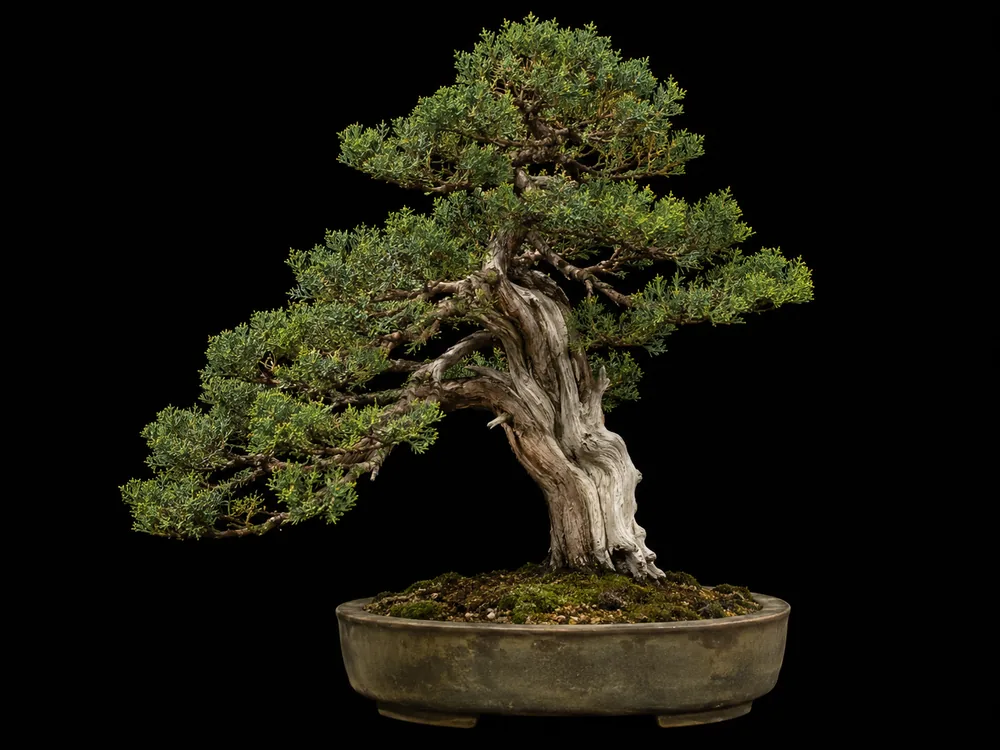
Rocky Mountain Juniper Bonsai Care
Juniperus scopulorum
Zones 3 to 7, outdoor only. Widely regarded as the highest-quality native North American juniper. Most are lost to overwatering.
Cupressaceae (cypress family) · Evergreen coniferous tree/shrub
Rocky Mountain Juniper quick reference
| USDA zones | 3–7 (very cold-hardy) |
|---|---|
| Indoor / outdoor | Outdoor only — never an indoor tree |
| Light | Full sun; thrives in strong, direct light |
| Water | DRY — like all junipers, prefers to approach dryness between waterings; never kept constantly wet |
| Soil | Very free-draining, inorganic mix (pumice/lava/akadama, lean) |
| Repot | Infrequent — every 3–5+ years; collected trees only when fully established |
| Frost | Excellent — extremely cold-hardy |
| Mature height (as bonsai) | 10-15m wild; 30-70cm as bonsai |
| Growth rate | Slow; prized collected yamadori |
| Season of interest | Year-round; dramatic natural deadwood shari |
| Leaf reduction | Scale foliage refines with pinching, not shears |
| #1 cause of death | Overwatering / root rot, and overworking foliage (over-pinching, stripping branches, repotting too aggressively) |
Overview & Character
The Rocky Mountain Juniper is widely regarded as the highest-quality native North American juniper for bonsai. It grows across the windswept high prairies, high desert, and rocky slopes of western North America, where harsh, dry, abrasive conditions sculpt ancient specimens with dramatic deadwood and tightly compact living foliage.
Most prized material is yamadori — trees collected from the wild after decades or centuries of slow growth. These collected specimens carry naturally weathered, sandblasted deadwood (jin and shari) and a contrast of living and dead tissue that is essentially impossible to replicate in nursery stock. The species' fine, tightly grained vascular system produces deadwood of unrivaled texture among junipers.
The central principle for working this tree: the foliage mass is the tree's battery. Strength flows from a full, healthy canopy down to the roots. Do not over-pinch, over-prune, or strip the foliage, and never cut branches back beyond their green growth — Rocky Mountain Juniper does not reliably back-bud on old, bare wood. Keep it outdoors, keep it on the dry side, work it conservatively, and let it build energy.
Identification
FOLIAGE: Predominantly scale-like (adult foliage) — coarse, tight, and pressed against the stems, ranging from dark green to a distinctive blue-green or silvery-blue. Juvenile/stressed growth can show sharper needle-like leaves. The fine, dense foliage mass is a hallmark of the species.
BARK & TRUNK: Reddish-brown to gray, fibrous bark that shreds in thin strips. Trunks on old collected trees are often twisted, hollowed, and richly featured with weathered deadwood.
GROWTH HABIT/FORM: Naturally an upright to irregular tree or shrub; in the wild, exposure produces gnarled, contorted, deadwood-laden forms ideal for literati, deadwood, and windswept styles.
FLOWERS/FRUIT/CONES: Dioecious. Female plants bear small, berry-like, blue, glaucous seed cones (2–3 years to mature); male cones are small and pollen-bearing.
Look-alikes & how to tell them apart: The key bonsai comparison is with **Chinese Juniper (Juniperus chinensis / 'Itoigawa', 'Shimpaku'). Both carry scale foliage, but Chinese juniper foliage is typically softer, finer, denser, and brighter green, and Chinese juniper is a vigorous nursery-grown species that back-buds and recovers from work far more readily. Rocky Mountain Juniper is distinguished by its collected (yamadori) origin, dramatic naturally weathered deadwood, bluer/coarser scale foliage, and a much more conservative tolerance for pinching and pruning. Also compare with Utah Juniper (J. osteosperma) and California Juniper (J. californica)** — other collected American junipers — which generally have coarser, looser foliage and different deadwood character. If it is a blue-green, fine-foliaged American collected juniper with sandblasted deadwood, suspect scopulorum.
Climate & USDA Zone
Extremely cold-hardy, comfortable in USDA zones 3–7. It is adapted to harsh continental extremes — cold winters, hot dry summers, intense sun, and wind. It needs a genuine outdoor life with full seasons. It tolerates cold far better than wet; the main climate-related risk is not frost but excess moisture and poor drainage.
Light
Full sun, all day. This is a high-light, high-exposure species; strong direct sunlight keeps the foliage tight, compact, and healthy and maintains the dense canopy that powers the tree. Insufficient light weakens the foliage mass and the whole tree declines.
Watering
This is a DRY-side species. Like all junipers, it must never be kept constantly wet. Let the soil approach dryness between waterings, then water thoroughly. The combination of a very free-draining mix and disciplined watering is what keeps the roots healthy. Overwatering is among the most common ways to kill a juniper. That said, junipers do not telegraph drought stress quickly — they can be dying from rot or drought before the foliage shows it — so judge by soil moisture and weight, not by waiting for foliage symptoms.
Soil & Root Care
Use a very free-draining, predominantly inorganic mix (pumice, lava, akadama), leaner and grittier than for moisture-loving species. Junipers do not have especially sensitive roots, but the tree's recovery depends on a strong foliage battery, so do not combine heavy root work with heavy foliage work in the same year. Repot infrequently — every 3–5 years or more for established trees. Newly collected yamadori must be left undisturbed in a free-draining substrate (often pure pumice) for one to several years to recover and build roots before any styling or repotting. Repot in early spring; never bare-root an old collected juniper.
Feeding
Feed through the growing season with a balanced fertilizer to maintain a vigorous, dense foliage mass — the battery. Healthy collected trees can take steady feeding once established. Ease off in deep winter. Do not push soft growth with excessive nitrogen; the goal is dense, tight, strong foliage rather than rampant extension.
Pruning & Styling
Work this species conservatively. Its strength is in the foliage mass, so do not over-prune and do not pinch in the way often done with pliable nursery junipers — pinching/over-pruning drains the battery and opens the tree to decline. Instead, thin and trim selectively, removing only what is necessary and always leaving plenty of strong green growth.
Critical rule: never cut a branch back beyond its living green foliage. Rocky Mountain Juniper does not reliably bud back on old bare wood — if you remove all the green from a branch, that branch will usually die rather than regenerate. Always leave foliage on any branch you intend to keep.
Styling centers on the species' greatest asset: deadwood. Create and refine jin (deadwood branches) and shari (deadwood trunk lines) to complement the natural weathering. When bending, remember that old wood and deadwood are brittle and break easily; large deadwood can be split to allow the flexible living vein to bend. Wire and structural work on yamadori should only begin after the tree is fully recovered and strong. Keep live veins healthy and traceable from root to foliage.
Propagation & Cuttings
Ease: Moderate (a juniper — roots from cuttings). Best methods: cuttings; collection.
Juniperus scopulorum roots from semi-hardwood heel cuttings in autumn/winter with IBA, kept cool and humid — rooting is moderate and slow. Seed is deeply dormant (long warm-then-cold cycling) and rarely used. The prized bonsai are collected as ancient, twisted, deadwood-rich yamadori from the Rockies. For bonsai, cuttings clone good foliage (often grafted with shimpaku for finer growth) while collected trunks provide dramatic age, driftwood, and live-vein character.
Pests
- Juniper borers / boring beetles — a notable pest of scopulorum; they feed on living tissue and live veins, killing sections and creating deadwood (occasionally dramatic, but harmful to the tree's vitality). Keep the tree vigorous and inspect for entry holes and dieback.
- Spider mites — common on junipers in hot, dry conditions; cause bronzing/yellowing. Inspect by tapping foliage over white paper.
- Juniper scale — appears as small encrustations on foliage and stems.
- Aphids and juniper webworm/needle miner — occasional.
Treat with horticultural oil, appropriate miticide/insecticide, and by keeping the tree strong; a healthy foliage battery resists pests far better than a weakened one.
Disease, Fungus & Infection
- Root rot — the principal disease threat, driven by overwatering and poor drainage. Prevent with a gritty, free-draining mix and dry-side watering.
- Phomopsis / Kabatina tip blight — fungal tip dieback, browning of shoot tips; worse in wet, humid, stagnant conditions. Improve airflow, avoid overhead wetting, remove affected tips.
- **Cedar-apple and related rusts (Gymnosporangium)** — junipers host these rusts, which form galls; remove galls and avoid planting near alternate hosts (apples, hawthorns).
The unifying preventive theme is the same as the watering rule: keep it dry, sunny, airy, and strong.
Most Common Causes of Death
1. Overwatering / root rot — keeping the soil constantly wet suffocates roots; the classic juniper killer. Prevention: very free-draining mix, water only as the soil approaches dryness. 2. Cutting branches back beyond their green foliage — bare old wood will not back-bud, so over-cut branches simply die. Prevention: always leave living green on every branch you keep. 3. Over-pinching / over-pruning (draining the battery) — stripping or excessively pinching foliage robs the tree of the energy that sustains its roots. Prevention: thin selectively, never strip; leave the canopy full. 4. Repotting or styling a collected tree too soon — yamadori need years to recover before heavy work. Prevention: leave newly collected trees undisturbed in pumice until vigorously growing before any root work or styling. 5. Keeping it indoors — junipers cannot survive indoors; lack of light, dormancy, and airflow kills them. Prevention: keep it outdoors year-round in full sun. 6. Borer infestation — boring beetles can kill live veins and whole sections. Prevention: keep the tree vigorous, inspect for holes and localized dieback, treat promptly. 7. Combining heavy root work and heavy foliage work in one season — double-stressing exceeds recovery capacity. Prevention: stagger major work across years.
Seasonal Calendar
- Spring (Mar–May): Best window for repotting established trees (sparingly). Begin feeding. Light selective thinning only on strong trees. Start of the active recovery and growth period.
- Summer (Jun–Aug): Full sun, dry-side watering with thorough soaks as the soil approaches dryness. Continue feeding. Refine deadwood and do conservative structural work on strong, established trees. Watch for spider mites and borers in heat.
- Autumn (Sep–Nov): Foliage firms up; reduce feeding. Good time for careful wiring once the season's growth has hardened. Prepare for winter.
- Winter (Dec–Feb): Fully dormant and cold-hardy; needs cold but protect roots in pots from extreme freeze-thaw in very harsh zones. Reduce watering; do not let it sit wet. Minimal work — rest the tree.
Sources
- Rocky Mountain Juniper Bonsai Guide — Bonsai Mirai
- Care and maintenance guide for native US Juniper Bonsai — Eisei-en (Bjorn Bjorholm)
- Care guide for the Juniper Bonsai tree — Bonsai Empire
- Rocky Mountain Juniper — Michael Hagedorn / Crataegus Bonsai
Where to buy a Rocky Mountain Juniper bonsai
We don’t stock Rocky Mountain Juniper at the moment. These species need similar care and we have them now — they are the closest match in our catalogue.
- Chinese Juniper — similar care, in stock now
- Common Juniper — similar care, in stock now
Browse all bonsai trees for sale or find a species matched to your climate and space.
- All species
- Shop bonsai trees, tools & supplies
- How to Water a Bonsai (Without Killing It)
- Bonsai Soil: What to Buy, What to Mix, and What It Costs
- Why Bonsai Die After Repotting: Diagnosing a Failed Repot
- Pruning vs. Pinching: Shaping Your Bonsai
- Overwintering Bonsai: Cold-Season Care
- Indoor Bonsai Light and Humidity: Making a Windowsill Actually Work
- Root Rot on bonsai
- Overwatering on bonsai
- Underwatering (Drought Stress) on bonsai
- Winter / Frost Damage on bonsai
- Insufficient Light (Etiolation) on bonsai
- Western Juniper bonsai care
- Chinese Juniper bonsai care
- Common Juniper bonsai care
- Eastern Red Cedar bonsai care