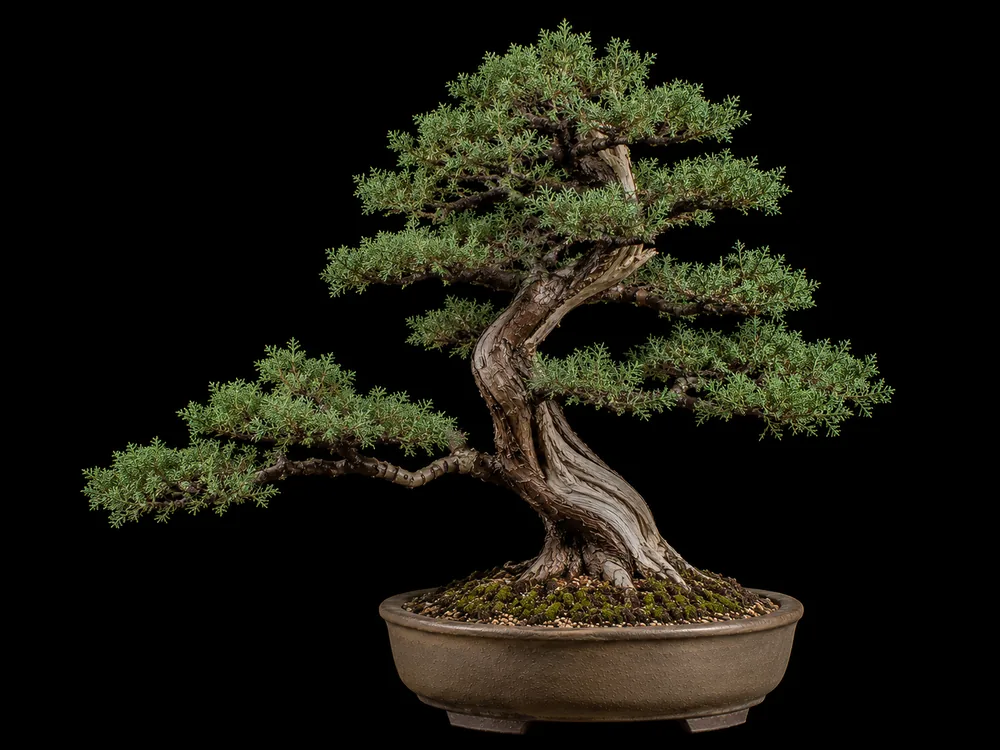
Western Juniper Bonsai Care
Juniperus occidentalis
Zones 4 to 9, outdoor only. A rugged, long-lived conifer of the western US mountains. Most are lost to overwatering.
Cupressaceae (cypress family) · Evergreen coniferous tree (juniper)
Western Juniper quick reference
| USDA zones | 4–9 |
|---|---|
| Indoor / outdoor | Outdoor only — full sun, fresh air, winter dormancy |
| Light | Full sun all day |
| Water | Slightly moist — wet/dry cycle; never soggy |
| Soil | Very free-draining, gritty mix |
| Repot | Every 2–4 years, early spring |
| Frost | Hardy; protect potted roots below ~−10 °C / 14 °F |
| Mature height (as bonsai) | Tree to 10m in nature; bonsai often 25-70cm. |
| Growth rate | Slow. |
| Season of interest | Year-round; dramatic deadwood, jin and shari. |
| Leaf reduction | Good; scale foliage tightens with pinching. |
| #1 cause of death | Root rot from overwatering; over-pinching/baring old wood |
Overview & Character
The Western Juniper is a rugged, long-lived conifer of the western US mountains, prized as collected yamadori for its dramatic deadwood, twisting trunks, and ancient character. It is one of three American junipers commonly used for bonsai (with California and Rocky Mountain), and all share very similar care.
It is an outdoor tree demanding maximum sun, very sharp drainage, a wet/dry watering cycle, and winter dormancy. Its signature is spectacular natural shari and jin set against fine scale foliage. As with all junipers, don't hedge off all the tips and don't cut back to bare wood — and collected trees need patience to establish before heavy work.
Identification
Foliage: Mostly tight grey-green adult scale leaves (with some prickly juvenile needles), often with a resin gland and a slightly mealy look; foliage forms dense pads.
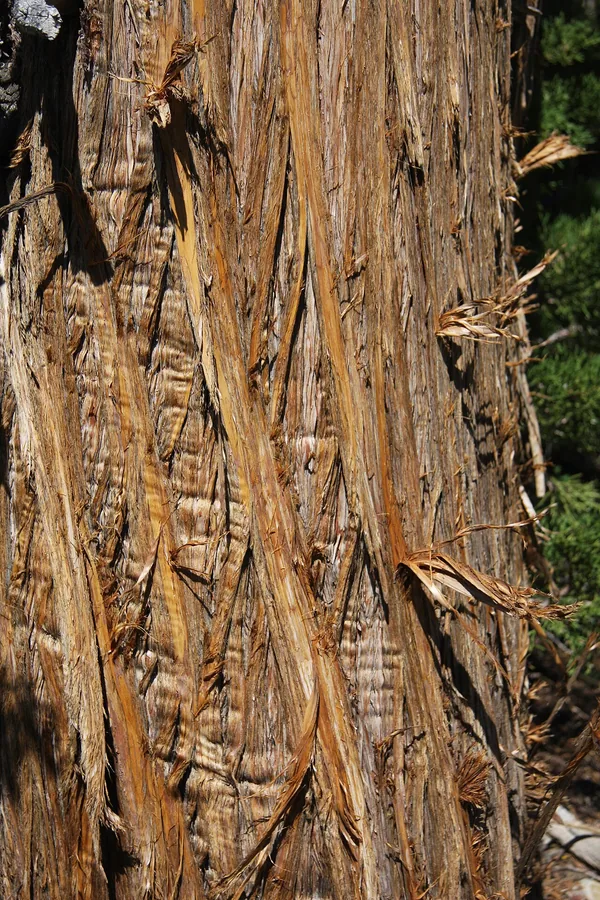
Bark & trunk: Reddish-brown, fibrous and shredding; old trees show massive natural deadwood (shari) and bleached jin — the species' calling card.
Growth habit / form: Gnarled, often twisting and asymmetrical, with heavy deadwood; suits literati, informal upright, and dramatic deadwood styles.
Flowers / fruit: Dioecious; females bear waxy blue-black berry-like cones.
Look-alikes & how to tell them apart: Very similar to other American scale junipers; distinguished from Rocky Mountain Juniper by stiffer, greyer, more resinous foliage and its characteristic massive shari, and from California Juniper by range and slightly different foliage texture.
Climate & USDA Zone
Hardy in USDA zones 4–9. Needs full sun, fresh air, and a real winter dormancy, grown outdoors year-round; shelter potted roots below about −10 °C / 14 °F. Extremely drought-adapted in nature. Not an indoor plant.
Light
Full sun all day for tight, healthy foliage and the strength to back-bud and support refinement. Shade weakens and stretches it.
Watering
Let the soil get slightly dry between waterings.
- Water thoroughly when the surface begins to dry; check up to twice a day in summer heat, then allow a partial dry-down.
- Highly drought-adapted but in a pot still needs regular water — keep damp, never soggy, never bone-dry for long.
- Sharp drainage is essential.
Soil & Root Care
Soil: A very free-draining, gritty inorganic mix (e.g. akadama / lava / pumice ~1:1:1). Preserve some mycorrhizal soil at repotting.
Repotting:
- Frequency: every 2–4 years; collected trees only once well established.
- Timing: early spring as foliage returns to normal green.
- Remove up to ~1/3 of roots; never bare-root, especially yamadori.
- Aftercare: shelter, keep lightly moist (not soggy) while recovering.
Feeding
Feed every ~3–4 weeks through the growing season; ease nitrogen late season. Don't feed freshly repotted or newly collected trees until clearly recovering.
Pruning & Styling
- In early spring let growth extend freely (do not prune emerging shoots) to drive hormone flow and strength; pinch/thin runners later in the season.
- Never hedge off all tips and never cut back to bare old wood — keep green foliage on branches you keep.
- Deadwood: its glory — refine and preserve shari/jin with lime sulfur.
- Wiring: flexible branches wire well in autumn–winter; protect live veins and bark.
- Suits literati, informal upright, and dramatic deadwood styles. Let collected trees fully recover before heavy work.
Propagation & Cuttings
Ease: Moderate (a juniper — roots from cuttings). Best methods: collection; cuttings.
Juniperus occidentalis roots from semi-hardwood heel cuttings in autumn/winter with IBA, kept cool and humid — rooting is moderate and slow. Seed is deeply dormant and rarely used. The spectacular bonsai are collected as ancient, twisted, deadwood-rich yamadori from the western mountains, often over a thousand years old. For bonsai, collected trunks (frequently grafted with shimpaku for finer foliage) define the species; cuttings are mainly for shohin or understock.
Pests
- Spider mites (hot, dry conditions)
- Juniper scale and aphids
- Bagworms
- Juniper webworm
Treat with horticultural oil, insecticidal soap, or appropriate systemics; catch infestations early.
Disease, Fungus & Infection
- **Root rot (Phytophthora / Pythium)** — from overwatering/poor drainage; the principal risk.
- **Juniper tip blight (Phomopsis / Kabatina)** — shoot-tip dieback in wet, humid, low-airflow conditions; prune out, sanitize, improve airflow.
- **Rust galls (Gymnosporangium)** — occasional; remove galls.
Prevention: full sun, very sharp drainage, airflow, correct watering, sanitation.
Most Common Causes of Death
1. Root rot from overwatering / poor drainage. The top killer; gritty mix, wet/dry cycle. 2. Over-pinching / hedging all the tips. Weakens and browns; thin selectively. 3. Cutting back to bare wood. Won't back-bud; keep foliage. 4. Rushing collected yamadori. Let it fully establish before root work or styling. 5. Indoor keeping / unprotected winter roots. Needs sun, air, dormancy; shelter the pot in hard freeze.
Seasonal Calendar
- Spring: Repot if due (as foliage greens); let new growth extend freely; full sun.
- Summer: Pinch/thin runners; watch spider mites; wet/dry watering.
- Autumn: Feed; refine deadwood; wire.
- Winter: Dormant outdoors; protect potted roots in hard freeze.
Close-up photo reference
Compare your tree against these to confirm the species and spot problems early.

Sources
Where to buy a Western Juniper bonsai
We don’t stock Western Juniper at the moment. These species need similar care and we have them now — they are the closest match in our catalogue.
- Chinese Juniper — similar care, in stock now
- Common Juniper — similar care, in stock now
Browse all bonsai trees for sale or find a species matched to your climate and space.
- All species
- Shop bonsai trees, tools & supplies
- How to Water a Bonsai (Without Killing It)
- Bonsai Soil: What to Buy, What to Mix, and What It Costs
- Why Bonsai Die After Repotting: Diagnosing a Failed Repot
- Pruning vs. Pinching: Shaping Your Bonsai
- Overwintering Bonsai: Cold-Season Care
- Indoor Bonsai Light and Humidity: Making a Windowsill Actually Work
- Root Rot on bonsai
- Overwatering on bonsai
- Winter / Frost Damage on bonsai
- Spider Mites on bonsai
- Scale Insects on bonsai
- Rocky Mountain Juniper bonsai care
- Chinese Juniper bonsai care
- Common Juniper bonsai care
- Eastern Red Cedar bonsai care