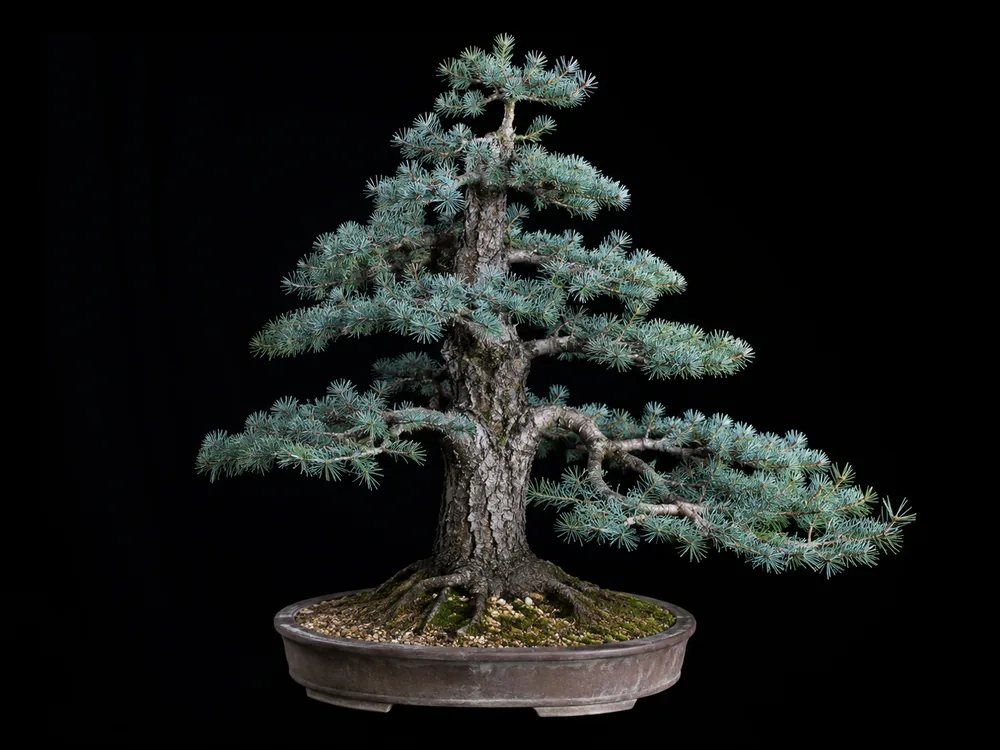
Blue Atlas Cedar Bonsai Care
Cedrus atlantica
Zones 6 to 9. The silver-blue glaucous form of Cedrus atlantica. Most are lost to overwatering.
Pinaceae (pine family) · Evergreen coniferous tree — a true cedar (genus *Cedrus*); outdoor bonsai
Blue Atlas Cedar quick reference
| USDA zones | 6–9 (reliably 6–8; protect in cold, windy zone 6) |
|---|---|
| Indoor / outdoor | Strictly outdoor — needs full sun, real seasons and winter dormancy |
| Light | Full sun (6+ hours direct); the intense blue glaucous color develops best in strong sun |
| Water | Dry-leaning. Drought-tolerant once established; let the soil approach dryness between waterings. Never keep it soggy. |
| Soil | Fast-draining, gritty, slightly acidic to neutral mix (e.g. akadama + pumice + lava) |
| Repot | Every 2–4 years (young trees more often, mature/large trees less); cedars resent root disturbance, so be conservative |
| Frost | Hardy to roughly -10 to -15 °C / 0–5 °F in the ground; in a pot protect roots and shelter from drying winter wind |
| Mature height (as bonsai) | Tree to 40 m; kept 30-80 cm as bonsai |
| Growth rate | Slow |
| Season of interest | Year-round silver-blue needles |
| Leaf reduction | Moderate - needle length shortens with technique |
| #1 cause of death | Root rot from overwatering / poorly drained soil (Phytophthora, Armillaria) |
Overview & Character
The Blue Atlas Cedar is the silver-blue glaucous form of Cedrus atlantica, a true cedar native to the Atlas Mountains of Morocco and Algeria. It is prized for its electric blue-gray needles and its stiff, ascending, almost architectural branch structure. As a bonsai it makes a powerful, masculine, aged-looking conifer with strong horizontal pads and an unmistakable color that no other common bonsai species matches.
True cedars are slow-growing and long-lived, which is both a virtue and a discipline for the bonsai grower — development takes patience, but a well-built blue cedar holds its form for decades. The species is fundamentally a dry-climate mountain tree, so the single most important thing to internalize is that it wants sun, air, sharp drainage, and to be allowed to dry out between waterings.
Identification
FOLIAGE: Short, stiff needles (roughly 1–2.5 cm) borne singly on new growth but clustered in dense spiral rosettes of 20–45 needles on short woody spur shoots — the classic true-cedar arrangement. In the 'Glauca' form the needles are a vivid silvery powder-blue, coated with a waxy bloom that both creates the color and helps the tree conserve water.
BARK & TRUNK: Young bark is smooth and gray; with age it becomes dark gray, fissured and plated. The trunk thickens slowly but develops genuine old-conifer character.
GROWTH HABIT / FORM: Stiff, strongly ascending branches that sweep upward, with a relatively rigid, upright leader. The overall impression is angular and architectural rather than soft or weeping.
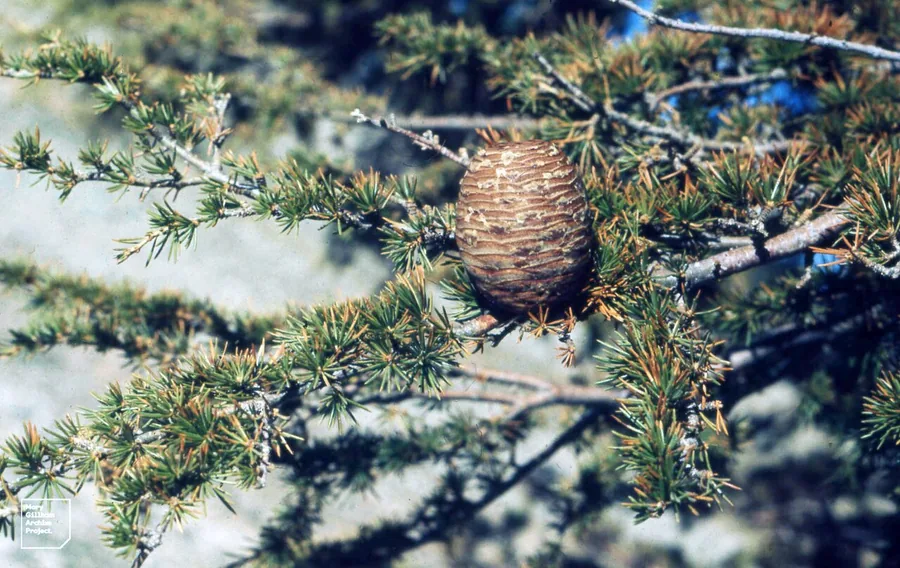
CONES: Upright, barrel-shaped (ovoid) cones, 5–8 cm, sitting on top of the branches like little casks. They take about two years to mature and then disintegrate on the tree, shedding scales rather than dropping whole — a true-cedar trait.
Look-alikes & how to tell them apart: Blue Atlas vs Deodar Cedar — the Atlas has stiff, ascending branches and intensely blue, short needles, while the Deodar has softer, longer needles, gracefully drooping branch tips and a nodding (bent-over) leader. Both share the spiral needle rosettes and upright disintegrating cones that mark them as true cedars and separate them from larches (deciduous), spruces and firs (needles single, not rosetted) and the scale-leaved cypress/arborvitae.
Climate & USDA Zone
Hardy in USDA zones 6–9, performing most reliably in zones 6b–8. It needs a true cold winter to set dormancy and is happiest in regions with hot, fairly dry summers — its mountain heritage. In zone 6 and colder microclimates, cold drying winds in winter can scorch the foliage, so shelter the tree. It is not suited to humid, waterlogged, or tropical conditions.
Light
Full sun, all day. Strong direct light is what drives the dense, compact growth and the intense blue color; in shade the tree opens up, loses the blue intensity and grows weak, leggy shoots. Give it the brightest, most open spot you have. It is an outdoor tree and will decline indoors.
Watering
Lean dry. This is a drought-tolerant mountain conifer, and overwatering is the chief way people kill it. Water thoroughly when the top of the soil has begun to dry, then let it approach dryness again before the next watering. In hot summer weather a vigorous tree in a small pot may still need daily water — but always governed by checking the soil, not by a fixed schedule. The combination of a fast-draining mix and disciplined watering keeps the roots healthy. Soggy, constantly-wet soil invites root rot and is the species' biggest enemy.
Soil & Root Care
Use a free-draining, gritty, inorganic-heavy mix. A standard conifer blend of akadama, pumice and lava rock (roughly equal parts) works well; raise the pumice/lava proportion if your climate is wet. The mix should be slightly acidic to neutral. Repot every 2–4 years depending on age and vigor, in early spring as buds begin to swell. True cedars resent heavy root disturbance, so do not bare-root them — work conservatively, remove no more than about a third of the root mass, preserve fine feeder roots and the mycorrhizae, and ensure the new soil drains instantly.
Feeding
Feed during the active growing season, spring through early autumn. A balanced organic fertilizer through spring and summer supports steady growth; easing off high nitrogen in late summer and shifting toward a lower-nitrogen, higher-potassium feed helps the wood harden before winter. Do not feed a freshly repotted tree until it has recovered and is pushing new growth. Modest, steady feeding suits this slow grower better than heavy pushing.
Pruning & Styling
Cedars build their pads slowly, so style with patience. The best time for structural pruning is late winter to early spring before the flush. Pinch or trim back extending new shoots in the growing season to keep the pads tight and encourage density. The wood is springy, so wiring works but the branches may need to be held in place for a long time before they set — apply wire carefully and watch that it does not bite into the bark as the (slow) growth proceeds. Build pads with a clear upward, layered structure that honors the tree's naturally ascending habit. As with most conifers, avoid removing too much foliage at once; let the tree stay strong.
Propagation & Cuttings
Ease: Difficult from cuttings; seed for species, graft for 'Glauca'. Best methods: seed; grafting.
The true species grows from seed: cold-moist stratify ~2–4 weeks and sow in spring; seedlings are variable in blue colour. Cuttings of cedars root poorly and slowly, so they're rarely used. The blue and weeping selections ('Glauca', 'Glauca Pendula') do not come true from seed and are side-veneer grafted onto Cedrus seedling understock in winter under glass — this is how nursery stock is produced. For bonsai, most people buy grafted nursery plants; hide the graft union in the design or plant it low.
Pests
- Deodar weevil (cedar weevil): bores into and flags shoot tips; prune out affected shoots and treat if persistent.
- Black scale and other scale insects: sap-suckers on needles and twigs; treat with horticultural oil.
- Aphids: can colonize soft new growth; usually controllable with a strong water spray, insecticidal soap or oil.
- Spider mites: in hot, dry, still air — watch for stippling and bronzing; raise humidity around the foliage and treat with oil/miticide.
Disease, Fungus & Infection
- Root rot (Phytophthora): the major killer, thriving in waterlogged soil and attacking the fine roots. Prevention is sharp drainage and dry-leaning watering.
- Armillaria (honey fungus): a root and butt rot that can produce mushrooms at the base; avoid wet, stagnant conditions.
- Tip blight / needle blight: fungal dieback of shoot tips, worse in wet, crowded, poorly ventilated conditions. Improve airflow, remove affected growth, keep foliage dry.
Most Common Causes of Death
1. Overwatering / root rot — the number one killer. Prevention: gritty fast-draining soil and water only as the soil dries; never let the pot sit wet. 2. Poor drainage in the pot/soil — even correct watering fails in a water-retentive mix. Prevention: high-inorganic, sharply draining substrate. 3. Keeping it indoors — it cannot survive long without sun and a dormant winter. Prevention: keep it outdoors year-round. 4. Winter wind scorch / root freeze in the pot — exposed potted roots and drying winds desiccate the foliage. Prevention: shelter the tree and protect the roots over winter. 5. Over-aggressive root work — bare-rooting or removing too much root at once can kill these root-disturbance-sensitive trees. Prevention: conservative, partial root pruning only. 6. Too much shade — leads to weak, leggy, disease-prone growth. Prevention: full sun. 7. Pest infestations left unchecked (weevils, scale, mites). Prevention: inspect regularly and treat early.
Seasonal Calendar
- Spring: Main repotting window as buds swell. Resume feeding. Structural pruning before/at the flush. Watch for aphids on new growth.
- Summer: Full sun; water by checking the soil (often daily in heat, but let it dry between). Pinch extending shoots for density. Monitor for spider mites and scale.
- Autumn: Shift to lower-nitrogen feed to harden growth, then taper off. Reduce watering as temperatures drop. Tidy up.
- Winter: Dormant. Shelter from cold drying winds and protect the roots from hard freeze in the pot. Water sparingly — only to keep roots from fully drying. No feeding.
Close-up photo reference
Compare your tree against these to confirm the species and spot problems early.


_Leaves_%26_cone._Middle_Atlas_(37497613140).jpg)
Sources
- Bonsai Empire — Cedar (Cedrus) Bonsai care
- Bonsai4Me — Cedrus / Cedar Bonsai species guide
- Missouri Botanical Garden — *Cedrus atlantica* (Glauca Group)
- North Carolina Extension Gardener Plant Toolbox — *Cedrus atlantica* 'Glauca'
Where to buy a Blue Atlas Cedar bonsai
We don’t stock Blue Atlas Cedar at the moment. These species need similar care and we have them now — they are the closest match in our catalogue.
- Deodar Cedar — similar care, in stock now
- Chinese Juniper — similar care, in stock now
Browse all bonsai trees for sale or find a species matched to your climate and space.
- All species
- Shop bonsai trees, tools & supplies
- How to Water a Bonsai (Without Killing It)
- Bonsai Soil: What to Buy, What to Mix, and What It Costs
- Why Bonsai Die After Repotting: Diagnosing a Failed Repot
- Pruning vs. Pinching: Shaping Your Bonsai
- Overwintering Bonsai: Cold-Season Care
- Indoor Bonsai Light and Humidity: Making a Windowsill Actually Work
- Root Rot on bonsai
- Overwatering on bonsai
- Underwatering (Drought Stress) on bonsai
- Winter / Frost Damage on bonsai
- Leaf Scorch / Sunburn on bonsai
- Cedar bonsai care
- Deodar Cedar bonsai care
- Bristlecone Pine bonsai care
- Chinese Juniper bonsai care