Swamp Privet Bonsai Care
Forestiera acuminata
Zones 5 to 9, outdoor only. Not a privet. Most are lost to being kept indoors.

Oleaceae (olive family) · Deciduous flowering shrub or small tree
Swamp Privet quick reference
| USDA zones | 5 to 9 |
|---|---|
| Indoor / outdoor | Outdoor only; it needs a real winter |
| Light | Full sun to light shade; best in sun |
| Water | Water-loving; tolerates standing water and must never dry out |
| Soil | Water-retentive bonsai mix; more akadama, less pumice |
| Repot | Every 1 to 2 years in early spring, before the buds break |
| Frost | Genuinely hardy; a native of flooded river bottoms |
| Mature height (as bonsai) | Shrub or small tree to 10 m; 20 to 60 cm as bonsai |
| Growth rate | Fast |
| Season of interest | Bare winter silhouette, earliest spring flowers, purple summer drupes |
| Leaf reduction | Very good |
| #1 cause of death | Drying out, and being kept indoors |
Overview & Character
Swamp Privet is not a privet. The name is a piece of nursery shorthand that has stuck because the leaves look vaguely privet-like, but Forestiera acuminata sits in a different genus entirely. It shares the olive family with true privets and with olives themselves, and that is the whole of the relationship.
What it actually is: a fast, tough, deciduous native of the flooded river bottoms and swamp margins of the southeastern United States, from Texas up through the Mississippi valley to Illinois. It grows where the soil is underwater for part of the year, which makes it one of the very few bonsai subjects you genuinely cannot overwater.
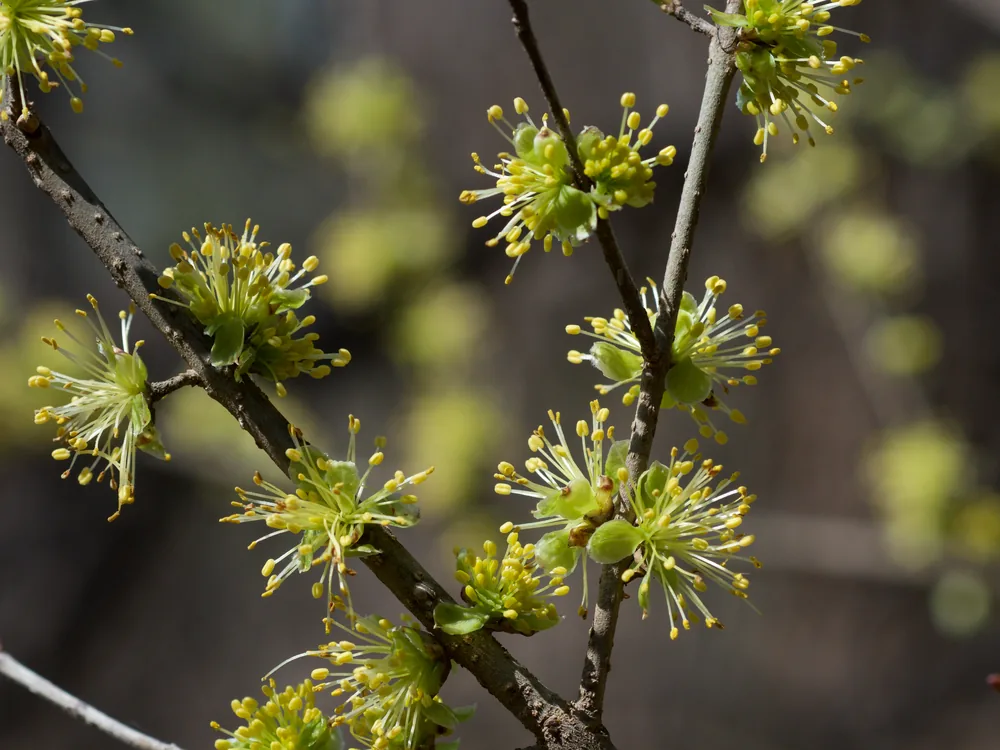
For bonsai that combination is unusual and valuable. It builds a trunk quickly, back-buds hard, reduces its leaves willingly, and gives you a fine twiggy winter silhouette, which is the real reward for growing a deciduous tree. It flowers before it leafs out, so an early spring specimen is a bare structure hung with small greenish-yellow clusters, and on a female plant that is followed by dark purple fruit through summer.
It is a plant with a season for everything and a very short list of ways to kill it. The main one is treating it like a houseplant.
Identification
Foliage: Opposite, elliptic to lance-shaped leaves 4 to 10 cm long, finely toothed along the margin, and drawn out to a long tapering point. That point is the species name: acuminata means acuminate, sharply drawn to a tip. Fresh green in summer, turning an unremarkable yellow before falling.
Bark & trunk: Grey to grey-brown, smooth when young, becoming finely fissured and slightly scaly with age. Frequently multi-trunked or leaning in the wild, which suits it to slanting, clump and raft styles.
Growth habit / form: Open, spreading, often arching, with long slender shoots. It suckers from the base, and in nature it forms thickets along water margins.
Flowers / fruit: The plant is dioecious, meaning individual plants are either male or female. Small clusters of yellowish-green flowers with no petals appear in early spring, well before the leaves. Female plants then carry oblong purple to nearly black drupes about 1 cm long through summer, which is where the "swamp" reputation comes from: they feed ducks and other waterfowl in flooded bottomland. A male plant will never fruit, and that is not a fault in the tree.
Look-alikes & how to tell them apart: True privets (Ligustrum) are evergreen or semi-evergreen, with untoothed leaf margins and showy white flower panicles in summer. Swamp Privet is fully deciduous, has finely toothed leaves, and flowers on bare wood in very early spring with flowers so small they are easily missed. If it has dropped every leaf by December, it is not a Ligustrum.
Climate & USDA Zone
Hardy through USDA zones 5 to 9, and it wants the winter. This is a temperate deciduous tree that requires a genuine dormant period with cold to set its buds and to flower properly the following spring. Kept warm year round it declines over two or three seasons and does not recover.
Grow it outdoors permanently. Over winter, protect the pot rather than the tree: mulch it, sink it into the ground, or move it into an unheated shed or cold frame once the leaves are down. The wood is hardy; the roots in a shallow container are the vulnerable part.
Light
Full sun, or light shade in the hottest climates. It grows in the open along waterways and takes as much sun as you can give it, provided the water supply keeps up. In shade it grows longer and looser, with poorer ramification and fewer flowers.
Watering
This is a swamp species. Keep it wet, and do not worry about overwatering it.
- It tolerates standing water. A shallow tray of water under the pot through summer is acceptable practice for this species, which is not true of almost anything else in the collection.
- In hot weather expect to water daily, sometimes more.
- Reduce, but do not stop, in winter dormancy. The root ball should stay damp even with no leaves on the tree.
- Drought is the real danger. It has no adaptation for it and wilts, then defoliates, then dies back, in short order.
Soil & Root Care
Soil: Lean towards water retention. A mix with a higher proportion of akadama, or akadama with a little organic component, holds the moisture this species wants. Pure pumice and lava will dry too fast in summer.
Repotting:
- Frequency: every one to two years, in early spring before the buds break.
- It is vigorous and fills a pot fast, so young trees in development want the shorter interval.
- Root work is well tolerated. It suckers and regenerates roots readily.
- Aftercare: keep it wet and sheltered from wind until the first flush hardens.
Feeding
Feed steadily through the growing season, from the point the first leaves harden until late summer. Solid organic fertiliser every four weeks or a weekly balanced liquid feed both work. Stop feeding as the leaves colour in autumn and give nothing over dormancy. Do not feed a freshly repotted tree for a month.
Pruning & Styling
- Structural pruning in late winter, while the tree is bare and you can see what you are doing. This is the great advantage of a deciduous subject: the structure is visible four months a year.
- Cut back through the growing season. Let shoots run to five or six leaves, then reduce to one or two. It back-buds strongly on old wood.
- Leaf reduction is very good with repeated cutting, and a full defoliation in early summer on a strong, established tree produces a second, smaller flush.
- Wiring: best applied in winter on bare wood. Young shoots are whippy and flexible; older wood stiffens and is better shaped by cut-and-grow.
- Remove basal suckers unless you are deliberately building a clump or multi-trunk composition, which this species suits particularly well.
Propagation & Cuttings
Ease: Easy. Best methods: hardwood and semi-hardwood cuttings; division of suckers; seed.
Forestiera acuminata roots well from cuttings and, because it suckers freely at the base, an established plant offers ready-made divisions with roots already attached. Seed needs a period of cold stratification to break dormancy, which is straightforward outdoors over winter but must be done deliberately indoors. Note that a seedling's sex is unknown until it first flowers, typically after several years, so if fruit matters to you, propagate vegetatively from a known female plant.
Pests
- Aphids on the soft early spring growth
- Scale insects on older stems
- Leaf-mining insects, cosmetic rather than serious
- Vine weevil larvae in the root ball
Nothing on this list is a common or severe problem. It is a robust native with few dedicated enemies in cultivation. Horticultural oil and insecticidal soap handle everything above.
Disease, Fungus & Infection
Notably trouble free. Its native habitat is wet, so it carries none of the fungal vulnerability that wet conditions create in most container plants.
- Leaf spot, occasional and cosmetic in crowded, still conditions.
- Dieback, almost always the aftermath of a drought event rather than an infection.
- Root rot is unusually unlikely here, because the species evolved in saturated soil.
Prevention is sun, water, and airflow through the interior.
Most Common Causes of Death
1. Drying out. It has no drought tolerance at all. A hot day with a dry pot does real damage. 2. Being kept indoors. It needs a cold dormancy. A warm windowsill kills it slowly and reliably. 3. A frozen root ball in a shallow pot. The tree is hardy, the exposed container roots are not. Mulch or shelter the pot. 4. Feeding or hard root work during dormancy. Wait for spring. 5. Expecting fruit from a male plant. Not a cause of death, but a common disappointment. Fruiting requires a female plant.
Seasonal Calendar
- Late winter: Structural pruning and wiring on bare wood. Watch for the flower buds swelling.
- Early spring: Flowers open on bare branches. Repot as buds begin to move. Resume watering heavily.
- Late spring and summer: Full sun, constant water, steady feeding. Cut back each extending shoot. Optional defoliation on strong trees in early summer. Purple fruit colours on female plants.
- Autumn: Leaves yellow and drop. Stop feeding. Reduce water but keep the root ball damp. Enjoy the emerging silhouette.
- Winter: Full dormancy outdoors. Protect the pot from hard freezing. Keep the soil damp, never dry.
Sources
- Wikipedia, Forestiera acuminata
- USDA NRCS PLANTS Database, Forestiera acuminata
- Missouri Botanical Garden Plant Finder, Forestiera acuminata
Buy a Swamp Privet bonsai
- All species
- Shop bonsai trees, tools & supplies
- How to Water a Bonsai (Without Killing It)
- Bonsai Soil: What to Buy, What to Mix, and What It Costs
- Why Bonsai Die After Repotting: Diagnosing a Failed Repot
- Pruning vs. Pinching: Shaping Your Bonsai
- Overwintering Bonsai: Cold-Season Care
- Indoor Bonsai Light and Humidity: Making a Windowsill Actually Work
- Root Rot on bonsai
- Overwatering on bonsai
- Underwatering (Drought Stress) on bonsai
- Winter / Frost Damage on bonsai
- Scale Insects on bonsai
- American Beech bonsai care
- Amur Maple bonsai care
- Beautyberry bonsai care
- Blueberry bonsai care