
Winterberry Holly Bonsai Care
Ilex verticillata
Zones 3 to 9, outdoor. A deciduous holly native to eastern North American wetlands. Most are lost to drying out.
Aquifoliaceae (holly family) · Deciduous broadleaf shrub
Winterberry Holly quick reference
| USDA zones | 3 to 9 |
|---|---|
| Indoor / outdoor | Outdoor: a cold-hardy wetland shrub that needs full winter dormancy |
| Light | Full sun to partial shade: full sun for best fruiting |
| Water | Moisture-loving: a wetland native; keep consistently moist |
| Soil | Moisture-retentive, acidic mix; tolerates wet feet |
| Repot | Every 2 to 3 years |
| Frost | Excellent: hardy to about −40 °C (−40 °F) |
| Mature height | Shrub to 5m in nature; bonsai usually 25-50cm. |
| Growth rate | Slow to moderate. |
| Season of interest | Winter for vivid red berries on bare branches. |
| Leaf reduction | Moderate; leaves reduce with trimming. |
| #1 cause of death | Drying out: the root ball desiccating in summer |
Overview & Character
Ilex verticillata is a deciduous holly native to eastern North American wetlands, grown almost entirely for one spectacular feature: its display of brilliant red berries that cling to bare branches long after the leaves have dropped, blazing through autumn and into winter. Unlike the familiar evergreen hollies, winterberry sheds its leaves, so the fruit is fully exposed on the twiggy silhouette, a striking bonsai effect. It is exceptionally cold-hardy and, being a wetland plant, unusually tolerant of wet soil that would kill most bonsai species. It back-buds well and develops fine ramification, making it well suited to informal upright and multi-trunk styles.
Care keys: this is an outdoor, cold-hardy, moisture-loving shrub. To get berries you must have both a female (fruiting) plant and a compatible male pollinator nearby, and grow it in acidic soil with steady moisture and good light. It needs a real winter and must never dry out.
Identification
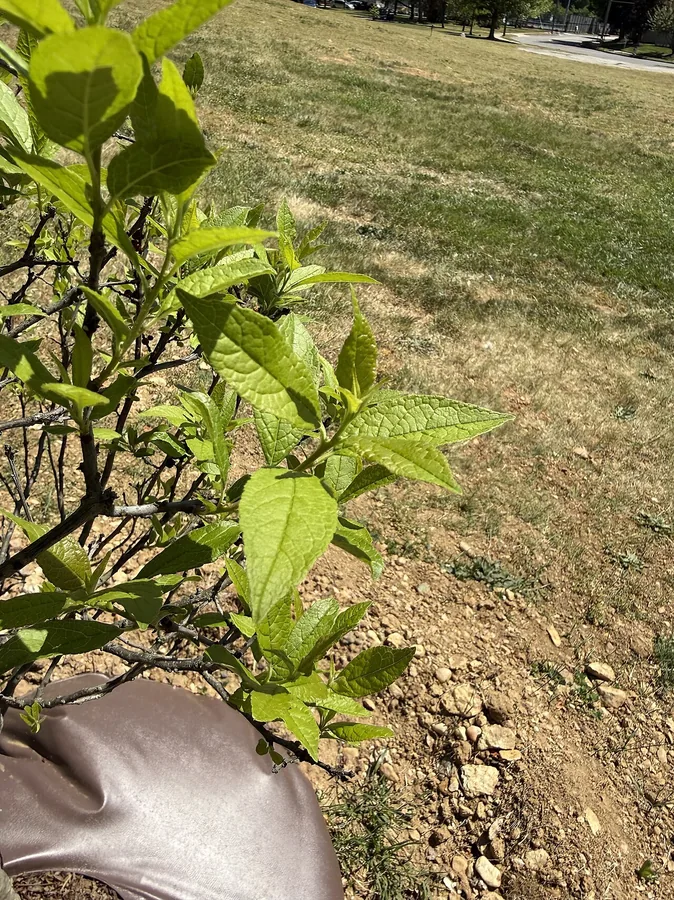
Foliage: Alternate, elliptic to oval leaves 4 to 9 cm long with finely serrated margins, matte to glossy dark green, turning yellowish to bronze before dropping in autumn. Leaves are non-spiny, unlike English holly.
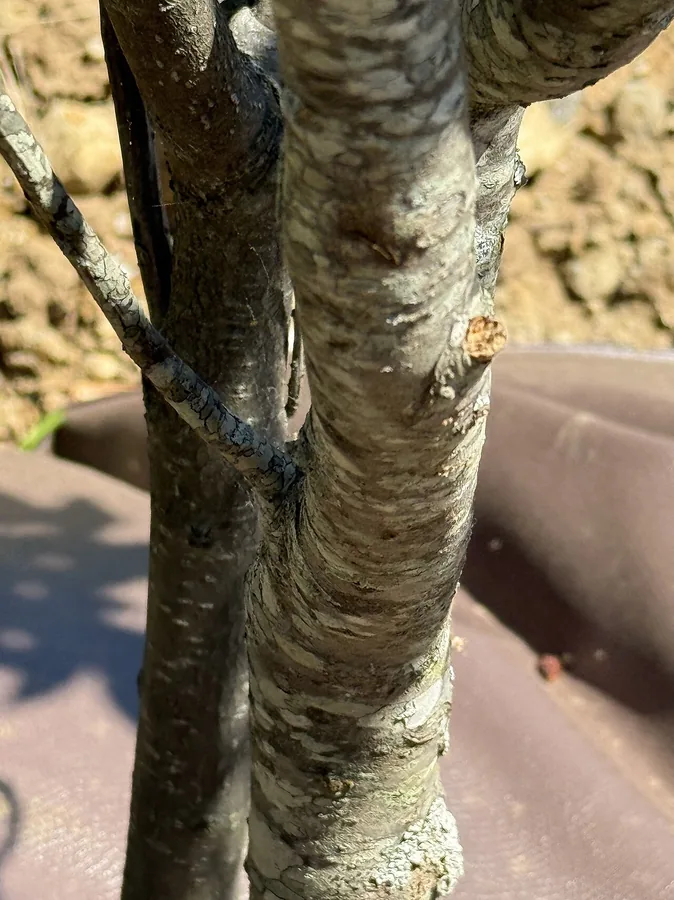
Bark & trunk: Smooth gray-brown bark, sometimes with paler lenticels; slender, twiggy branching that shows well when leafless.
Growth habit / form: A dense, rounded, suckering shrub in the wild; forms good taper and fine twigging under bonsai care.
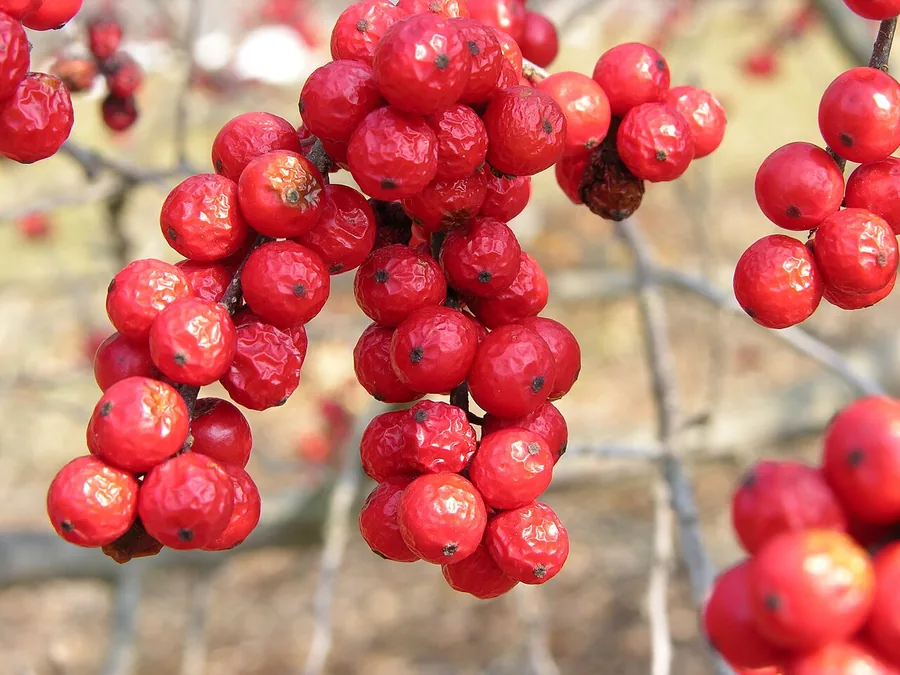
Flowers / fruit: Dioecious: small, greenish-white flowers in late spring on separate male and female plants. Fertilized females bear tight clusters of bright red (occasionally orange or gold) berries along the stems that persist into winter.
Look-alikes & how to tell them apart: Distinguished from **evergreen English holly (Ilex aquifolium) by its deciduous habit and soft, non-spiny leaves; English holly keeps glossy spiny evergreen foliage. It also resembles common winterberry relatives and Ilex serrata (Japanese winterberry)**, which is very similar but has slightly smaller leaves and berries and is the species more often seen in Japanese bonsai; the two are sometimes hybridized.
Climate & USDA Zone
Hardy in USDA zones 3 to 9, one of the most cold-tolerant bonsai subjects, surviving to about −40 °C (−40 °F) in the ground. It requires a full winter dormancy and is strictly an outdoor plant. Ideal growing temperatures are 15 to 28 °C (59 to 82 °F). As a wetland native it tolerates cool, damp conditions and heavy soils. In a pot the roots are less insulated, so in the coldest zones give the pot some winter protection while still allowing the tree to experience proper cold; the berries themselves are unharmed by frost and are in fact at their best in the cold.
Light
Grow in full sun for the heaviest fruit set and most compact growth; it tolerates partial shade but flowers and fruits less. Because the berries are the whole point, prioritize a sunny position. In very hot regions light afternoon shade helps keep the moisture-loving root ball from drying, but do not deprive it of the light it needs to fruit well.
Watering
Keep the soil consistently moist at all times; this is a wetland plant that will not tolerate drying out.
- Water freely and often; in summer this may mean twice daily for a small pot.
- Never let the root ball dry; desiccation causes leaf scorch, berry drop, and can be fatal.
- It tolerates standing water far better than most bonsai and can sit in a shallow tray of water in high summer.
- Use rainwater or soft water where possible, since it prefers acidic conditions and dislikes hard, limey water.
Soil & Root Care
Soil: A moisture-retentive, acidic mix: akadama with added kanuma or composted pine bark to hold water and lower pH. Avoid limestone-based grit, which raises pH and causes chlorosis.
Repotting:
- Repot every 2 to 3 years.
- Best in early spring before bud break.
- Roots are fibrous and tolerate pruning well; keep the root ball from drying at any point during the work.
- Aftercare: keep consistently moist, sheltered from strong sun and wind for a few weeks, and delay feeding until growth resumes.
Feeding
Feed from spring, once leaves have hardened, through summer with a balanced fertilizer; an acidifying / ericaceous feed helps maintain deep green foliage and prevents chlorosis in this acid-loving species. Adequate feeding through the growing season supports the energy the plant needs to set and hold a heavy crop of berries. Ease off high nitrogen in late summer and stop feeding as the tree enters dormancy. Iron or ericaceous supplements correct any yellowing between leaf veins caused by high-pH water or soil.
Pruning & Styling
- Prune structurally in late winter while dormant and leafless, when the twiggy framework is visible.
- Because berries form on new growth from the current season, avoid over-pruning in late spring or you will remove the flowering wood and lose fruit.
- Pinch and cut back new shoots through early summer to build the fine ramification that shows off the berries.
- Wire young flexible shoots; older wood is brittle and better shaped by directional pruning.
- Suits informal upright, multi-trunk, clump, and group styles that echo its natural thicket-forming wetland habit.
Propagation & Cuttings
Ease: Easy. Best methods: semi-hardwood cuttings; layering.
Ilex verticillata (a deciduous holly) roots from semi-hardwood cuttings in summer with IBA under humidity at good rates, the reliable way to keep good berrying clones and the correct sex. It layers where stems touch soil. Seed is very slow (warm-then-cold, often germinating the second year) and, being dioecious, gives mixed sexes. For bonsai the bare red berries on winter twigs are the prize, so propagate known female clones by cuttings (and keep a male pollinator nearby); it back-buds well and tolerates wet soil.
Pests
- Spider mites: a common problem in hot dry conditions (ironic for a wetland plant kept too dry); cause stippling and leaf drop; raise humidity and treat with a miticide.
- Aphids: cluster on new shoots; rinse off or use insecticidal soap.
- Scale insects: on stems and leaf undersides; treat with horticultural oil.
- **Holly leaf miner (Phytomyza spp.)**: larvae tunnel within leaves leaving blotchy trails; remove affected leaves and treat with a systemic if severe.
Disease, Fungus & Infection
- Leaf spot / anthracnose: fungal spotting common in the humid conditions this plant likes; remove affected and fallen leaves and improve airflow.
- Powdery mildew: a white coating in stagnant, humid air; increase ventilation and treat if needed.
- Chlorosis: not an infection but a very common disorder here: yellowing leaves with green veins from high soil pH or hard water; correct with acidic soil and ericaceous or iron feed.
- Root rot: less common in this wet-tolerant species but still possible if soil is stagnant and airless rather than merely moist.
Prevention: keep the soil moist but not stagnant, maintain acidic conditions, ensure airflow through the canopy, and clear fallen leaves that harbor fungal spores.
Most Common Causes of Death
1. Drying out, the root ball desiccating in summer: the single biggest killer for this wetland plant; never let it dry, water freely and often. 2. Chlorosis from alkaline soil or hard water: chronic yellowing starves the plant; use acidic soil and soft/rainwater with an ericaceous feed. 3. Severe spider mite infestation: worsened by keeping it too dry; can defoliate the tree; monitor and treat early. 4. Loss of dormancy / kept indoors: denied its winter cold it weakens; it must overwinter outdoors. 5. Over-pruning off the fruiting wood: not fatal to the plant but "kills" the display; prune with the berry-bearing new growth in mind.
Seasonal Calendar
- Spring: Repot before bud break; flowers appear in late spring (ensure a male pollinator is nearby); begin feeding once leaves harden.
- Summer: Full sun and abundant water; pinch new growth for ramification while preserving fruiting wood; watch for spider mites.
- Autumn: Leaves color and drop, revealing the ripening red berries; taper feeding as the tree shuts down.
- Winter: Full dormancy; enjoy the persistent berries on bare branches; keep cold but shelter the pot in the harshest freezes; keep roots from freezing dry.
Close-up photo reference
Compare your tree against these to confirm the species and spot problems early.



Sources
- Wikipedia: *Ilex verticillata*
- Missouri Botanical Garden: *Ilex verticillata*
- The Morton Arboretum: Winterberry
Where to buy a Winterberry Holly bonsai
We don’t stock Winterberry Holly at the moment. These species need similar care and we have them now — they are the closest match in our catalogue.
- Japanese Holly — similar care, in stock now
Browse all bonsai trees for sale or find a species matched to your climate and space.
- All species
- Shop bonsai trees, tools & supplies
- How to Water a Bonsai (Without Killing It)
- Bonsai Soil: What to Buy, What to Mix, and What It Costs
- Why Bonsai Die After Repotting: Diagnosing a Failed Repot
- Pruning vs. Pinching: Shaping Your Bonsai
- Overwintering Bonsai: Cold-Season Care
- Indoor Bonsai Light and Humidity: Making a Windowsill Actually Work
- Root Rot on bonsai
- Underwatering (Drought Stress) on bonsai
- Winter / Frost Damage on bonsai
- Leaf Scorch / Sunburn on bonsai
- Powdery Mildew on bonsai
- Japanese Holly bonsai care
- American Beech bonsai care
- Amur Maple bonsai care
- Beautyberry bonsai care