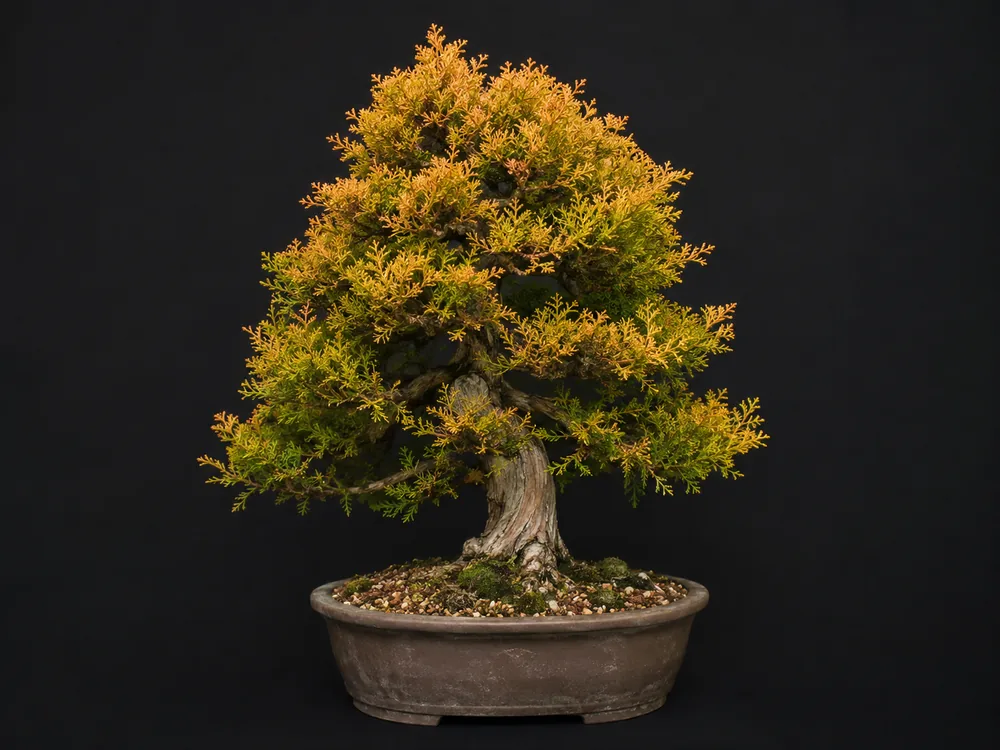
Fire Chief Arborvitae Bonsai Care
Thuja occidentalis
2 Fire Chief Arborvitae bonsai in stock, from $150.00 Shipped direct from our nursery partners, with a 48-hour live-arrival guarantee. See the trees
Zones 5 to 9. A dwarf, naturally globe-shaped cultivar of Thuja occidentalis (trademarked from the cultivar 'Congabe'). Most are lost to drying out.
Cupressaceae (cypress family) · Evergreen coniferous shrub — a dwarf globe cultivar of arborvitae; outdoor bonsai
Fire Chief Arborvitae quick reference
| USDA zones | 5–9 (very cold-hardy; the species is hardy from zone 3) |
|---|---|
| Indoor / outdoor | Strictly outdoor — needs full sun, airflow and a cold winter |
| Light | Full sun to part shade; full sun gives the brightest color and the strongest red tips |
| Water | Moisture-loving, but well-drained. Likes consistently moist soil; will NOT tolerate waterlogged roots. Not a dry-loving conifer. |
| Soil | Free-draining bonsai mix that retains some moisture (akadama + pumice + lava) |
| Repot | Every 2–3 years |
| Frost | Excellent; the cool-weather red tip color is part of its charm. In a pot still protect roots and shelter from winter wind |
| Mature height (as bonsai) | Shrub to 1.5 m; kept 20-45 cm as bonsai |
| Growth rate | Slow |
| Season of interest | Red-tipped foliage, warmer winter tones |
| Leaf reduction | Good - fine scale foliage |
| #1 cause of death | Root rot from waterlogged soil, and desiccation (drying out completely / winter wind burn) |
Overview & Character
Fire Chief is a dwarf, naturally globe-shaped cultivar of Thuja occidentalis (trademarked from the cultivar 'Congabe'). Its signature feature is color: dense, feathery foliage that flushes bright gold in spring, settles to sage-green, and develops glowing red-orange tips in cool weather, especially autumn and into winter. It is slow-growing, compact (typically reaching only about 3–4 ft in the landscape over many years), and uniformly rounded — a naturally tidy little dome that lends itself to a soft, rounded bonsai silhouette.
As with all arborvitae, Fire Chief carries the cypress-family limitation: it does not reliably back-bud on bare old wood. Cut a branch back past its green foliage and it generally stays bare. So refinement is done entirely by pinching and trimming the outer foliage pads only, never by cutting into the leafless interior. Its dwarf, dense, slow habit actually suits this approach well, since it needs little heavy pruning to stay compact.
Identification
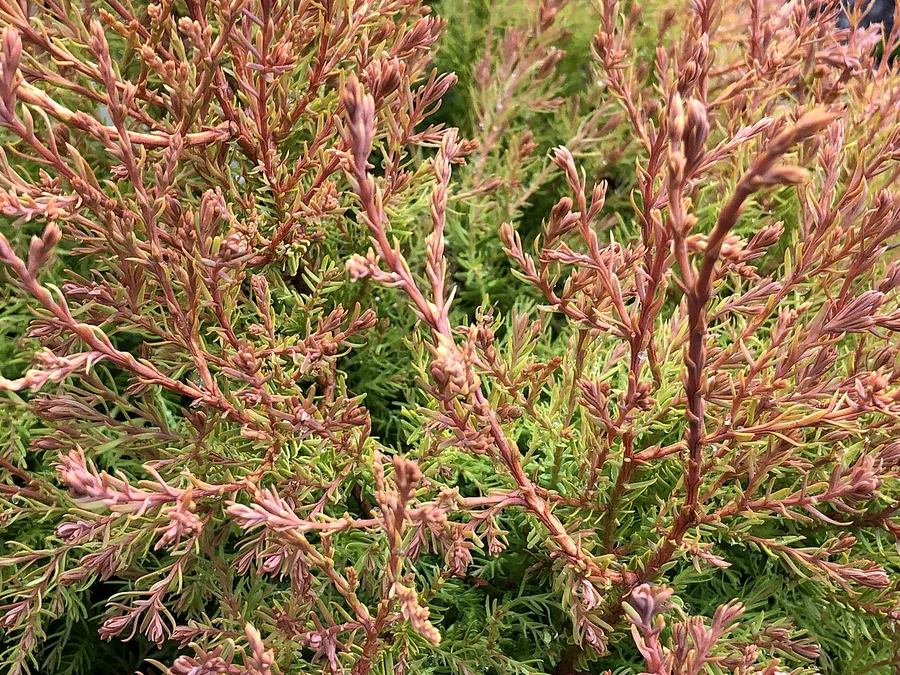
FOLIAGE: Dense, soft sprays of scale-like leaves in feathery, fan-like fronds — the arborvitae texture. Color is the giveaway: bright gold in spring, sage-green in summer, and red/orange flushed tips in cool weather (notably fall and cold spells). Crushed foliage is aromatic.
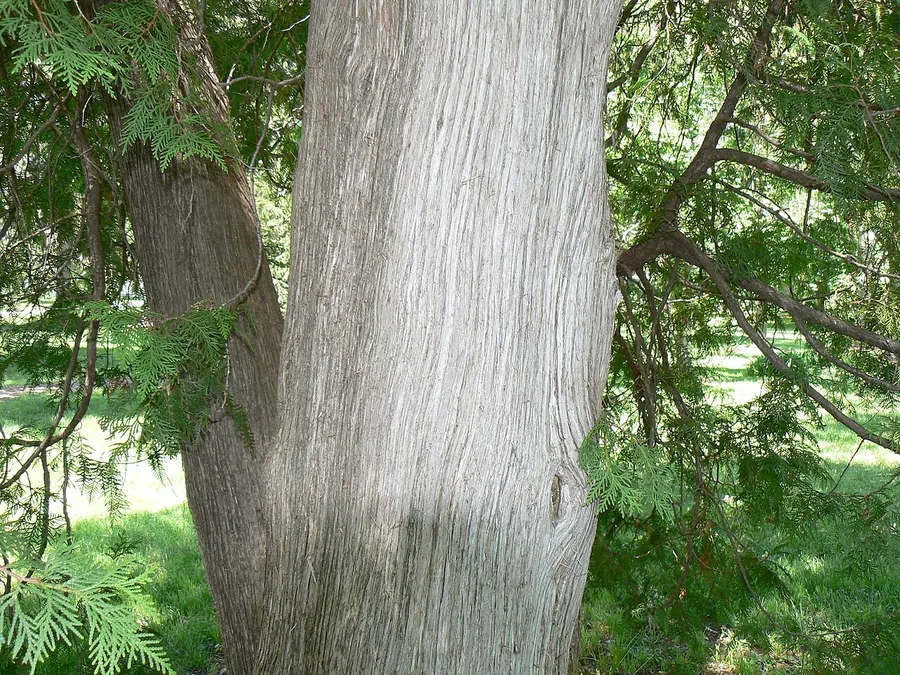
BARK & TRUNK: Reddish-brown, fibrous, stringy bark that shreds in vertical strips with age.
GROWTH HABIT / FORM: Naturally dwarf and globe-shaped — a tight, rounded, slow-growing ball that rarely needs much pruning to hold its dome.
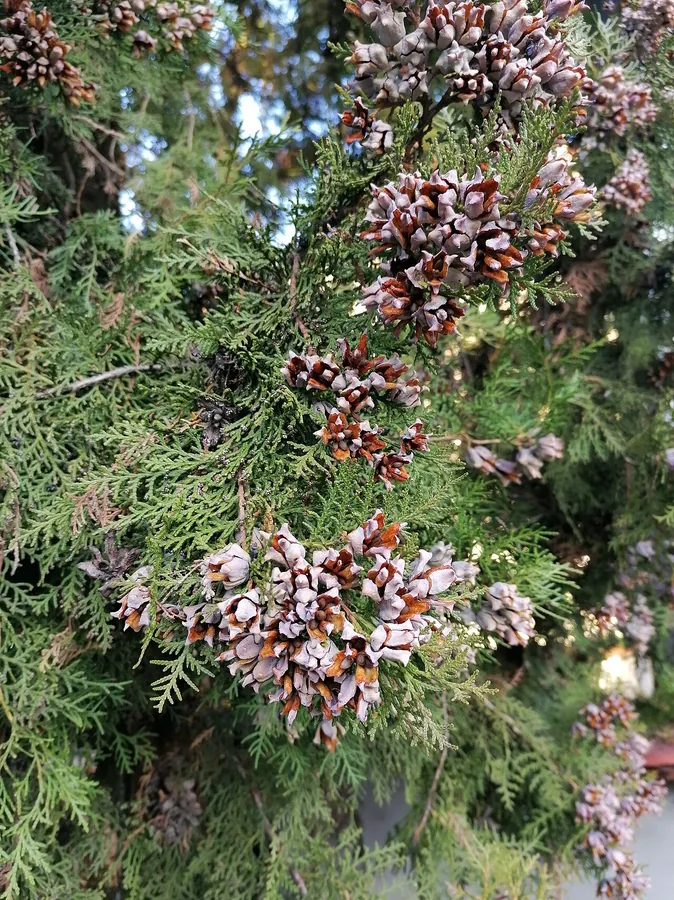
CONES/FLOWERS: Small (about 1 cm) upright elongated cones with a few scales; sparse and inconspicuous on this dwarf.
Look-alikes & how to tell them apart: Fire Chief vs Gold Arborvitae — both are Thuja occidentalis: Fire Chief is a green dwarf globe whose new tips flush red/orange in cool weather, while golden cultivars (e.g. 'Golden Globe', 'Rheingold') hold a steady yellow-gold color year-round. Fire Chief vs other dwarf globe arborvitae (e.g. 'Danica', 'Golden Globe') — the seasonal red tips are the distinguishing mark. Arborvitae vs Leyland Cypress — arborvitae sprays are flatter, softer and far less vigorous; Leyland is a fast, coarse, tree-like hybrid. Arborvitae vs true cedars (Cedrus) — cedars have spiral needle rosettes and upright barrel cones, arborvitae has flat scale sprays. Winter bronzing of the foliage is normal.
Climate & USDA Zone
Hardy in USDA zones 5–9 (the parent species is hardy from zone 3), so it is very cold-tolerant and well suited to cold climates. The cool-weather red tip coloring is actually a feature of cold exposure. It prefers cool, moist conditions over hot, arid ones. In a pot the roots are less insulated than in the ground, so still shelter it during deep freezes and from drying winter wind.
Light
Full sun to part shade. It tolerates part shade, but full sun gives the brightest gold flush and the strongest red tips, plus the densest growth — in heavy shade the colors mute and the dome opens up. Aim for the sunniest spot that does not scorch the foliage in very hot, dry climates. It must live outdoors and will not survive indoors.
Watering
Moisture-loving — keep it evenly moist, never waterlogged. Like all arborvitae, Fire Chief naturally grows in moist sites and resents drying out completely; going bone-dry causes browning and dieback. But it must also have free drainage, since standing water rots the roots. Water when the surface starts to dry, water thoroughly, and let the excess drain freely. In hot weather a small-potted tree may need water once or twice a day. Avoid overhead watering where possible to limit fungal problems.
Soil & Root Care
Use a free-draining bonsai substrate that retains some moisture — akadama (retention) with pumice and lava (drainage) strikes a good balance. Avoid dense, soggy soils. Repot every 2–3 years in early spring as growth begins, gently teasing out and trimming crowded roots and refreshing the mix. Sharp drainage is the key defense against root rot.
Feeding
Feed through the growing season, spring to early autumn, with a balanced fertilizer to keep the foliage dense and well-colored. Go easy on nitrogen — this is a slow dwarf and forcing growth only produces soft, weak shoots and weaker color. Taper off feeding in late summer/autumn so the wood hardens before winter, and stop during dormancy. Do not feed right after repotting.
Pruning & Styling
Critical rule: never cut a branch back beyond its green foliage. Thuja does not reliably back-bud on bare old wood — cut into the leafless interior and that branch stays bare permanently. Refine by pinching and trimming the outer foliage pads only, always leaving green growth on every branch you want to keep. Pinch the soft new tips with your fingers through the growing season to build dense, rounded pads; avoid shearing across the scale fronds with scissors, which browns the cut tips. Because Fire Chief is naturally dwarf and tidy, it needs comparatively little pruning — mostly light pinching to refine the dome. Set any branch structure early while shoots are young and flexible, since a branch cannot be reclaimed by hard cutting later. Wiring works on young, pliable shoots; protect the soft bark from wire bite.
Propagation & Cuttings
Ease: Easy (arborvitae root from cuttings). Best method: cuttings.
This Thuja occidentalis cultivar is propagated from cuttings to stay true — take semi-hardwood cuttings with a heel in autumn to winter, dip in IBA, and keep humid; rooting is reliable but slow (2–3 months). Seed won't reproduce the compact golden-orange 'Fire Chief' form. It doesn't layer readily. For bonsai, cutting-grown stock preserves the dwarf globe habit and colour; arborvitae tolerate shearing and back-bud on younger wood, so build pads while foliage is still active.
Pests
- Spider mites: the most common arborvitae pest; cause patchy bronzing, dieback and premature needle drop, often peaking in cool spring/autumn. Improve airflow, spray foliage, and treat with horticultural oil/miticide.
- Bagworms: caterpillars in spindle-shaped silk bags that can strip foliage and kill the plant; hand-pick bags and treat early.
- Scale and aphids: sap-suckers on foliage; treat with horticultural oil or insecticidal soap.
Disease, Fungus & Infection
- Root rot (Phytophthora / Armillaria): the main soil-borne killer, from waterlogged soil. Prevention is sharp drainage and avoiding soggy conditions.
- Tip/needle blight (fungal): browning and dieback of shoot tips, worse in wet, crowded, poorly ventilated conditions and with overhead watering. Improve airflow, remove affected growth, keep foliage dry.
- Winter bronzing (disorder, not disease): foliage bronzes in cold winter weather — normally a harmless seasonal response (and on Fire Chief, the cool-weather red tips are desirable color), but severe browning can follow winter desiccation from wind and frozen roots.
Most Common Causes of Death
1. Root rot from waterlogged soil — the chief soil-borne killer. Prevention: fast-draining mix, never let the pot stay soggy. 2. Drying out completely / desiccation — arborvitae browns and dies back if allowed to go bone-dry, including winter wind burn. Prevention: keep soil evenly moist; shelter from drying winter wind. 3. Cutting back beyond green foliage — the branch stays bare permanently. Prevention: trim outer pads only, never into bare wood. 4. Keeping it indoors — it cannot survive without sun and a cold winter. Prevention: keep it outdoors year-round. 5. Spider mite infestation — heavy mite damage causes serious bronzing and dieback. Prevention: inspect regularly (especially cool seasons) and treat early. 6. Bagworm defoliation — can kill if unchecked. Prevention: remove bags early. 7. Deep shade — mutes the gold flush and red tips and weakens growth. Prevention: give it full sun.
Seasonal Calendar
- Spring: Repotting window as growth begins; enjoy the bright gold spring flush. Resume feeding. Begin light pinching. Watch for spider mites (which can peak now) and emerging bagworms.
- Summer: Full sun for color; keep soil evenly moist and water often in heat. Light pinching to refine the dome. Monitor for mites, bagworms and tip blight.
- Autumn: The red-orange tips develop in the cooling weather. Taper off feeding so wood hardens. Spider mites can peak again — keep watching. Reduce watering as growth slows but never let it dry out.
- Winter: Dormant and very cold-hardy; cool-weather red tips and normal bronzing are expected. Shelter from drying winter wind and protect potted roots from deep freeze. Water sparingly but do not let it dry out. No feeding.
Close-up photo reference
Compare your tree against these to confirm the species and spot problems early.

_bark_and_foliage.jpg)

Sources
- Gardenia.net — *Thuja occidentalis* Fire Chief (American Arborvitae)
- University of Kentucky Entomology — Common Insect Pests of Arborvitae
- NC State Extension Gardener Plant Toolbox — *Thuja occidentalis*
- Proven Winners — Arborvitae Growing Guide
Buy a Fire Chief Arborvitae bonsai
- All species
- Shop bonsai trees, tools & supplies
- How to Water a Bonsai (Without Killing It)
- Bonsai Soil: What to Buy, What to Mix, and What It Costs
- Why Bonsai Die After Repotting: Diagnosing a Failed Repot
- Pruning vs. Pinching: Shaping Your Bonsai
- Overwintering Bonsai: Cold-Season Care
- Indoor Bonsai Light and Humidity: Making a Windowsill Actually Work
- Root Rot on bonsai
- Underwatering (Drought Stress) on bonsai
- Winter / Frost Damage on bonsai
- Leaf Scorch / Sunburn on bonsai
- Spider Mites on bonsai
- Gold Arborvitae bonsai care
- Douglas Fir bonsai care
- Eastern White Pine bonsai care
- Japanese Yew bonsai care