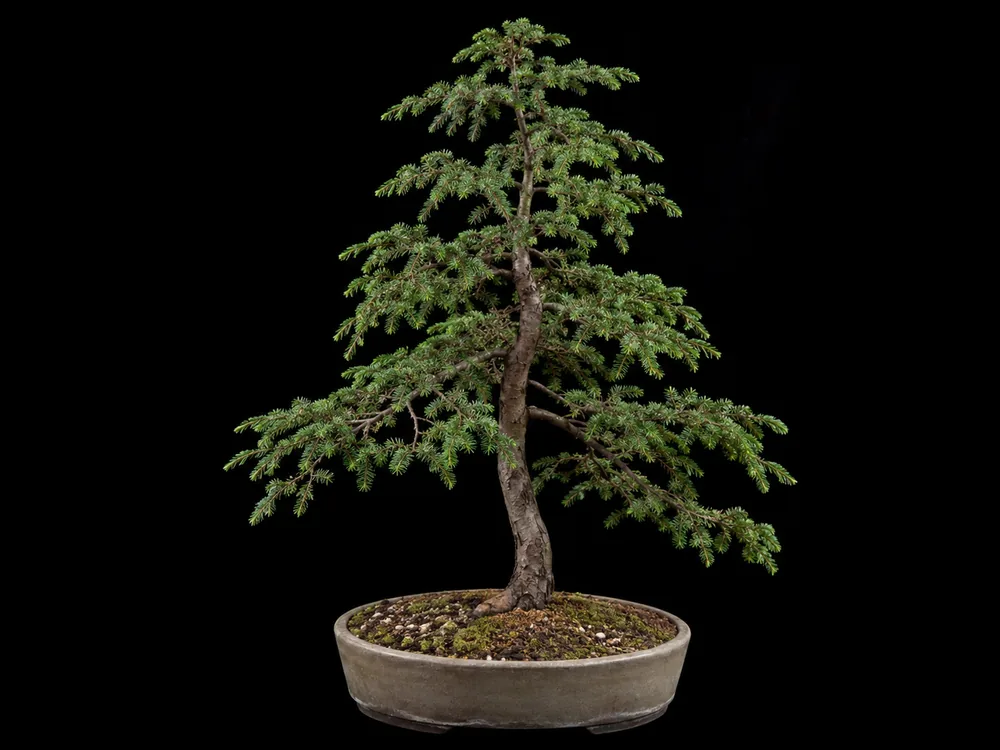
Carolina Hemlock Bonsai Care
Tsuga caroliniana
Zones 4 to 7, outdoor only. A beautiful, somewhat rarer relative of the Eastern Hemlock. Most are lost to drying out.
Pinaceae · Evergreen conifer (small-to-medium native tree; refined as bonsai)
Carolina Hemlock quick reference
| USDA zones | 4–7 |
|---|---|
| Indoor / outdoor | Outdoor only |
| Light | Partial shade to morning sun; protect from harsh afternoon sun |
| Water | Consistently moist (not soggy) — does not tolerate drying out |
| Soil | Moisture-retentive but free-draining, slightly acidic |
| Repot | Every 2–4 years |
| Frost | Cold-hardy; somewhat more heat/drought tolerant than Eastern Hemlock |
| Mature height (as bonsai) | Tree to 25 m; kept 30-70 cm as bonsai |
| Growth rate | Slow |
| Season of interest | Year-round soft evergreen needles |
| Leaf reduction | Good - short needles shorten with pinching |
| #1 cause of death | Hemlock woolly adelgid, plus drought stress |
Overview & Character
Carolina Hemlock is a beautiful, somewhat rarer relative of the Eastern Hemlock, native to a limited range in the southern Appalachian Mountains. Its needles radiate more fully around the shoot (giving a slightly bushier, "bottlebrush" appearance) compared with the flatter, two-ranked sprays of Tsuga canadensis, and it tends to be a denser, more compact tree. Many growers consider it a touch more tolerant of heat, drought, and exposure than the Eastern Hemlock — though both remain cool, moist, woodland conifers at heart.
Its care is essentially the same as Eastern Hemlock: shade-leaning, moisture-loving, and dormancy-requiring. And like the Eastern Hemlock, its overwhelming threat is the hemlock woolly adelgid, which attacks this species as well.
Identification
Foliage: Short, flat, soft needles roughly 1/3–3/4 in (10–18 mm) long, dark glossy green above with two whitish stomatal bands beneath. The defining trait is the arrangement: needles radiate more or less all around the shoot (spirally, in many directions), giving a fuller, bottlebrush-like appearance rather than lying in a flat plane. Needle margins are typically entire (not finely toothed like Eastern Hemlock).
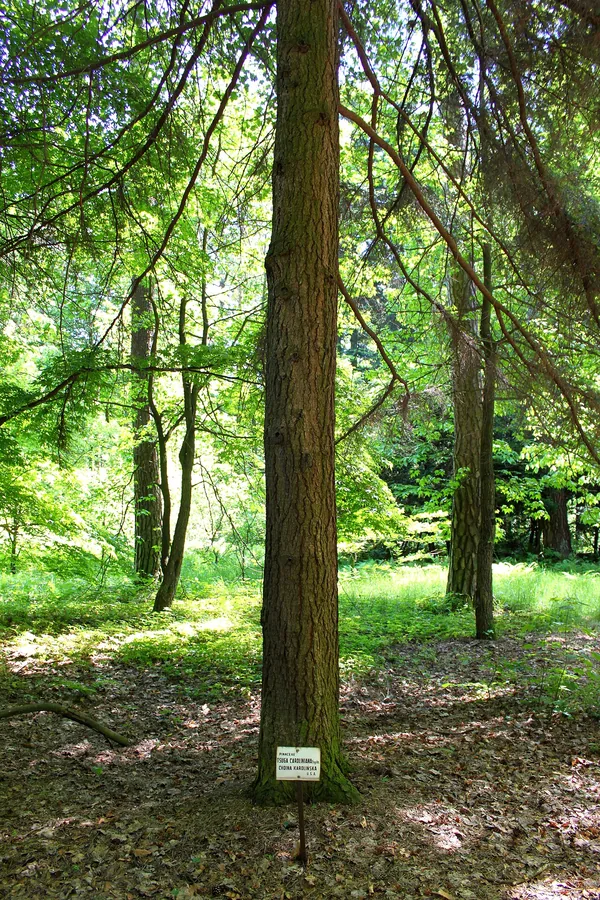
Bark & trunk: Reddish-brown, deeply furrowed and scaly bark; slender, somewhat stiff twigs. The overall tree is denser and more compact than the Eastern Hemlock.
Growth habit / form: A small-to-medium, densely branched native conifer of southern Appalachian rocky slopes; its lush radial foliage suits informal upright, slant, and forest/group plantings.
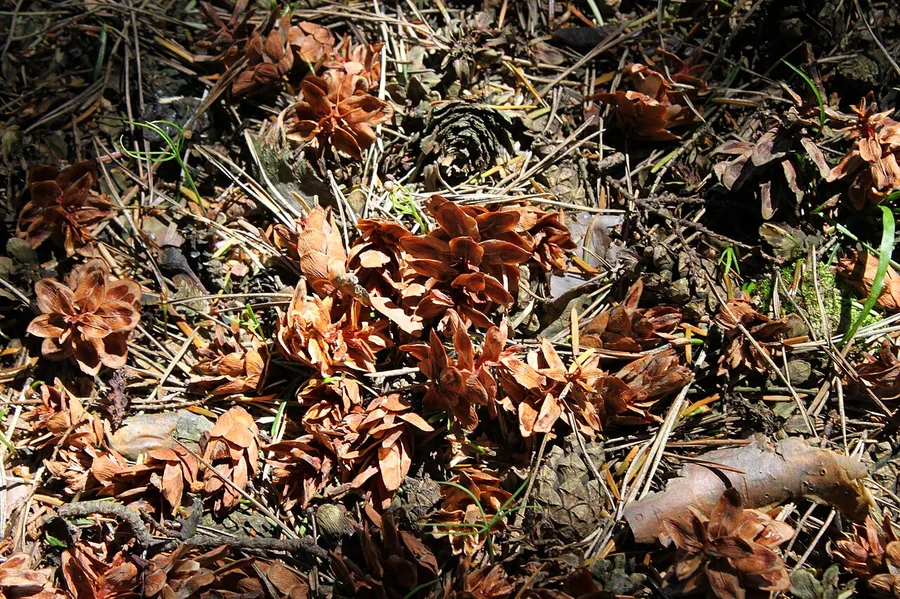
Cones: Pendant oblong seed cones ~2–4 cm — noticeably larger than Eastern Hemlock's, with scales that spread widely open at maturity (almost star-like), brown when ripe.
Look-alikes & how to tell them apart: Most often confused with **Eastern Hemlock (Tsuga canadensis) — the single distinguishing feature is needle arrangement: Carolina Hemlock needles radiate all around the shoot (bottlebrush), whereas Eastern Hemlock needles lie in a flat, two-ranked (comb-like) plane**. (Carolina's larger, open-scaled cones confirm it.)
Climate & USDA Zone
Hardy in roughly USDA zones 4–7. Native to cool, rocky, well-drained mountain slopes of the southern Appalachians, it appreciates cool conditions and winter dormancy but is reputed to handle heat, wind, and drier exposure a little better than the Eastern Hemlock. Grow outdoors year-round — it cannot live indoors.
Light
Partial shade to gentle morning sun is ideal. It tolerates a bit more exposure than the Eastern Hemlock but still benefits from protection from harsh, hot afternoon sun, which can scorch foliage. Bright, dappled light keeps growth dense without burning.
Watering
Prefers evenly moist soil — never waterlogged, never bone-dry.
- Keep the soil consistently moist through the growing season; do not let it dry out, as the shallow root system is drought-sensitive.
- Increase watering in summer heat; reduce in winter while keeping soil from fully drying.
- The mix must still drain freely — moist and airy, not saturated.
- Appreciates humidity; misting and good airflow help, especially in warmer, drier sites.
(Carolina Hemlock's slightly better drought tolerance gives a little more margin for error than the Eastern Hemlock — but treat steady moisture as the rule.)
Soil & Root Care
Soil: Moisture-retentive yet free-draining and slightly acidic. An akadama-based mix with some organic/humus component (composted bark, or a portion of kanuma for acidity and moisture) works well. Carolina Hemlock naturally grows on rocky, well-drained slopes, so lean slightly toward sharper drainage than for Eastern Hemlock while still retaining moisture.
Repotting:
- Frequency: every 2–3 years (young), up to 4 (established).
- Timing: early spring as buds begin to swell.
- Fine, shallow root system — repot gently, remove no more than ~1/3 of roots, and never let roots dry during the work.
- Aftercare: shade, shelter, even moisture, no feeding until recovered.
Feeding
Feed modestly during the growing season. As with all hemlocks, avoid excess nitrogen — high nitrogen both produces weak growth and increases woolly adelgid populations. Use balanced or low-nitrogen feed at moderate rates; skip feeding on freshly repotted, stressed, or dormant trees.
Pruning & Styling
- Back-buds well, including on older wood — good for developing fine ramification and dense foliage pads.
- Pinch/prune spring growth to refine pads; structural pruning in early spring.
- Its fuller, radial needle arrangement gives a lush, slightly bushier look that suits informal upright, slant, and group/forest plantings.
- Wiring: flexible branches; protect the thin bark and watch for wire bite.
Propagation & Cuttings
Ease: Difficult. Best methods: seed; collected.
Hemlock is grown from seed: cold-moist stratify ~2–3 months and surface-sow in spring in cool, humid conditions with light shade; germination is modest and seedlings are slow and delicate. Cuttings root poorly and slowly and are seldom worth it. It does not layer readily. Named/weeping forms are grafted. For bonsai, most Carolina hemlock stock is seedling-grown or collected from the wild where legal; the species resents heat and root disturbance, so propagate cool and transplant carefully.
Pests
- Hemlock woolly adelgid (HWA) — the dominant pest; attacks Carolina Hemlock as it does Eastern Hemlock (see below).
- Elongate hemlock scale — scales on needle undersides; yellowing/decline.
- Spider mites — in hot, dry, stressed conditions; stippling and bronzing.
- Bagworms and other foliage feeders occasionally.
Disease, Fungus & Infection
- **Root rot (Phytophthora)** — from waterlogged soil/poor drainage.
- Needle blights / rusts — fungal needle browning and drop in stagnant, overly wet conditions; improve airflow, remove affected foliage.
- Cankers — fungal branch dieback; prune out and sanitize tools.
Prevention: correct moisture (moist, not wet), strong airflow, and keeping the tree unstressed and vigorous.
Most Common Causes of Death
1. Hemlock woolly adelgid (HWA). Attacks Carolina hemlock as it does Eastern; look for white woolly masses on shoot undersides and treat with oil or a systemic (imidacloprid/dinotefuran). Avoid excess nitrogen. 2. Drought / dry-out. Shallow roots; keep evenly moist — a hard dry-out can be fatal. 3. Heat and harsh sun stress. Provide afternoon shade in hot climates to prevent scorch and mite outbreaks. 4. Root rot from waterlogging. Keep moist but free-draining, never saturated. 5. Over-fertilizing / indoor keeping. Excess nitrogen worsens adelgid; needs outdoor dormancy.
Seasonal Calendar
- Spring: Repot if due (early). Light feeding. Pinch and structural prune. Inspect for HWA.
- Summer: Afternoon shade; keep cool and evenly moist; monitor mites/scale.
- Autumn: Taper feeding; keep monitoring HWA; reduce water as growth slows.
- Winter: Cold dormancy outdoors; keep soil from fully drying; check for HWA in mild spells.
Close-up photo reference
Compare your tree against these to confirm the species and spot problems early.


Sources
Where to buy a Carolina Hemlock bonsai
We don’t stock Carolina Hemlock at the moment. These species need similar care and we have them now — they are the closest match in our catalogue.
- Eastern Hemlock (Canadian Hemlock) — similar care, in stock now
- Atlantic White Cedar — similar care, in stock now
- Dawn Redwood — similar care, in stock now
Browse all bonsai trees for sale or find a species matched to your climate and space.
- All species
- Shop bonsai trees, tools & supplies
- How to Water a Bonsai (Without Killing It)
- Bonsai Soil: What to Buy, What to Mix, and What It Costs
- Why Bonsai Die After Repotting: Diagnosing a Failed Repot
- Pruning vs. Pinching: Shaping Your Bonsai
- Overwintering Bonsai: Cold-Season Care
- Indoor Bonsai Light and Humidity: Making a Windowsill Actually Work
- Root Rot on bonsai
- Underwatering (Drought Stress) on bonsai
- Winter / Frost Damage on bonsai
- Leaf Scorch / Sunburn on bonsai
- Spider Mites on bonsai
- Eastern Hemlock (Canadian Hemlock) bonsai care
- Atlantic White Cedar bonsai care
- Cryptomeria / Japanese Cedar bonsai care
- Dawn Redwood bonsai care