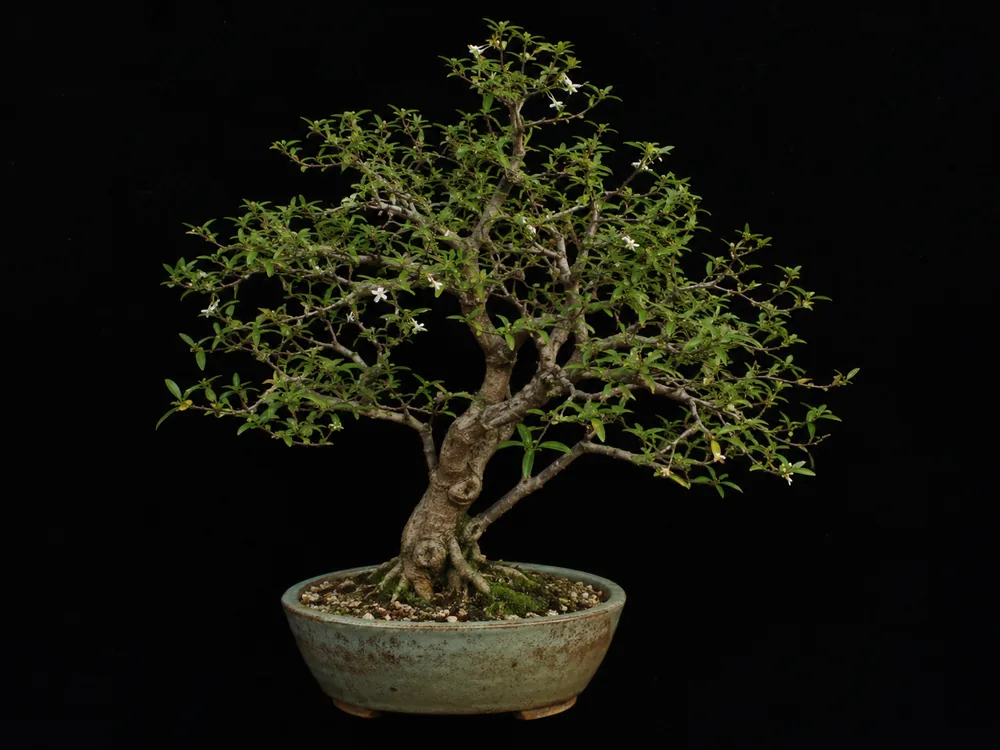
Water Jasmine Bonsai Care
Wrightia religiosa
Zones 10 to 11, indoor or out. One of the most popular flowering tropical bonsai in Southeast Asia. Most are lost to drying out.
Apocynaceae (dogbane family) · Tropical evergreen flowering shrub
Water Jasmine quick reference
| USDA zones | 10–11 (grow indoors / under glass in cooler zones) |
|---|---|
| Indoor / outdoor | Indoor-capable — loves heat & sun; outdoors in warmth |
| Light | Full sun — as much direct light as possible |
| Water | Likes lots of water — never let it dry; not waterlogged |
| Soil | Free-draining, moisture-retentive mix |
| Repot | Every 1–2 years, warmest part of summer |
| Frost | Tender — drops leaves below ~65 °F; protect from frost |
| Mature height (as bonsai) | Shrub to 6m in nature; bonsai usually 20-50cm. |
| Growth rate | Fast (tropical, buds strongly). |
| Season of interest | Warm months for fragrant white flowers; twisting roots. |
| Leaf reduction | Good; leaves reduce well with pinching. |
| #1 cause of death | Drying out; cold (+ overwatering when defoliated) |
Overview & Character
The Water Jasmine is one of the most popular flowering tropical bonsai in Southeast Asia, prized for masses of small, fragrant, bell-shaped white flowers (often pendulous), glossy foliage, and a fast-thickening characterful trunk. It is vigorous, back-buds strongly, and flowers freely in warmth — rewarding and showy.
It loves heat and full sun and wants plenty of water (it must never dry out), with no real cold tolerance — below about 65 °F it can drop its leaves, and a defoliated plant must not be overwatered. Its fast roots and vigorous growth mean frequent repotting and trimming. Given warmth, sun, and steady water it is fast and floriferous.
Identification
Foliage: Small, opposite, glossy ovate-elliptic leaves ~2–4 cm, deep green, on slender twiggy branches; exudes milky latex when cut (an Apocynaceae trait).
Bark & trunk: Pale grey-brown, thickening and roughening quickly to give an aged trunk young.
Growth habit / form: Vigorous, twiggy, fast-ramifying evergreen shrub; suits informal upright, weeping, and flowering styles.
Flowers / fruit: The signature feature — small, fragrant, white five-petalled bell flowers (single or double in cultivars), often hanging, produced in flushes through warm months.
Look-alikes & how to tell them apart: The pendulous fragrant white flowers and milky latex distinguish it; superficially resembles true jasmines (Jasminum) but is unrelated — Wrightia has opposite glossy leaves, milky sap, and the characteristic bell flowers; named 'religiosa' for its temple plantings.
Climate & USDA Zone
Hardy outdoors in frost-free USDA zones 10–11. Tropical and cold-sensitive — it can go semi-deciduous below ~65 °F and is damaged by frost. In cooler zones grow as an indoor/greenhouse bonsai, summered outdoors in heat. Loves warmth, sun, and humidity.
Light
Full sun — as much direct light as possible. Strong light drives compact growth and heavy flowering; indoors give the brightest window and supplement if needed. Shade reduces bloom and tightness.
Watering
It likes a lot of water — water thoroughly as soon as the surface dries, and never let the soil dry out completely — but don't keep it waterlogged.
- A thirsty grower in warmth; may need daily (or more) watering in summer.
- Caution when defoliated/cool: if it drops leaves in cool conditions, reduce watering sharply to avoid rotting the roots.
- Maintain free drainage.
Soil & Root Care
Soil: A free-draining yet moisture-retentive bonsai mix (akadama / pumice / lava).
Repotting:
- The roots grow very strongly — check yearly and repot at least every 2 years, in the warmest part of summer, with considerable root pruning.
- It re-establishes fast in heat.
- Aftercare: warm, bright, evenly moist while recovering.
Feeding
A hungry plant that likes high nitrogen: solid organic fertilizer every ~4 weeks or a weekly liquid feed through the growing season; about monthly in cooler/slower winter growth. Don't feed a defoliated, cold, or freshly repotted plant heavily.
Pruning & Styling
- Trimming: very vigorous — for fine ramification, constantly trim new shoots back to one leaf pair after several pairs develop; it back-buds well even after heavy pruning.
- Flowering: blooms in flushes on growth in warmth; light continual trimming keeps it shapely while still flowering.
- Wiring: young shoots are flexible; protect the bark; remove before bite.
- Suits informal upright, weeping, and flowering styles. (Milky latex is mildly toxic.)
Propagation & Cuttings
Ease: Easy. Best methods: cuttings; air-layering; seed.
Wrightia religiosa roots readily from semi-hardwood cuttings in the warm season with hormone under humidity, and air-layers well — the usual ways to build trunk quickly. Fresh seed germinates warm. Keep everything tropical-warm and bright. For bonsai the small glossy leaves and fragrant pendulous white flowers are the draw, and it is a favourite Southeast Asian subject; cuttings and layers develop fast, and the plant flowers young and back-buds strongly, tolerating frequent trimming.
Pests
- Scale insects and mealybugs
- Aphids
- Spider mites (hot, dry indoor air)
- Whitefly
Treat with horticultural oil, insecticidal soap, or appropriate systemics; catch infestations early.
Disease, Fungus & Infection
Generally healthy in warmth; problems are mostly cultural:
- Root rot — from overwatering, especially when cool or defoliated.
- Yellow leaves — from overwatering or underfeeding (a common Wrightia complaint).
- Leaf drop — from cold (semi-deciduous below ~65 °F).
Prevention: heat, full sun, generous water in growth (less when cool/defoliated), free drainage, steady feeding.
Most Common Causes of Death
1. Drying out. It must never dry — keep well-watered in growth. 2. Cold. Tender — drops leaves below ~65 °F and is killed by frost; keep warm. 3. Overwatering when defoliated/cool. Reduce water sharply if it drops its leaves, or the roots rot. 4. Underfeeding. A hungry plant — yellow leaves often mean it needs feeding. 5. Low light. Poor flowering and leggy growth; give full sun.
Seasonal Calendar
- Spring: Resume heavy feeding; trim for ramification; full sun; keep well-watered; move outdoors in warmth.
- Summer: Full sun and heat; water generously (never dry); repot if due (warmest nights); feed high-nitrogen; flower flushes.
- Autumn: Bring indoors before it cools below ~65 °F; maintain warmth, light, moisture.
- Winter: Warm, bright spot; if it drops leaves in cool air, cut back watering; feed lightly.
Sources
Where to buy a Water Jasmine bonsai
We don’t stock Water Jasmine at the moment. These species need similar care and we have them now — they are the closest match in our catalogue.
- Black Olive — similar care, in stock now
- Bougainvillea — similar care, in stock now
Browse all bonsai trees for sale or find a species matched to your climate and space.
- All species
- Shop bonsai trees, tools & supplies
- How to Water a Bonsai (Without Killing It)
- Bonsai Soil: What to Buy, What to Mix, and What It Costs
- Why Bonsai Die After Repotting: Diagnosing a Failed Repot
- Pruning vs. Pinching: Shaping Your Bonsai
- Overwintering Bonsai: Cold-Season Care
- Indoor Bonsai Light and Humidity: Making a Windowsill Actually Work
- Root Rot on bonsai
- Overwatering on bonsai
- Underwatering (Drought Stress) on bonsai
- Winter / Frost Damage on bonsai
- Insufficient Light (Etiolation) on bonsai
- Bahama Berry bonsai care
- Black Olive bonsai care
- Bougainvillea bonsai care
- Brazilian Rain Tree bonsai care