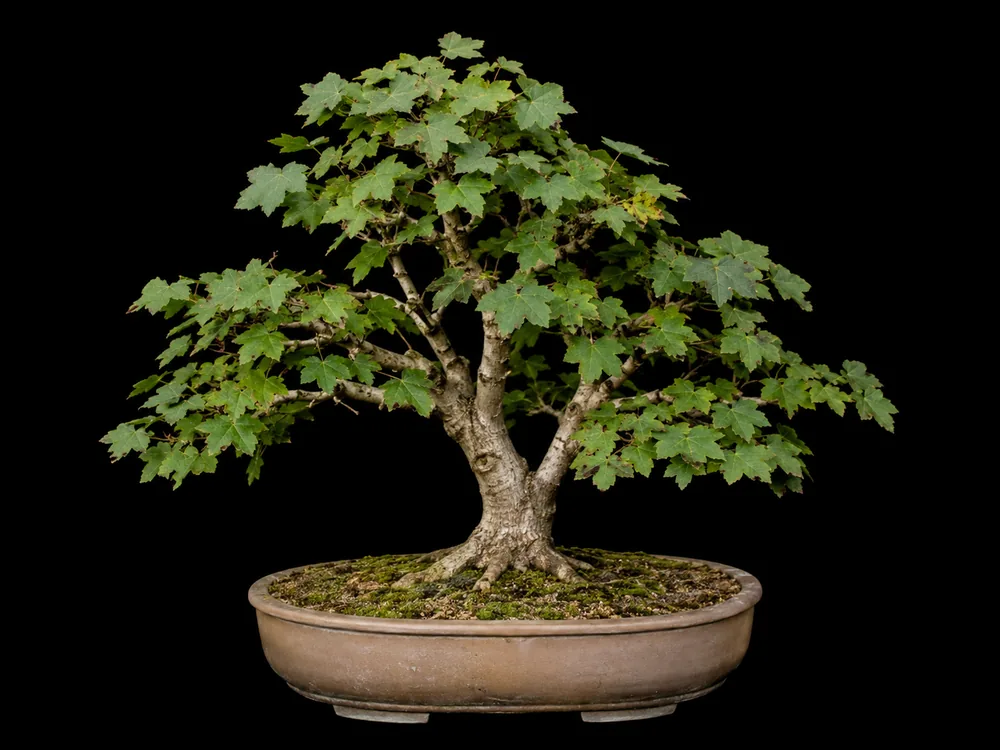
Sycamore Maple Bonsai Care
Acer pseudoplatanus
Zones 4 to 7, outdoor. A big, tough, fast-growing European maple. Most are lost to overwatering.
Sapindaceae (maple family) · Deciduous broadleaf tree
Sycamore Maple quick reference
| USDA zones | 4–7 |
|---|---|
| Indoor / outdoor | Outdoor (deciduous; needs seasons and dormancy) |
| Light | Full sun to part shade; some shade in fierce heat |
| Water | Keep evenly moist; never waterlogged |
| Soil | Free-draining, moisture-retentive mix |
| Repot | Every 2 years (young), 3–4 (older), early spring |
| Frost | Very hardy; protect potted roots in hard freeze |
| Mature height (as bonsai) | Tree to 35m in nature; bonsai usually 30-70cm. |
| Growth rate | Fast (vigorous, robust). |
| Season of interest | Autumn foliage; spring flowers; flaking bark. |
| Leaf reduction | Moderate; large leaves reduce with defoliation but stay coarse. |
| #1 cause of death | Overwatering/root rot; long internodes from unchecked vigor |
Overview & Character
The Sycamore Maple is a big, tough, fast-growing European maple. As bonsai it is valued for hardiness, easy culture, attractive five-lobed leaves, and flaking maturing bark — but its sheer vigor is a double-edged sword: young trees grow rapidly and throw long internodes, so it demands frequent trimming and pinching to stay refined. It is sometimes called a poor bonsai candidate for exactly this reason, yet handled with discipline it makes a robust, characterful tree.
It wants even moisture, dislikes stagnant wet soil, and needs a real winter dormancy. Control its energy with timely pruning and it rewards you with a sturdy trunk and good structure.
Identification
Foliage: Large, opposite, five-lobed palmate leaves ~10–16 cm (reducible on bonsai), dark green above and often purplish beneath, with coarsely toothed margins; turns yellow-brown in autumn.
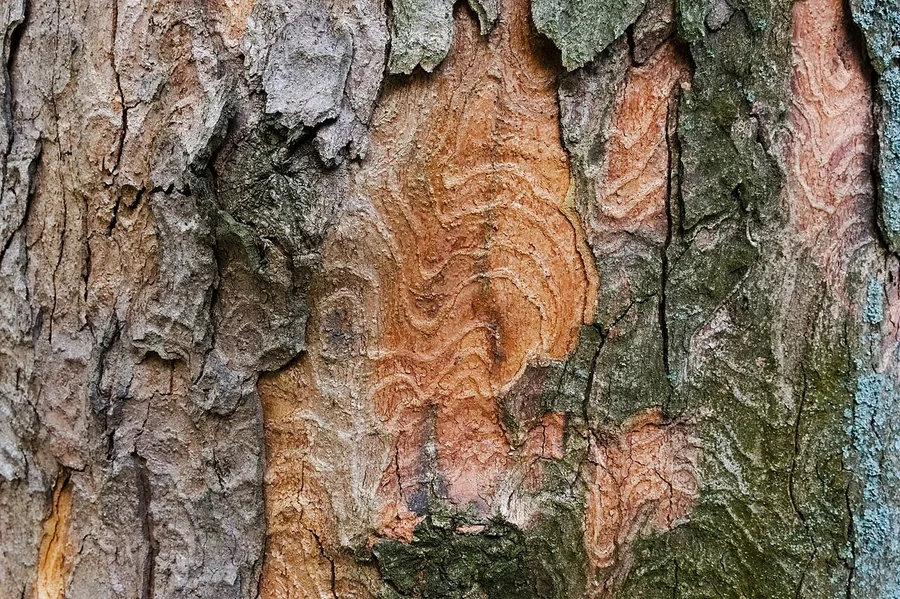
Bark & trunk: Grey-brown, smooth when young, maturing to flaking, scaly plates that reveal pinkish-brown patches — attractive with age.
Growth habit / form: Vigorous, fast, upright with a broad crown; long internodes if unchecked. Suits informal upright once internodes are managed.
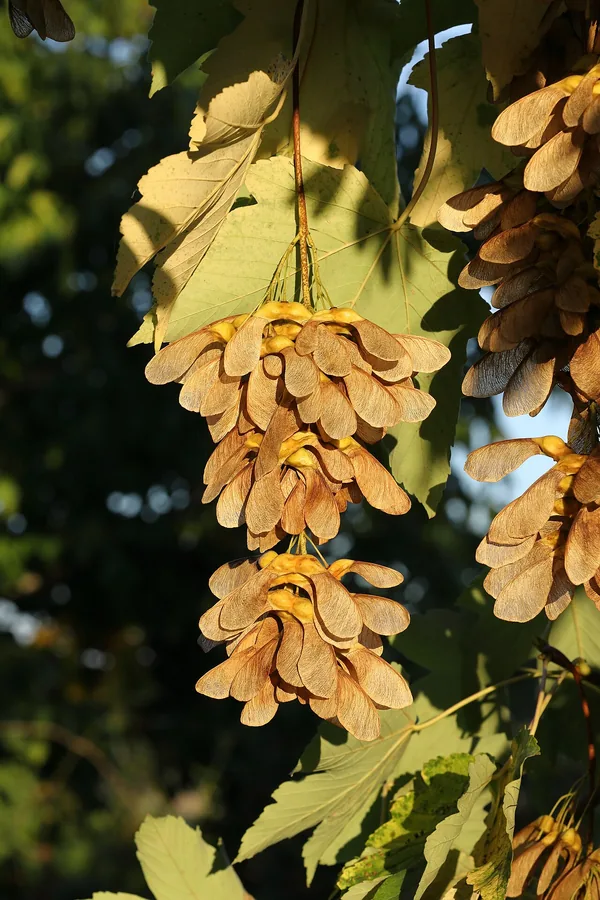
Flowers / fruit: Hanging greenish flower racemes in spring, followed by paired winged samaras set at roughly a right angle.
Look-alikes & how to tell them apart: Resembles other big palmate maples; distinguished from Norway Maple by leaf teeth (Sycamore: blunt, rounded teeth; Norway: sharp, with milky sap in the petiole) and from plane trees (Platanus, confusingly also called 'sycamore' in the US) by its opposite leaves and winged maple seeds.
Climate & USDA Zone
Very hardy in USDA zones 4–7. Deciduous and dormancy-dependent, grown outdoors year-round; protect potted roots in hard freezes. Tolerant of wind, coastal salt, and poor soil.
Light
Full sun to partial shade. Full sun gives the most compact growth; in fierce summer heat some afternoon shade reduces leaf scorch on the large leaves.
Watering
Keep evenly moist; avoid waterlogging — the roots dislike stagnant moisture.
- Water as the surface begins to dry through the growing season.
- In winter reduce watering but do not let the soil dry out completely, which can harm the roots.
- Free drainage is important given how much it drinks in growth.
Soil & Root Care
Soil: A free-draining but moisture-retentive bonsai mix (akadama / pumice / lava).
Repotting:
- Frequency: young trees every 2 years (they fill pots fast); older every 3–4 years.
- Timing: early spring before bud break.
- Tolerates root pruning well; reduce up to ~1/3.
- Aftercare: keep evenly moist and sheltered while re-establishing.
Feeding
Feed monthly with a balanced organic fertilizer in the growing season; a little extra nitrogen in early spring drives growth, then reduce in late autumn to harden off. With such a vigorous tree, avoid overfeeding which worsens long internodes. Don't feed freshly repotted or dormant trees.
Pruning & Styling
- Control the vigor: trim new shoots back to 1–2 leaf pairs once they have extended a few nodes; frequent pinching/trimming is essential to keep internodes short.
- Leaf reduction: partial defoliation/leaf-cutting on a strong tree reduces the large leaves.
- Wiring: best in late winter when branches are flexible; protect bark on thicker branches.
- Suits informal upright; manage energy first, refine second.
Propagation & Cuttings
Ease: Easy. Best methods: seed; air-layering.
Acer pseudoplatanus grows readily from its paired samaras — cold-moist stratify ~2–3 months (or sow fresh) and sow in spring; germination is good and it self-sows freely. Softwood cuttings root only modestly, so cultivars are grafted or air-layered (spring, reliable). For bonsai the large leaves reduce only somewhat, suiting larger sizes, but the tree is vigorous, tough, and back-buds strongly; seedlings and layers develop quickly, and variegated forms must be layered or grafted to stay true.
Pests
- Aphids (heavy on new growth; sticky honeydew)
- Scale insects and sooty mold
- Spider mites (hot, dry conditions)
Treat with horticultural oil, insecticidal soap, or appropriate systemics; catch infestations early.
Disease, Fungus & Infection
Generally tough; maple-typical risks:
- **Tar spot (Rhytisma)** — large black leaf blotches; cosmetic, clear fallen leaves.
- Powdery mildew — in damp, crowded conditions; improve airflow.
- Verticillium wilt — soil-borne wilt/dieback; clean soil and tools.
- Root rot — from waterlogged, stagnant soil.
Prevention: even moisture with free drainage, airflow, and clean tools.
Most Common Causes of Death
1. Overwatering / root rot. It dislikes stagnant wet soil — keep moist but sharply drained. 2. Unchecked vigor / long internodes. Not fatal but ruins the design; trim and pinch frequently. 3. Verticillium wilt. Use clean soil and tools; remove affected wood. 4. Leaf scorch in extreme heat. Some afternoon shade in fierce sun. 5. Unprotected potted roots in severe freezes. Hardy tree, but shelter the pot.
Seasonal Calendar
- Spring: Repot if due (before bud break); leaves emerge fast; begin feeding (modest); start trimming early to control internodes.
- Summer: Even moisture; afternoon shade in fierce heat; frequent trimming/pinching; optional leaf-cut on strong trees.
- Autumn: Yellow-brown color; taper feeding/water as it goes dormant.
- Winter: Dormant/leafless; wire while flexible; keep just-moist (not bone-dry); protect potted roots.
Close-up photo reference
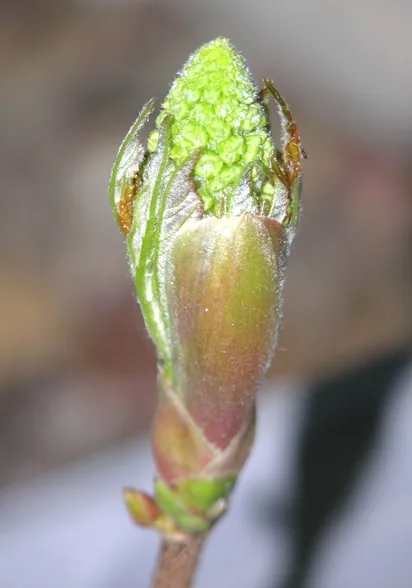
Compare your tree against these to confirm the species and spot problems early.



Sources
Growing a Sycamore Maple bonsai
We don’t currently stock Sycamore Maple trees. If you already have one — or you are sourcing one elsewhere — these are the supplies its care depends on:
- Bonsai Decorative Crushed Shale Top of Soil Dressing — $4.95
- Bonsai Zen Garden Grooming Rake — $8.95
- Metal Impression Tags Package of 4 — $2.95
Browse all bonsai trees, tools and soil or find a species we stock that suits your conditions.
- All species
- Shop bonsai trees, tools & supplies
- How to Water a Bonsai (Without Killing It)
- Bonsai Soil: What to Buy, What to Mix, and What It Costs
- Why Bonsai Die After Repotting: Diagnosing a Failed Repot
- Pruning vs. Pinching: Shaping Your Bonsai
- Overwintering Bonsai: Cold-Season Care
- Indoor Bonsai Light and Humidity: Making a Windowsill Actually Work
- Root Rot on bonsai
- Overwatering on bonsai
- Underwatering (Drought Stress) on bonsai
- Winter / Frost Damage on bonsai
- Leaf Scorch / Sunburn on bonsai
- Amur Maple bonsai care
- Field Maple bonsai care
- Red Maple bonsai care
- Sugar Maple bonsai care