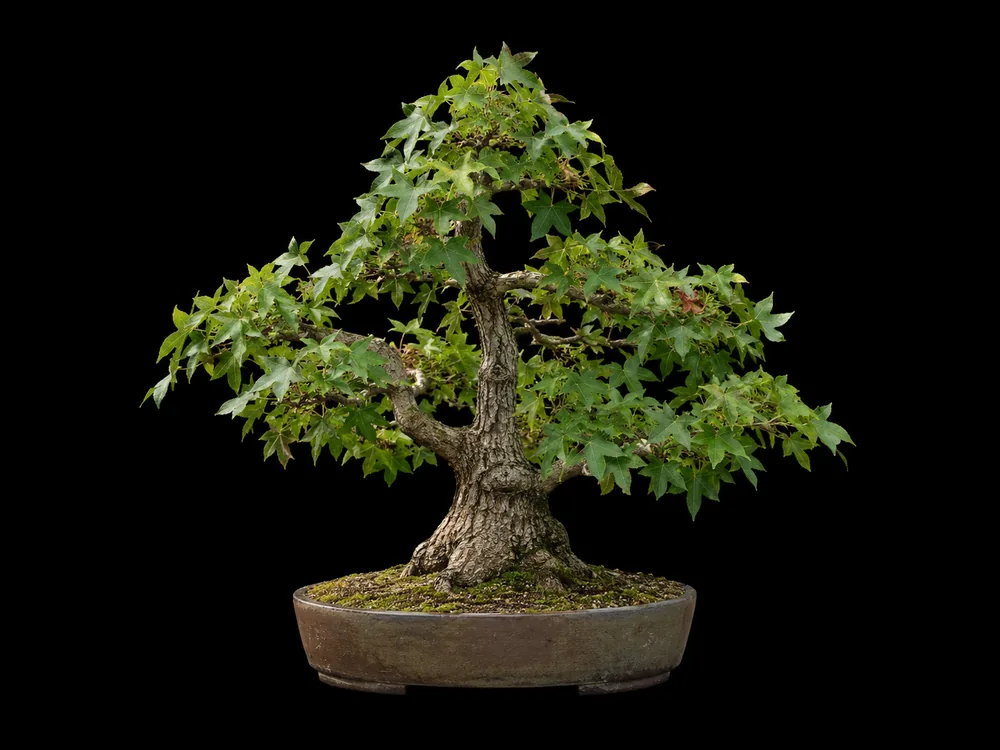
Sweetgum Bonsai Care
Liquidambar styraciflua
Outdoor only. Grown almost entirely for one spectacular payoff: its autumn color. Most are lost to drying out.
Altingiaceae (formerly Hamamelidaceae / witch-hazel family) · Deciduous broadleaf tree; vigorous, native to eastern North America and Central America
Sweetgum quick reference
| USDA zones | ~5–9 (protect potted roots from hard frost) |
|---|---|
| Indoor / outdoor | Outdoor only — needs winter dormancy |
| Light | Full sun for best fall color; light midday shade in extreme summer heat |
| Water | Moist — a moisture-loving species; keep evenly damp, never bone-dry |
| Soil | Free-draining, slightly acidic (pH ~6–6.5); use rain/soft water if tap is alkaline |
| Repot | Every 2 years (young trees) to 3–4 years (older) in early spring |
| Frost | Hardy in ground, but potted roots need protection from hard/prolonged frost |
| Mature height (as bonsai) | Tree to 25m in nature; bonsai often 30-70cm. |
| Growth rate | Moderate to fast. |
| Season of interest | Autumn for vivid red, purple and orange star leaves. |
| Leaf reduction | Moderate; lobed leaves reduce with defoliation. |
| #1 cause of death | Drying out the rootball (and root damage from hard frost on an unprotected pot) |
Overview & Character
Sweetgum is grown almost entirely for one spectacular payoff: its autumn color. Its glossy, star-shaped leaves turn through yellow, orange, scarlet, deep crimson and purple — often several colors on one tree at once — making it one of the most brilliant fall performers available for bonsai. It is a vigorous, fast-growing species that builds trunk and branch quickly and back-buds well, so it develops as bonsai material faster than many natives.
Its quirks are characterful: corky "wings" form along the twigs, and it produces hard, spiky spherical seed balls. The leaves are large for a small bonsai and resist heavy reduction, so sweetgum suits medium to large bonsai better than tiny shohin. Best styles are informal upright, formal upright and broom, which show off the straight trunk and the autumn canopy.
Identification
FOLIAGE: The signature feature — alternate, simple leaves that are palmately lobed with 5–7 pointed, star-like lobes, glossy green, with finely serrate margins, and aromatic when crushed. The arrangement is alternate (unlike maples, which are opposite). Spectacular multi-colored autumn display.
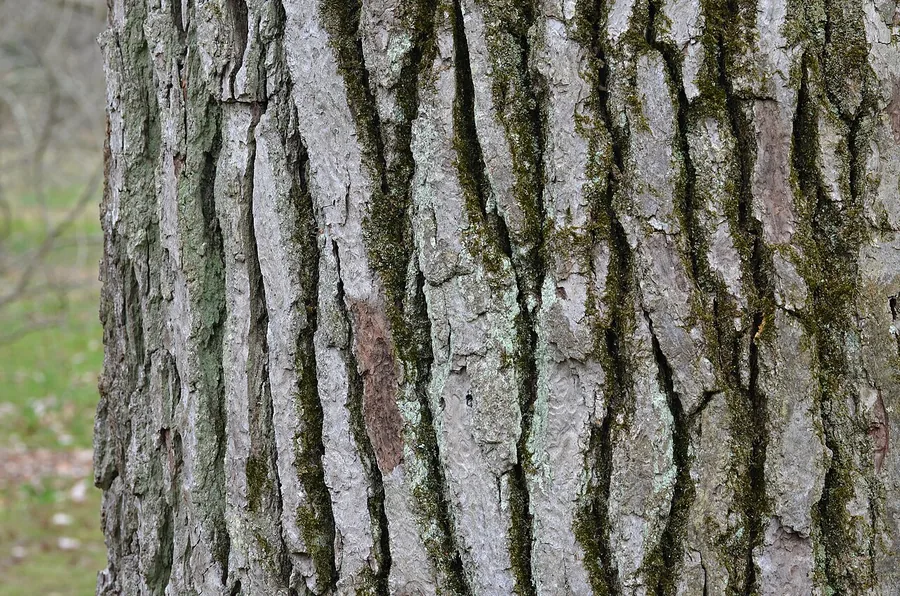
BARK & TRUNK: Bark is grey-brown and develops deep, narrow furrows with age. A diagnostic feature is the corky, winged ridges that grow along younger twigs and branches.
GROWTH HABIT/FORM: A vigorous, fast-growing tree, naturally pyramidal/conical when young, rounding with age. Strong, upright growth with a clear central leader tendency.
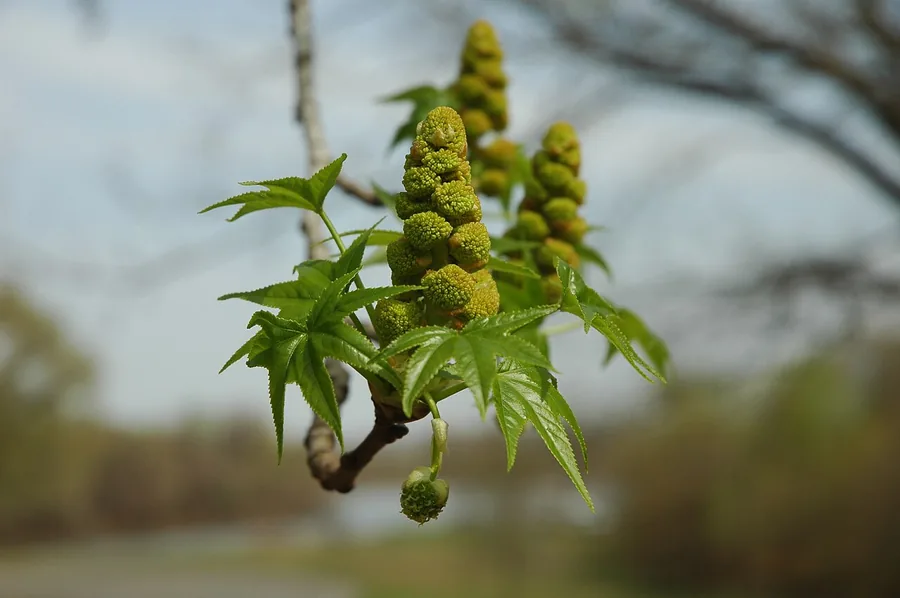
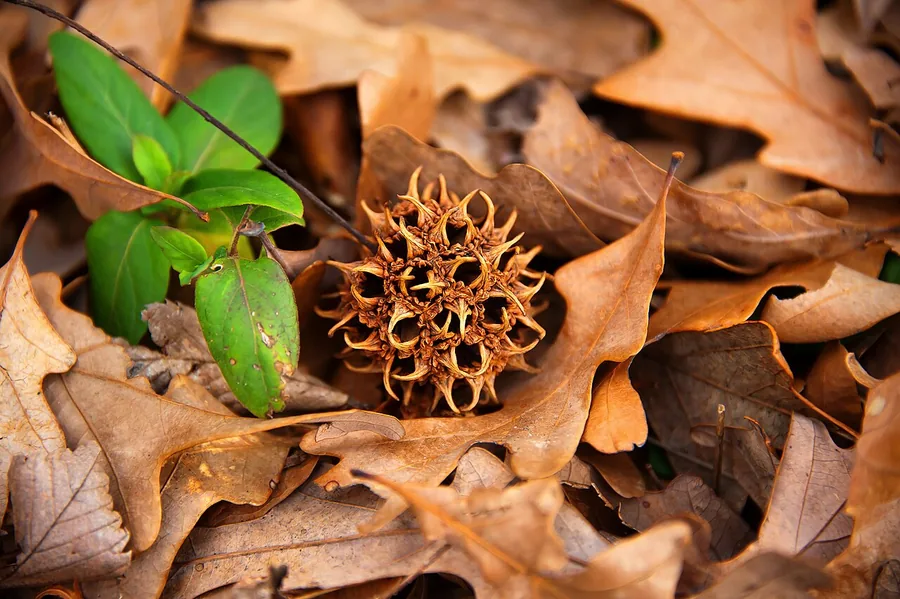
FLOWERS/FRUIT/SEEDS: Monoecious; inconspicuous greenish flowers in spring. The fruit is the famous spiky, woody, ball-shaped "gumball" (a cluster of capsules with hooked points), hanging on a stalk and persisting into winter.
Look-alikes & how to tell them apart: Most often mistaken for maples (Acer) because of the lobed leaves — but sweetgum leaves are alternate and star-shaped with 5–7 fine-toothed lobes, while maple leaves are opposite. The corky winged twigs and the spiky round seed balls are unmistakable and confirm sweetgum at a glance. Oriental sweetgum (Liquidambar orientalis) is similar but smaller-leaved and is sometimes preferred for bonsai for that reason.
Climate & USDA Zone
Hardy roughly across USDA zones 5–9. In the ground it tolerates real cold, but as a potted bonsai the roots are more exposed and need protection from hard, prolonged frost — a frozen-solid pot can damage the root system. It naturally favors moist bottomlands, so it likes humidity and steady moisture and dislikes hot, dry, windy positions. A drop in autumn night temperatures is what triggers the brilliant fall color, so cool autumns produce the best display.
Light
Grow in full sun for the strongest growth and, crucially, the most intense autumn color. In regions with fierce summer heat, provide some shade over midday and early afternoon to prevent leaf scorch and to keep the rootball from cooking. Good light keeps growth compact and color vivid.
Watering
Sweetgum likes it MOIST. As a bottomland species it wants consistently damp soil and will not tolerate the rootball drying out — drought-stress causes leaf scorch and dieback. Water thoroughly as soon as the surface begins to dry; in hot summer weather daily watering is often necessary. Allow only the very top layer to dry slightly between waterings; never let the root ball dry out completely. It is not a bog plant, so the soil must still drain freely — keep it damp, not waterlogged. Where tap water is hard/alkaline, use rainwater or a mix to keep the slightly acidic pH it prefers.
Soil & Root Care
Use a free-draining bonsai mix that still holds moisture (akadama-leaning blend with pumice and lava), kept slightly acidic (pH ~6–6.5). Hard, alkaline water over time can raise pH and cause chlorosis, so rainwater is ideal. Sweetgum is vigorous and produces strong roots; repot young trees every 2 years and older specimens every 3–4 years in early spring before bud break, pruning roots moderately. Always protect newly repotted trees from frost.
Feeding
Feed generously through the growing season to fuel its strong growth and ramification. Start once spring leaves harden and continue to early autumn. A balanced fertilizer suits it; for the best fall color reduce nitrogen toward late summer. An acidic/ericaceous-leaning feed can help maintain leaf color where water is hard. Do not feed stressed or freshly repotted trees.
Pruning & Styling
Sweetgum's vigor and good back-budding make it responsive to pruning. Do structural pruning in late winter to early spring before buds open; the strong growth will fill in quickly. Through the growing season, pinch and cut back new shoots to control extension and build ramification. Because the leaves are large, defoliation (partial, on healthy trees) can be used to reduce leaf size and improve ramification — but use it sparingly and only on vigorous specimens. The corky winged twigs are part of the tree's charm; bear them in mind when wiring. Young shoots wire well; older wood is stiff. Seal larger cuts.
Propagation & Cuttings
Ease: Moderate. Best methods: seed; softwood cuttings; air-layering.
Liquidambar styraciflua grows from seed — collect the spiky gumball fruit, extract the seed, cold-moist stratify ~1–3 months, and sow in spring; germination is fair. Softwood cuttings in early summer under mist with IBA root at moderate rates, and air-layering works in spring. For bonsai the star-shaped leaves and brilliant autumn colour are the appeal; the leaves reduce with ramification, the tree is vigorous and back-buds strongly, and seedlings or layers develop quickly.
Pests
- Aphids — on soft new growth; sticky honeydew and sooty mold. Treat with insecticidal soap/neem.
- Scale insects (incl. walnut scale) — bumps on twigs; treat with horticultural oil.
- Caterpillars (incl. tent caterpillars and fall webworm) — defoliate foliage; remove by hand and treat.
- Spider mites — in hot, dry conditions; stippled bronzed leaves.
- Borers (e.g. American plum borer) — chiefly attack weakened trees; keep the tree vigorous.
Disease, Fungus & Infection
- Leaf spot fungi — brown/black blotches in damp conditions; remove affected leaves, improve airflow.
- Bleeding necrosis / canker — stress- and wound-related; keep the tree healthy and cuts clean.
- Iron chlorosis — yellowing leaves with green veins from alkaline soil/water; correct pH with rainwater and acidic feed.
- Root rot — from waterlogged soil; prevent with free-draining mix.
Most Common Causes of Death
1. Letting the rootball dry out. Sweetgum is moisture-loving; a severe dry-out scorches foliage and kills branches. Prevention: keep soil consistently damp, water daily in summer heat, never bone-dry. 2. Hard frost on an unprotected pot. Potted roots are far more frost-exposed than in the ground and can be killed by a deep freeze. Prevention: overwinter in a cold frame, mulch, or sheltered spot so the rootball never freezes solid; protect newly repotted trees especially. 3. Waterlogging / root rot. Constantly soggy soil suffocates roots. Prevention: free-draining soil and a well-drained pot. 4. Chlorosis from alkaline water. Persistent hard water raises pH and starves the tree of iron. Prevention: use rainwater/soft water, keep the mix slightly acidic, feed with an acidic fertilizer. 5. Summer leaf scorch. The large leaves burn in fierce, dry heat. Prevention: midday/afternoon shade in extreme heat plus steady moisture. 6. Over-aggressive root pruning. Too much root removed at once can stall a tree. Prevention: repot on a 2–4 year cycle and prune roots moderately. 7. Pest/borer infestation on a weakened tree. Stress invites scale, caterpillars and borers. Prevention: keep the tree vigorous and inspect/treat early.
Seasonal Calendar
- Early Spring (before bud break): Repot and do structural/root pruning. Resume attentive watering as buds swell. Keep frost protection on until danger passes.
- Late Spring: Let strong new growth extend, then pinch/cut back to shape and ramify. Begin feeding once leaves harden. Watch for aphids and caterpillars.
- Summer: Water heavily, often daily; provide midday shade in extreme heat. Maintenance pinching; optional partial defoliation on vigorous trees to reduce leaf size. Monitor for mites and scale.
- Autumn: The highlight — full sun and cool nights drive brilliant color. Reduce nitrogen and feeding. Keep soil moist until leaf drop.
- Winter: Dormant. Protect the pot/roots from hard, prolonged frost (cold frame, mulch, shelter). Keep outdoors for dormancy; do not bring indoors.
Close-up photo reference
Compare your tree against these to confirm the species and spot problems early.



Sources
- Bonsai Empire — Liquidambar (Gum tree) care guide
- Miyagi Bonsai — Sweet Gum care guide
- Phoenix Bonsai Society — Liquidambar / Sweet Gum
- Bonsai Tree Gardener — Liquidambar care guide
Where to buy a Sweetgum bonsai
We don’t stock Sweetgum at the moment. These species need similar care and we have them now — they are the closest match in our catalogue.
- Blueberry — similar care, in stock now
Browse all bonsai trees for sale or find a species matched to your climate and space.
- All species
- Shop bonsai trees, tools & supplies
- How to Water a Bonsai (Without Killing It)
- Bonsai Soil: What to Buy, What to Mix, and What It Costs
- Why Bonsai Die After Repotting: Diagnosing a Failed Repot
- Pruning vs. Pinching: Shaping Your Bonsai
- Overwintering Bonsai: Cold-Season Care
- Indoor Bonsai Light and Humidity: Making a Windowsill Actually Work
- Root Rot on bonsai
- Underwatering (Drought Stress) on bonsai
- Winter / Frost Damage on bonsai
- Leaf Scorch / Sunburn on bonsai
- Spider Mites on bonsai
- American Beech bonsai care
- Amur Maple bonsai care
- Beautyberry bonsai care
- Blueberry bonsai care