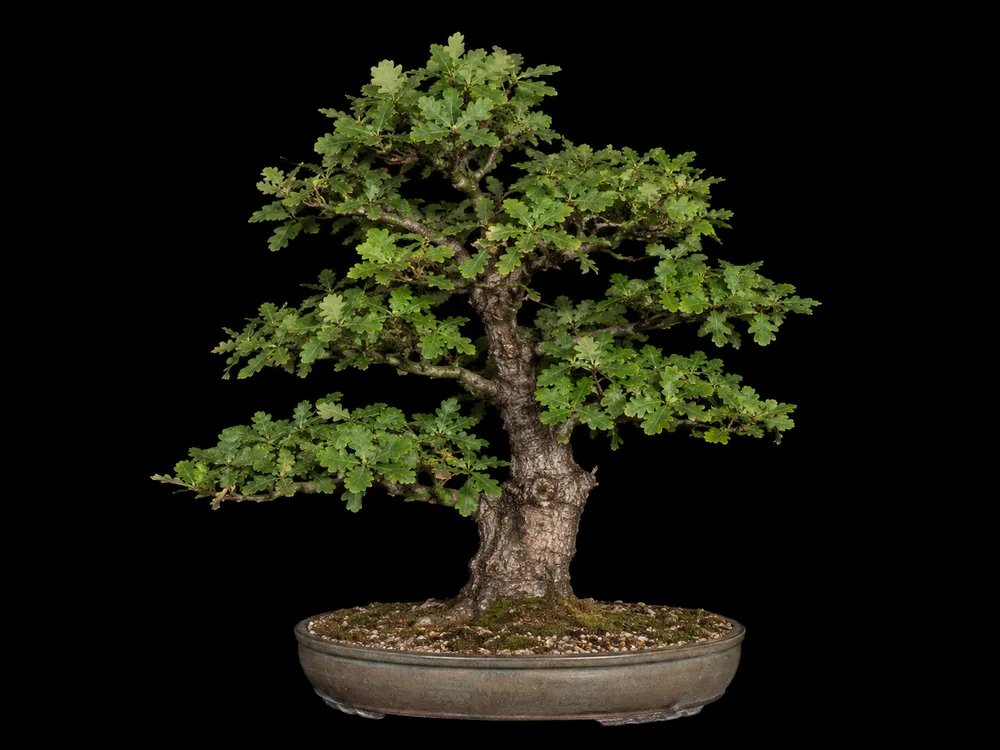
Oak Bonsai Care
Quercus robur
1 Oak bonsai in stock, from $98.95 Shipped direct from our nursery partners, with a 48-hour live-arrival guarantee. See the trees
Outdoor. Oaks are iconic for their strength, longevity and rugged, characterful bark. Most are lost to cold damage.
Fagaceae · Q. robur* — deciduous broadleaf tree; *Q. suber* — evergreen/semi-evergreen broadleaf tree
Oak quick reference
| USDA zones | Q. robur* ~4–8 (very hardy); *Q. suber* ~8–10 (tender — protect from hard frost) |
|---|---|
| Indoor / outdoor | Outdoor year-round. English oak fully hardy; cork oak needs frost protection in cold zones |
| Light | Full sun (both); some afternoon shade in extreme heat |
| Water | Evenly moist in the growing season — oaks are thirsty. Keep just-moist, never waterlogged; cork oak slightly more drought-tolerant |
| Soil | Free-draining but moisture-retentive loam-based mix |
| Repot | Every 2–4 years; infrequent repotting helps reduce leaf size |
| Frost | English oak excellent; cork oak limited (protect below ~zone 8) |
| Mature height (as bonsai) | 20-40m wild; 30-80cm as bonsai |
| Growth rate | Slow to moderate; coarse and rugged |
| Season of interest | Russet autumn; bold winter branch structure |
| Leaf reduction | Leaves reduce moderately with defoliation |
| #1 cause of death | Powdery mildew/fungal stress and root problems; for cork oak, cold/frost damage |
Overview & Character
Oaks are iconic for their strength, longevity and rugged, characterful bark — qualities that translate powerfully into bonsai. Two species lead the field, and they are quite different:
**English oak (Quercus robur) is the classic deciduous oak: hardy, vigorous, with the familiar lobed leaves and a stout, fissured trunk. Its leaves are naturally large, which is the main challenge for bonsai — but with the right techniques (infrequent repotting, bud and leaf management, restrained feeding) they reduce substantially**, and the species rewards patient ramification work with a magnificent broad-crowned, ancient look.
**Cork oak (Quercus suber) is the prized, more tender Mediterranean evergreen oak, grown above all for its thick, deeply fissured, spongy corky bark — the same bark harvested for wine corks — which gives even young trees an instantly aged, deeply textured trunk. Its small, leathery, holly-like leaves reduce easily and stay on through much of the year, but it is cold-sensitive** and must be protected from hard frost.
Identification
FOLIAGE:
- Q. robur — deciduous; leaves obovate with rounded lobes, 7–14 cm, with very short stalks and small auricles (ear-like lobes) at the leaf base. Bright green, turning brown/yellow before dropping; often holds dead leaves (marcescence) on young growth in winter.
- Q. suber — evergreen/semi-evergreen; leaves small, oval, tough and leathery, dark glossy green above, gray-felted beneath, with slightly toothed/spiny holly-like margins.
BARK & TRUNK:
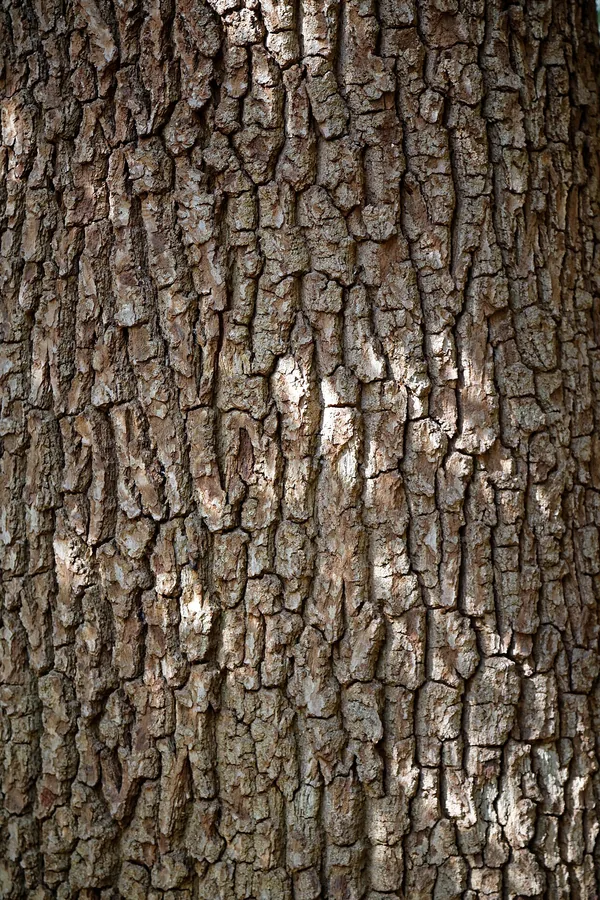
- Q. robur — gray-brown, deeply fissured and rugged with age.
- Q. suber — the standout feature: thick, pale gray-brown, spongy, deeply furrowed corky bark that builds dramatically and is the species' chief ornamental value.
GROWTH HABIT/FORM: Broad, spreading, heavy-crowned trees with strong, gnarled branch structure; both make powerful, masculine bonsai.
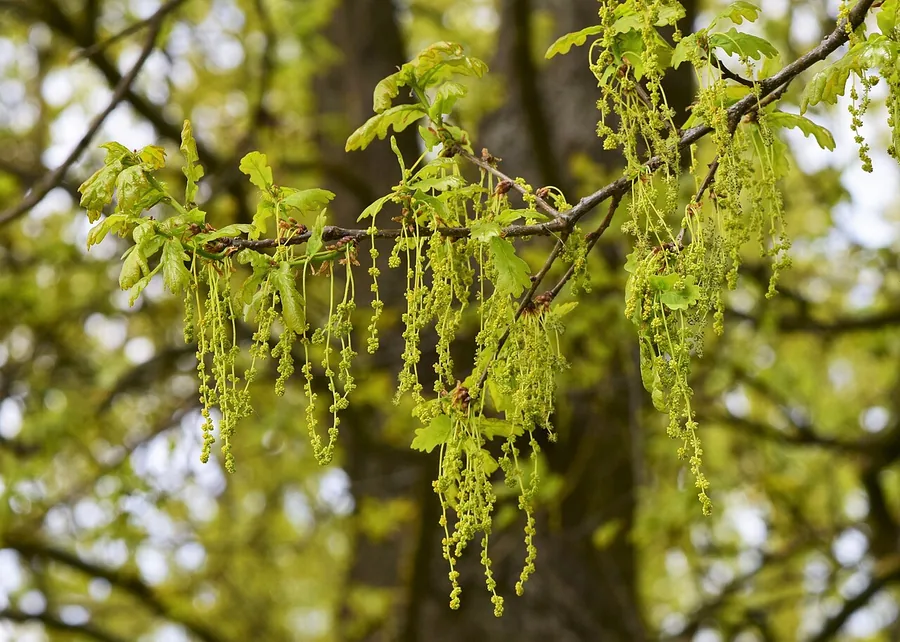
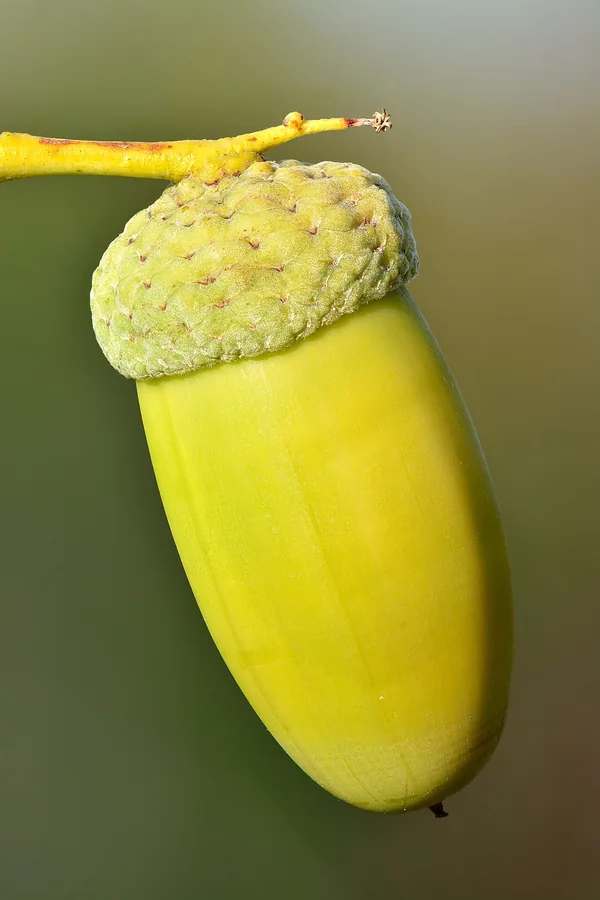
FLOWERS/FRUIT/CONES: Catkins (wind-pollinated) in spring; fruit is the acorn in a cup. Q. robur acorns sit on long stalks (peduncles) — hence "pedunculate oak"; Q. suber acorns sit in a deeper, scaly cup.
Look-alikes & how to tell them apart: Q. robur is often confused with **sessile oak (Quercus petraea): the giveaway is the acorn stalk and leaf base — robur has long-stalked acorns and almost stalkless leaves with basal auricles**, while petraea is the reverse (stalkless acorns, long-stalked leaves without auricles). Q. suber is most confused with **holm oak (Quercus ilex) — both evergreen with small leathery leaves — but cork oak's thick spongy corky bark is unmistakable, whereas holm oak has thinner, dark, finely cracked bark. The decisive marks: for English oak, lobed deciduous leaves + long-stalked acorns; for cork oak, thick corky bark + small evergreen leathery leaves.**
Climate & USDA Zone
- **English oak (Q. robur):** Very hardy, roughly USDA zones 4–8. Grows outdoors year-round and needs a real winter dormancy; tolerates cold well, though shallow bonsai pots benefit from root protection in severe freezes.
- **Cork oak (Q. suber): A Mediterranean species, roughly zones 8–10 and frost-tender.** It must be protected from hard frost — overwinter in a cold but frost-free place (unheated greenhouse, cold frame) where winters are cold. It keeps its foliage where winters are mild.
Both want full sun and warmth in the growing season.
Light
Full sun for both species produces the best growth, shorter internodes and good ramification. In very hot climates, light afternoon shade prevents leaf scorch (English oak's large leaves are more prone to it). Cork oak relishes Mediterranean-style heat and sun.
Watering
- English oak: A thirsty, moisture-loving tree — in the growing season it can need watering daily, increasing in summer heat, keeping the soil evenly just-moist. Never let it dry out hard while in leaf, but never waterlog it either.
- Cork oak: Wants thorough watering when the topsoil feels dry, avoiding soggy soil. It is somewhat drought-tolerant but grows best with consistent moisture during active growth. Reduce watering in winter for both, but never let the rootball dry out completely.
Bottom line: both prefer evenly moist soil (English oak the thirstier of the two); neither tolerates standing water.
Soil & Root Care
Use a free-draining but moisture-retentive mix — a loam-based or akadama-based mix with organic content suits oaks better than a purely inorganic, fast-drying conifer mix. Repot every 2–4 years in early spring as buds swell. Importantly, keeping repotting infrequent is itself a leaf-reduction technique — a slightly root-bound oak produces smaller leaves. Oaks have strong, sometimes coarse roots and a tendency to a dominant taproot when young; develop a good radial root system early and reduce roots gradually. Cork oak roots resent cold-wet conditions.
Feeding
Feed through the growing season, but with restraint if leaf reduction is the goal — heavy nitrogen produces large, lush leaves. Use a balanced fertilizer, easing off in late summer. For developing trees you can feed more freely to build the trunk and structure; for refined trees, feed more modestly to keep leaves small. Resume/continue feeding to build strength for next year.
Pruning & Styling
Oaks build classic broad-crowned, powerful structures and ramify well with patient work.
Leaf-size reduction (the central technique, especially for English oak):
- Remove apical/terminal buds before they extend in spring — this checks the surge of large leaves and pushes growth into finer side shoots.
- Remove the largest leaves (leaving those on the weakest branches) and thin foliage at branch tips through the season to admit light and balance vigor.
- Repot infrequently (see above) to keep leaves small.
- Cork oak's small leathery leaves reduce easily and respond well to consistent pruning — far less of a struggle than English oak.
Other work:
- Pruning: Trim new extension shoots back to 1–2 leaves once they've extended, through the growing season. Major structural cuts in late winter/early spring; oaks back-bud reasonably well on younger wood but are less reliable on very old, thick wood — work while branches are manageable.
- Wiring: Possible but oak wood is hard and stiffens quickly; wire young, flexible shoots and watch for bite — oak bark (and cork oak's corky bark) marks and damages easily.
- Protect the cork: On cork oak, avoid wiring tightly over the corky bark and handle it gently — the cork layer is the whole point and bruises/strips easily.
Propagation & Cuttings
Ease: Easy from acorns. Best method: seed (acorns).
Oaks (Quercus robur and relatives) are grown from acorns — sow fresh in autumn before they dry, as they germinate immediately and put down a strong taproot; sow shallow or root-prune early to encourage bonsai nebari. Cuttings and grafting are difficult and seldom used. For bonsai, start acorns early and grow on hard for girth; oaks back-bud well from old wood, so heavy reduction and trunk chops are recoverable once the tree is established and vigorous.
Pests
- Aphids — heavy on soft new oak growth; cause distortion and sooty mould.
- Scale insects — on twigs and leaf undersides.
- Oak leafminers — blotches/tunnels in leaves.
- Caterpillars (oakworms, tortrix, oak processionary moth where present) — can defoliate; pick off or treat.
- Gall wasps — produce harmless but unsightly galls (oak apples, knopper galls) on leaves, buds and acorns.
- Cork oak is generally more pest-resistant but still gets scale and aphids.
Disease, Fungus & Infection
- Powdery mildew — very common on oaks, coating leaves with white film, especially on soft summer regrowth in humid, still air; improve airflow, avoid wetting foliage, remove affected leaves, treat with fungicide if severe.
- Oak wilt (where present) and anthracnose — leaf and shoot dieback; prune in dormancy, disinfect tools, dispose of infected leaves.
- Root rot / Phytophthora from waterlogged soil — keep drainage sharp.
- Honey fungus (Armillaria) — can attack stressed oaks at the roots.
- Cork oak: occasional powdery mildew and fungal leaf spot, plus cold/frost-related dieback.
Most Common Causes of Death
1. Powdery mildew and fungal stress weakening the tree. Repeated defoliation/mildew saps vigor. Prevention: full sun, good airflow, dry foliage, prompt removal of affected leaves, fungicide if needed. 2. Cork oak frost/cold damage. The tender species can be killed by hard frost. Prevention: overwinter cork oak frost-free; don't expose it to deep cold. 3. Root rot from waterlogged soil. Prevention: free-draining (but moisture-retentive) mix; never let the pot stand in water. 4. Letting English oak dry out while in leaf. Its large leaves transpire heavily; a hard dry-out causes leaf burn and dieback. Prevention: keep evenly moist, water daily in summer heat. 5. Over-aggressive repotting / damaging the coarse root system. Prevention: repot in early spring, reduce roots gradually, develop radial roots early. 6. Heavy pest defoliation (caterpillars, aphids). Prevention: inspect regularly, treat early. 7. Stripping or crushing cork oak's bark with wire/handling. Damages the tree's main feature and can wound it. Prevention: wire loosely on young shoots, handle the corky bark gently.
Seasonal Calendar
- Spring: Repot as buds swell (early spring). Remove terminal/apical buds before they extend to control leaf size (English oak). Begin feeding (restrained if reducing leaves). Move cork oak back outside once hard frosts are past.
- Summer: Full sun; keep evenly moist (English oak thirsty — possibly daily). Remove largest leaves and thin tips for leaf reduction and light. Watch for mildew, aphids and caterpillars; pinch/trim extension shoots.
- Autumn: Ease nitrogen. English oak colors and drops (may hold marcescent leaves). Cork oak keeps foliage. Wire young shoots. Prepare cork oak for winter protection.
- Winter: English oak fully dormant outdoors (protect pot in severe freeze). Cork oak must be kept frost-free (cold but protected). Water sparingly; never bone-dry. Major structural pruning in late winter.
Close-up photo reference
Compare your tree against these to confirm the species and spot problems early.



Sources
- Bonsai Empire — Oak (Quercus) care
- Bonsai Empire — Cork oak (Quercus suber) care
- Bonsai4Me — Quercus species / Oak Bonsai
- Miyagi Bonsai — English Oak care guide
Buy a Oak bonsai
- All species
- Shop bonsai trees, tools & supplies
- How to Water a Bonsai (Without Killing It)
- Bonsai Soil: What to Buy, What to Mix, and What It Costs
- Why Bonsai Die After Repotting: Diagnosing a Failed Repot
- Pruning vs. Pinching: Shaping Your Bonsai
- Overwintering Bonsai: Cold-Season Care
- Indoor Bonsai Light and Humidity: Making a Windowsill Actually Work
- Root Rot on bonsai
- Underwatering (Drought Stress) on bonsai
- Winter / Frost Damage on bonsai
- Leaf Scorch / Sunburn on bonsai
- Powdery Mildew on bonsai
- Cork Oak bonsai care
- English Oak bonsai care
- Live Oak bonsai care
- Cotoneaster bonsai care