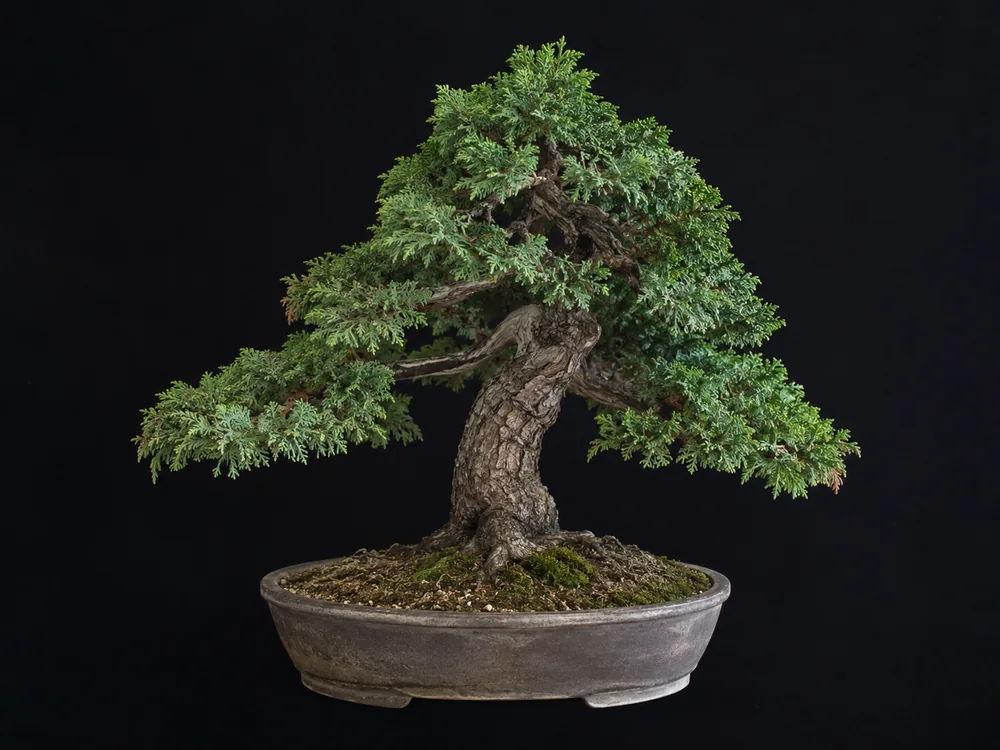
Sawara Cypress Bonsai Care
Chamaecyparis pisifera
1 Sawara Cypress bonsai in stock, from $49.95 Shipped direct from our nursery partners, with a 48-hour live-arrival guarantee. See the trees
Zones 4 to 8, outdoor only. A Japanese false-cypress widely grown as bonsai, especially the soft. Most are lost to drying out.
Cupressaceae (cypress family) · Evergreen coniferous tree
Sawara Cypress quick reference
| USDA zones | 4–8 |
|---|---|
| Indoor / outdoor | Outdoor only — full sun, shelter from wind |
| Light | Full sun — shade browns inner/lower foliage |
| Water | Thirsty — never let it dry; mist foliage but hates soggy soil |
| Soil | Free-draining yet moisture-holding mix |
| Repot | Every 2–3 years, spring |
| Frost | Hardy; shelter from cold drying wind (unheated greenhouse) |
| Mature height (as bonsai) | Tree to 30m in nature; bonsai commonly 25-60cm. |
| Growth rate | Moderate. |
| Season of interest | Year-round soft feathery evergreen foliage. |
| Leaf reduction | Moderate; scale foliage refines with pinching, not cutting. |
| #1 cause of death | Inner foliage dieback (won't bud old wood); root rot; drying out |
Overview & Character
The Sawara Cypress is a Japanese false-cypress widely grown as bonsai, especially the soft, feathery blue-foliaged 'Boulevard' cultivar. It offers fine, dense, ferny foliage and shredding reddish bark, suited to formal/informal upright and naturalistic conifer styles.
The two defining care facts: it is a thirsty conifer that will not tolerate drying out (it even appreciates foliage misting), yet it hates soggy soil; and like all Chamaecyparis it will not back-bud on old bare wood, so inner/lower foliage that browns from shade or hard cutting does not return. Keep it in full sun, water faithfully, and refine by clip-and-grow pinching of green foliage only.
Identification
Foliage: Fine scale leaves pressed to the shoots with whitish X-marks beneath (and feathery juvenile foliage in cultivars like 'Boulevard', which is soft, blue-grey, and awl-like); dense and ferny.
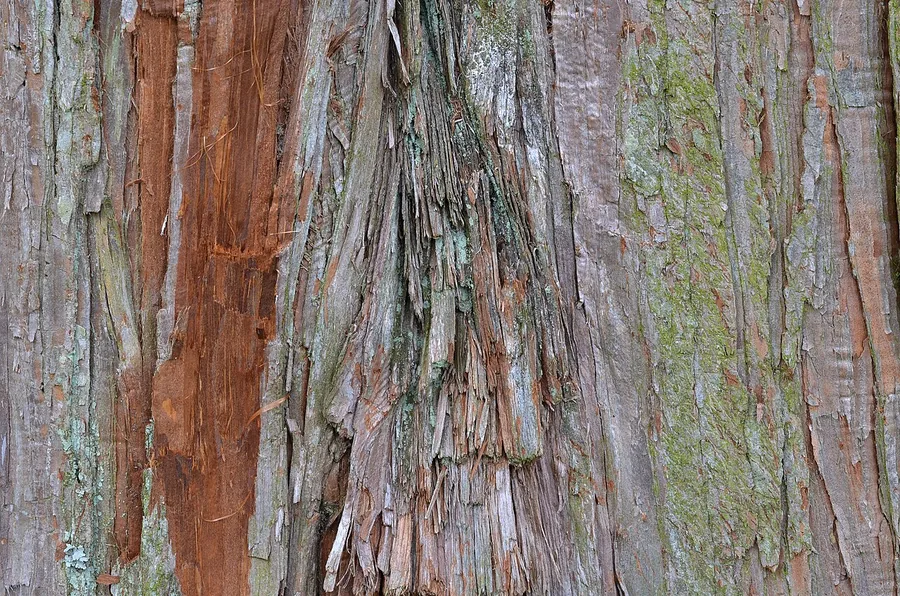
Bark & trunk: Reddish-brown, shredding in vertical strips with age.
Growth habit / form: Conical, dense, twiggy; soft-textured. Suits formal/informal upright and naturalistic styles.
Flowers / fruit: Monoecious; small cones — distinctively tiny pea-sized round cones (~6 mm), the source of the name pisifera ('pea-bearing').
Look-alikes & how to tell them apart: Close to Hinoki Cypress (C. obtusa) — Sawara has more pointed, looser scale leaves with white X-marks beneath and tiny pea cones, whereas Hinoki has blunt, tight scales with white Y-marks and slightly larger cones.
Climate & USDA Zone
Hardy in USDA zones 4–8. Needs full sun and shelter from strong wind (especially winter wind), grown outdoors; in hard winters move to a bright unheated greenhouse away from chilling wind. Not an indoor plant.
Light
Full sun — it is not shade-tolerant, and in shade the lower and inner branches brown and die, which is serious because it cannot re-bud bare wood. Maximize light to keep the whole canopy alive and dense.
Watering
Keep it well-watered — it will not tolerate drying out — but it hates soggy soil.
- A thirsty conifer; water generously (preferably in the morning) and never let the soil dry out; it benefits from regular foliage misting.
- Despite the thirst, avoid waterlogging/standing water, which rots roots — use a mix that holds moisture but drains freely.
Soil & Root Care
Soil: A mix that retains moisture yet drains and aerates well — e.g. akadama/pumice/lava, or 1 part sharp sand : 1 part grit : 1 part loam.
Repotting:
- Frequency: every 2–3 years, in spring as growth starts (or late summer).
- Moderate root-pruning; keep some old soil.
- Aftercare: keep moist (mist foliage), sheltered from wind/sun while recovering.
Feeding
Feed fortnightly from spring to autumn with a balanced feed (or slow-release granules every couple of months). Ease off in winter. Don't feed freshly repotted trees.
Pruning & Styling
- Clip-and-grow / pinch green foliage only. It will not back-bud on old bare wood, so never cut a branch back past its green foliage, and keep light reaching inner growth so it doesn't brown out.
- Pinch/trim soft new tips regularly to build dense pads (pinch rather than shear with scissors where possible to avoid browned tips).
- Wiring: branches are workable; protect the shredding bark; shape mostly by directional pruning.
- Suits formal/informal upright and naturalistic conifer styles.
Propagation & Cuttings
Ease: Easy (roots from cuttings). Best method: cuttings.
Chamaecyparis pisifera and its many cultivars ('Boulevard', thread and moss forms) are propagated from cuttings — semi-hardwood heel cuttings in autumn to winter with IBA, kept humid, root reliably though slowly. Seed grows the species, not the named forms. It doesn't layer readily. For bonsai, cuttings keep the chosen foliage type; like related cypresses it back-buds poorly on bare old wood, so retain interior growth and develop pads while the foliage is young.
Pests
- Spider mites (hot, dry conditions — watch closely)
- Scale insects
- Aphids
- Bagworms
Treat with horticultural oil, insecticidal soap, or appropriate systemics; catch infestations early.
Disease, Fungus & Infection
- **Root rot (Phytophthora)** — from soggy soil/poor drainage; a key risk despite the tree's thirst.
- Inner/lower foliage dieback — from shade or over-cutting (cultural; irreversible since it won't re-bud bare wood).
- **Tip blight / Phomopsis** — shoot dieback in wet, humid, low-airflow conditions; prune out, improve airflow.
Prevention: full sun, faithful watering with sharp drainage, airflow, wind shelter.
Most Common Causes of Death
1. Inner/lower foliage dieback. From shade or hard cutting — it won't re-bud bare wood; keep full sun and never cut past green foliage. 2. Root rot from soggy soil. Thirsty but rot-prone — water well yet keep sharply drained. 3. Drying out. Will not tolerate a dry rootball; water faithfully and mist. 4. Cold drying wind in winter. Shelter (unheated greenhouse) from chilling wind. 5. Spider mites on a stressed tree. Keep vigor up; treat early.
Seasonal Calendar
- Spring: Repot if due (as growth starts); resume feeding; full sun; pinch new tips.
- Summer: Water generously (never dry); mist foliage; watch spider mites; clip-and-grow.
- Autumn: Continue feeding then taper; light shaping.
- Winter: Shelter from cold drying wind (bright unheated greenhouse in hard winters); keep moist, not soggy.
Close-up photo reference
Compare your tree against these to confirm the species and spot problems early.

Sources
Buy a Sawara Cypress bonsai
- All species
- Shop bonsai trees, tools & supplies
- How to Water a Bonsai (Without Killing It)
- Bonsai Soil: What to Buy, What to Mix, and What It Costs
- Why Bonsai Die After Repotting: Diagnosing a Failed Repot
- Pruning vs. Pinching: Shaping Your Bonsai
- Overwintering Bonsai: Cold-Season Care
- Indoor Bonsai Light and Humidity: Making a Windowsill Actually Work
- Root Rot on bonsai
- Underwatering (Drought Stress) on bonsai
- Winter / Frost Damage on bonsai
- Spider Mites on bonsai
- Scale Insects on bonsai
- Atlantic White Cedar bonsai care
- Lawson Cypress bonsai care
- Hinoki Cypress bonsai care
- Cryptomeria / Japanese Cedar bonsai care