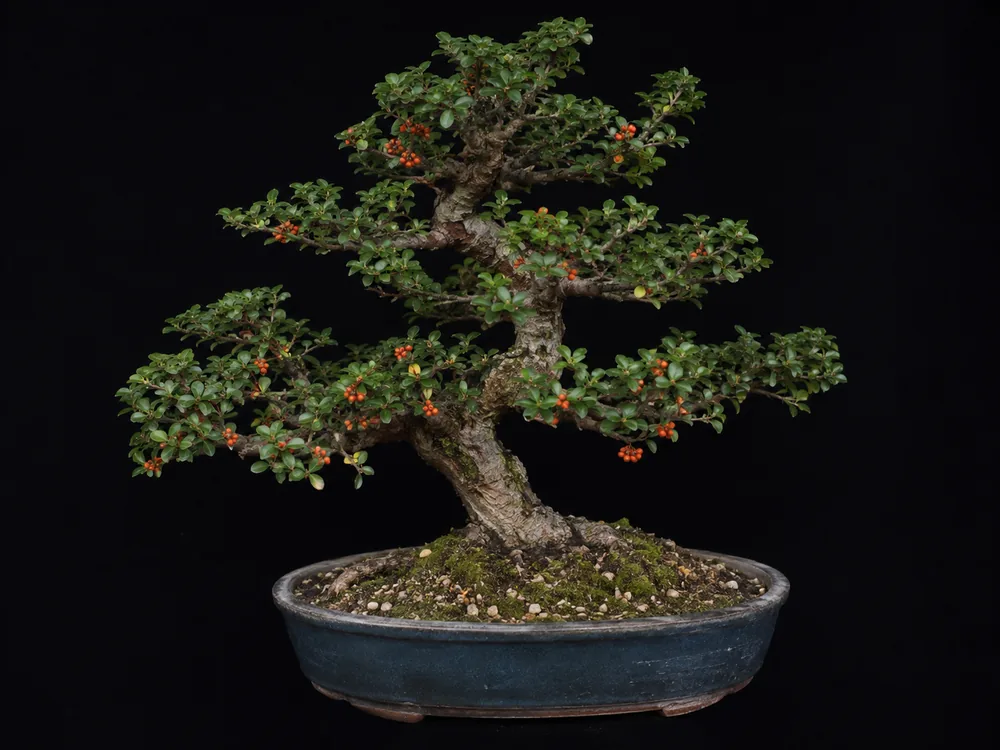
Pyracantha (Firethorn) Bonsai Care
Pyracantha
Outdoor. Pyracantha, the firethorn, is a vigorous, thorny evergreen shrub from the rose family. Most are lost to drying out.
Rosaceae (rose family) · Evergreen, thorny woody shrub; hardy temperate (outdoor)
Pyracantha (Firethorn) quick reference
| USDA zones | Roughly 6–9 (*P. coccinea*); Asian/Formosa types (*P. koidzumii*) ~8–10; some hardy cultivars to zone 5 |
|---|---|
| Indoor / outdoor | Outdoor — needs a winter rest; not an indoor bonsai |
| Light | Sunny to semi-shaded; needs good sun to flower and fruit. Protect from extreme heat/scorch in very hot climates |
| Water | Keep the rootball consistently slightly moist; very thirsty in summer when flowering/fruiting — must not dry out |
| Soil | Standard free-draining bonsai mix; undemanding |
| Repot | Every 2 years (young), 3–5 years (older), early spring |
| Frost | Frost-hardy, but pot-bound roots need protection from hard frost and cold wind; Asian types are more tender |
| Mature height (as bonsai) | 3-5m wild; 20-50cm as bonsai |
| Growth rate | Fast; thorny, vigorous |
| Season of interest | White spring flowers; showy autumn berries |
| Leaf reduction | Small leaves reduce well with pruning |
| #1 cause of death | Drying out / inconsistent watering; root rot from waterlogging; unprotected winter roots |
Overview & Character
Pyracantha, the firethorn, is a vigorous, thorny evergreen shrub from the rose family, grown as bonsai for its three-season display: masses of small creamy-white flowers in late spring, followed by spectacular clusters of bright red, orange, or yellow berries that persist well into winter, all set against glossy dark evergreen foliage. The genus name comes from the Greek for "fire" and "thorn" — the sharp spines are a real feature to respect when handling the tree.
Firethorn is robust, fast-growing, and tolerant of hard pruning and root work, back-budding readily on old wood, which makes it forgiving and well suited to developing structure. Its small leaves take well to ramification, and its prolific fruiting is the headline attraction. It is an outdoor bonsai that wants a sunny position and a winter rest, and it is a good, rewarding choice for beginners willing to keep up with its summer thirst.
Identification
Foliage: Small, alternate, narrow oblong-to-oblanceolate leaves, glossy dark green and leathery, with finely toothed or scalloped margins and a slightly notched tip. Evergreen, clustered on short shoots along thorny branches.
Bark & trunk: Grey-brown bark, smooth on young wood and roughening with age; branches and trunk bear stiff, sharp woody thorns (modified short shoots) — the genus name means "fire-thorn."
Growth habit / form: Vigorous, dense, somewhat tangled evergreen shrub that back-buds freely on old wood; stiff thorny branching.
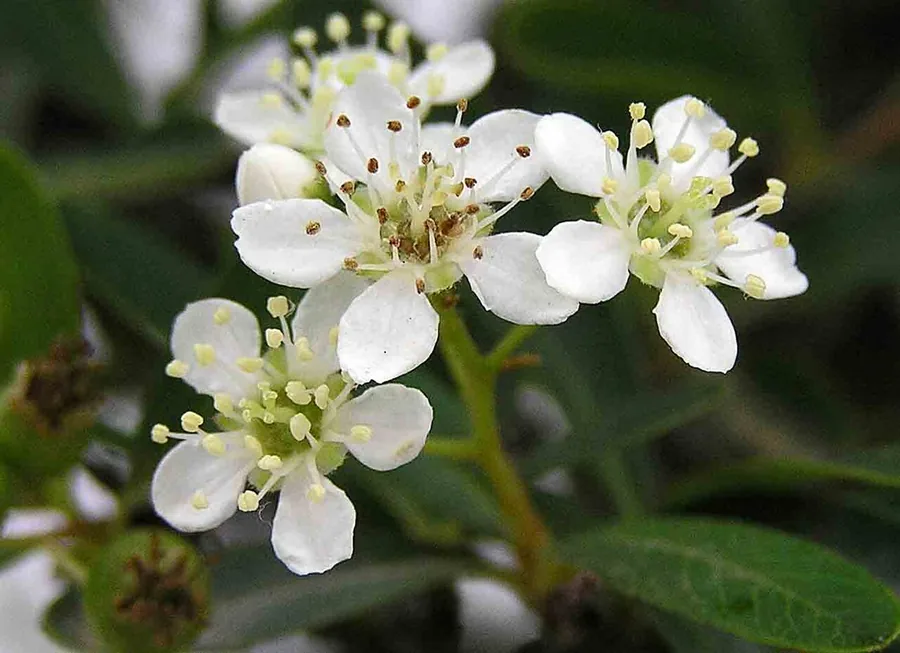
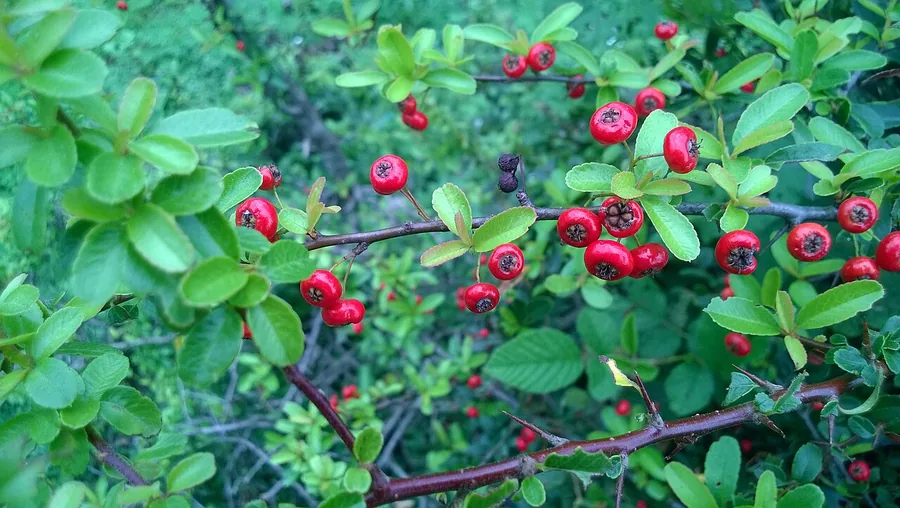
Flowers / fruit: Dense, flat clusters (corymbs) of small creamy-white five-petalled flowers in late spring, followed by the headline feature — heavy, tightly packed clusters of bright orange, red, or yellow berries (pomes) that persist into winter.
Look-alikes & how to tell them apart: The giveaway is sharp thorns plus showy clusters of orange/red berries on a glossy evergreen. Thorns rule out Cotoneaster (thornless herringbone, scattered red berries), Privet (thornless, black berries, white panicles), Ficus, and Fukien Tea. Versus Hawthorn: Pyracantha is evergreen with simple toothed leaves and berries in dense clusters, whereas Hawthorn is deciduous with deeply lobed leaves and red haws — and Hawthorn's thorns are typically longer, sharper spurs.
Climate & USDA Zone
Hardiness depends on the species. The common Mediterranean/European firethorn P. coccinea is hardy across roughly USDA zones 6–9 (with some hardy cultivars usable in zone 5), and overwinters well in an unheated greenhouse or polytunnel, tolerating temperatures down to about 23°F (–5°C). Asian-origin species such as P. koidzumii (Formosa firethorn) and P. angustifolia are more tender — typically zones 8–10 — and should be kept somewhat warmer in winter, not falling much below about 27–28°F (–2 to –3°C). Firethorn is an outdoor tree that requires a real but mild winter dormancy.
Light
Give firethorn a sunny or semi-shaded position during the growing season. It needs a good amount of sunlight to flower and fruit well — too much shade means few berries. In very hot climates, protect it from the most extreme midday heat and sun to prevent leaf scorch and dehydration, but in most climates plenty of sun is ideal.
Watering
Keep the rootball consistently and slightly moist — firethorn does not like to dry out, and in summer, while flowering and fruiting, it is very thirsty and must not be allowed to go dry, which often means daily watering in warm weather. At the same time, avoid the opposite extreme of standing water and constantly saturated soil, which rots roots. In winter, water less, but never let the rootball dry out completely. Consistency is key: erratic wet/dry swings stress the tree and can cause berry and flower drop.
Soil & Root Care
Firethorn has no special soil demands — a standard free-draining bonsai mix works well. Repot every 2 years for younger trees and every 3–5 years for older specimens, in early spring before growth begins. It takes root pruning well, so building good surface roots and keeping the tree in a refined pot is straightforward. Keep newly repotted trees sheltered and evenly moist (not soggy) while they recover.
Feeding
Feed regularly through the growing season to support strong growth and heavy fruiting — a balanced bonsai fertilizer, with solid organic feed every few weeks or a liquid feed more frequently. As with other fruiting Rosaceae, avoid excessive nitrogen, which encourages leafy growth at the expense of flowers and berries; a balanced or slightly higher-potassium feed supports fruiting. Stop feeding as the tree goes into winter dormancy.
Pruning & Styling
Firethorn is vigorous and takes pruning very well, back-budding readily on old wood, so hard cutbacks reliably produce new shoots — useful for developing and correcting structure. Let shoots extend, then prune back to shape and to build ramification, trimming through the growing season. A crucial point for fruit: flowers (and therefore berries) form on older wood, so over-trimming in the wrong season removes next year's display — prune with the flowering cycle in mind and leave some older shoots intact. The wood wires reasonably but is fairly stiff and the thorns make handling awkward, so wear gloves and use directional pruning where wiring is impractical. Cascade, informal upright, and multi-trunk styles all suit it.
Propagation & Cuttings
Ease: Easy. Best methods: semi-hardwood cuttings; layering; seed.
Pyracantha roots reliably from semi-hardwood cuttings in summer to autumn with IBA under humidity, and it layers where stems touch soil. Seed germinates after cleaning the berries and ~2–3 months cold stratification but named forms won't come true. For bonsai the white spring flowers, autumn berries, small leaves, and spines are the draw; cutting-grown plants keep the berry colour, flower and fruit young, and back-bud strongly after hard pruning, making excellent forgiving stock.
Pests
Firethorn can be attacked by aphids (on soft new growth), scale insects, spider mites, leaf miners, and caterpillars. Inspect new shoots and leaf undersides regularly and treat outbreaks with insecticidal soap, neem oil, or a suitable systemic. Aphids in particular can deform new growth and reduce flowering, so deal with them promptly in spring.
Disease, Fungus & Infection
As a member of the Rosaceae, firethorn can be affected by fire blight (the bacterial disease Erwinia amylovora), which causes shoots to suddenly wilt, blacken, and appear scorched — but in practice this is rare on bonsai firethorn; some experienced growers report essentially never seeing it over decades. Scab (which spots and disfigures leaves and berries) is a more common nuisance on some species and cultivars. Root rot from waterlogged soil is the usual cultural killer. Keep the tree vigorous, well-drained, and in good airflow; prune out any blighted shoots well below the damage with sterilized tools and dispose of the material.
Most Common Causes of Death
1. Fire blight. The signature killer — blackened, wilted 'shepherd's-crook' shoots; prune 30 cm below symptoms into healthy wood, sterilizing between cuts; remove badly infected trees. 2. Scab. Fungal scab disfigures leaves/berries in wet conditions; improve airflow, remove fallen debris, fungicide if severe. 3. Overwatering / root rot. Thirsty in summer but rot-prone in soggy soil; free-draining mix, water when surface dries. 4. Drying out during fruiting. Heavy water demand in berry season; don't let it dry out. 5. Winter root freeze; pests. Shelter potted roots in hard freezes; watch aphids, scale, and woolly aphid.
Seasonal Calendar
- Spring: Repot if due (early); resume feeding; prune for structure (mind the thorns); white flowers form — leave some for berries.
- Summer: Water generously; trim after flowering; monitor scab and pests.
- Autumn: Brilliant orange/red berries (the highlight); taper feeding/water.
- Winter: Hardy dormancy; protect potted roots; berries persist; prune while dormant.
Close-up photo reference
Compare your tree against these to confirm the species and spot problems early.
.jpg)

Sources
Where to buy a Pyracantha (Firethorn) bonsai
We don’t stock Pyracantha (Firethorn) at the moment. These species need similar care and we have them now — they are the closest match in our catalogue.
- Satsuki Azalea — similar care, in stock now
- Boxwood — similar care, in stock now
Browse all bonsai trees for sale or find a species matched to your climate and space.
- All species
- Shop bonsai trees, tools & supplies
- How to Water a Bonsai (Without Killing It)
- Bonsai Soil: What to Buy, What to Mix, and What It Costs
- Why Bonsai Die After Repotting: Diagnosing a Failed Repot
- Pruning vs. Pinching: Shaping Your Bonsai
- Overwintering Bonsai: Cold-Season Care
- Indoor Bonsai Light and Humidity: Making a Windowsill Actually Work
- Root Rot on bonsai
- Overwatering on bonsai
- Underwatering (Drought Stress) on bonsai
- Winter / Frost Damage on bonsai
- Leaf Scorch / Sunburn on bonsai
- Satsuki Azalea bonsai care
- Boxwood bonsai care
- Camellia bonsai care
- Cotoneaster bonsai care