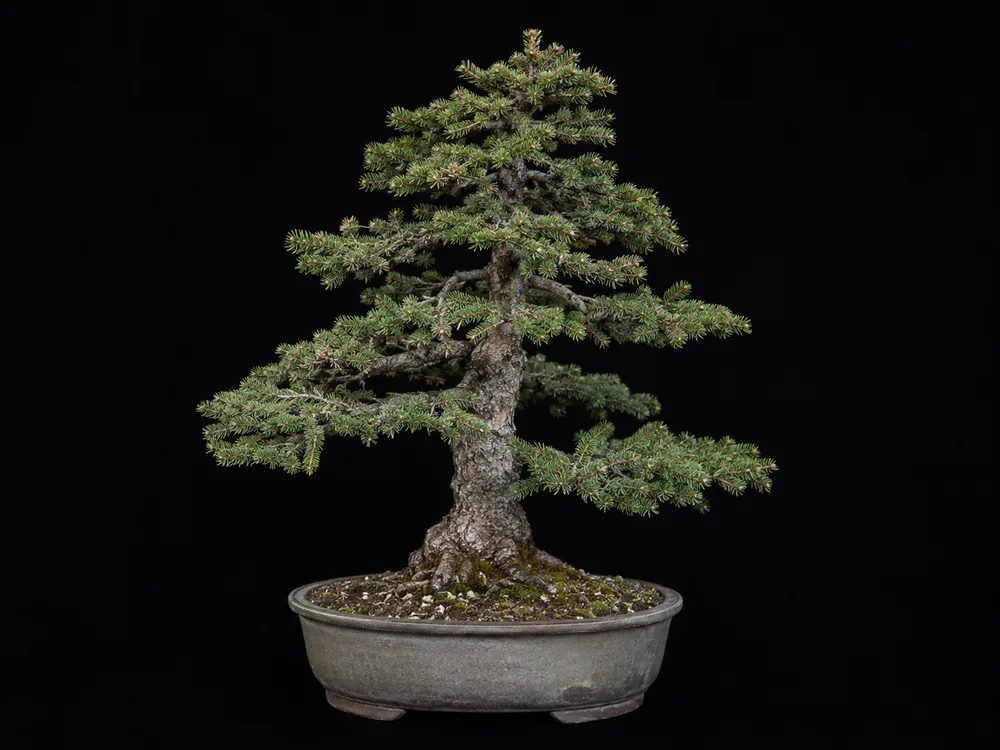
Ezo Spruce Bonsai Care
Picea jezoensis
Zones 4 to 8, outdoor only. The classic bonsai spruce, native to Japan (Hokkaido), Korea, and northeast Asia. Most are lost to overwatering.
Pinaceae (pine family) · Evergreen coniferous tree
Ezo Spruce quick reference
| USDA zones | 4–8 |
|---|---|
| Indoor / outdoor | Outdoor only — needs full sun, fresh air, winter cold |
| Light | Full sun in the growing season; light shade in fierce heat |
| Water | Evenly moist — water when surface dries; never soggy, never bone-dry |
| Soil | Free-draining bonsai mix |
| Repot | Every 2–4 years (young more often) |
| Frost | Hardy; protect potted roots from hard freeze (evergreen desiccation risk) |
| Mature height (as bonsai) | Tree to 40 m; kept 25-70 cm as bonsai |
| Growth rate | Slow to moderate |
| Season of interest | Year-round evergreen, fine dense needles |
| Leaf reduction | Good - naturally short needles |
| #1 cause of death | Cutting to bare wood (no back-budding); root rot from overwatering |
Overview & Character
The Ezo Spruce is the classic bonsai spruce, native to Japan (Hokkaido), Korea, and northeast Asia, long used for refined, naturalistic conifer bonsai. It bears short, fine, flattened needles, a neat layered branch structure, and attractive reddish-brown scaly bark, lending itself to formal upright, informal upright, and group/forest plantings.
It is a hardy outdoor conifer that wants full sun, even moisture, and genuine winter cold. The single most important thing to know: spruce do not reliably back-bud on old, bare wood, so you must always leave needles and buds on any branch you want to keep, and build the tree by pinching soft new growth — not by cutting back hard into leafless wood.
Identification
Foliage: Short, flattened needles ~1–2 cm, deep green above with two whitish stomatal bands beneath, arranged densely around the shoot; needles sit on tiny peg-like bases (pulvini) that remain on the twig after needles fall — a spruce hallmark. Needles are stiff and (in this species) not especially sharp.
Bark & trunk: Grey-brown, becoming scaly/flaky and reddish-brown with age, giving a mature, plated look.
Growth habit / form: Upright with horizontal, layered branch tiers and a fine twig structure; classic for formal/informal upright and forest/group plantings.
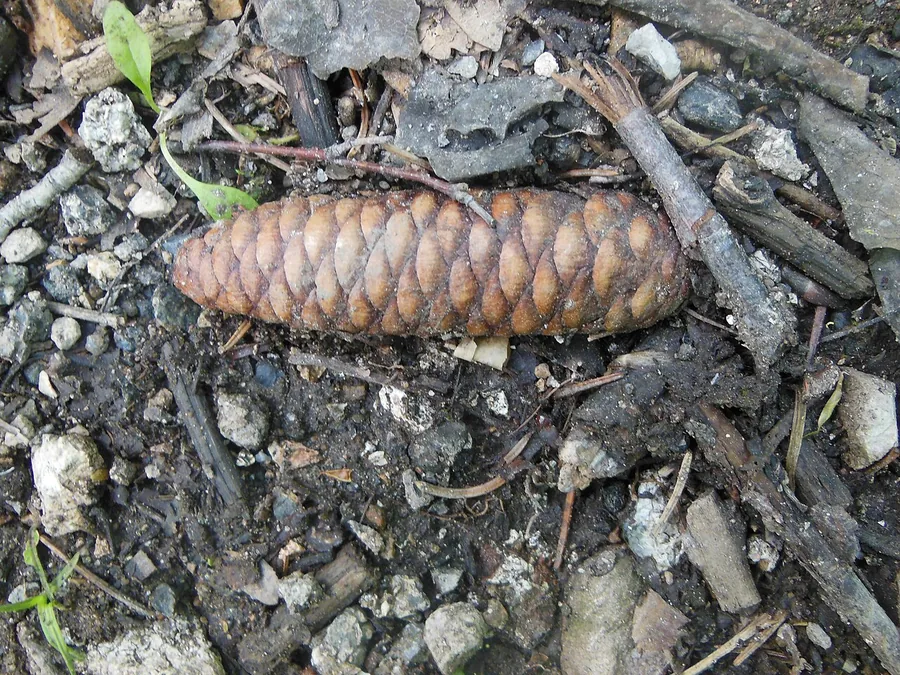
Cones: Pendulous, cylindrical woody cones ~4–7 cm with thin, papery scales, ripening pale brown (whole cones drop intact — unlike firs, which shed scales).
Look-alikes & how to tell them apart: Distinguish spruce from **fir (Abies) and hemlock (Tsuga) by the peg-like needle bases (rough twigs after needle fall) and pendulous whole cones; firs have flat needles leaving round scars and upright cones that disintegrate on the tree. From pines (Pinus)**, spruce needles are borne singly, not in bundles.
Climate & USDA Zone
Hardy in USDA zones 4–8. It needs full sun, fresh air, and a real winter cold period, and is grown outdoors year-round. The tree is very cold-hardy, but as an evergreen in a pot it can desiccate if the rootball freezes solid while foliage keeps transpiring — so shelter potted roots and protect from drying winter wind in hard freezes. It is not an indoor plant.
Light
Full sun during the growing season for compact growth, good color, and strong buds; in very intense summer heat, light afternoon shade prevents needle scorch on potted trees. In winter, a semi-shaded, sheltered spot with root/wind protection is ideal. Too little light gives weak, open, leggy growth.
Watering
Keep evenly moist — water thoroughly when the surface dries, but never keep the roots soaking.
- Water as soon as the topsoil begins to dry, soaking until it drains; spruce like moisture but not stagnation.
- In winter, water less but never let the rootball dry out completely — an evergreen with frozen-then-dry roots desiccates.
- Good drainage is essential year-round.
Soil & Root Care
Soil: A standard free-draining bonsai mix (akadama / pumice / lava) — retentive enough for even moisture, open enough to avoid waterlogging.
Repotting:
- Frequency: young/developing every 2 years; mature every 3–4 years.
- Timing: early spring as buds begin to move, before new growth extends.
- Remove up to ~1/3 of the roots; do not bare-root; keep some old soil.
- Aftercare: shelter from harsh sun/wind and frost; keep evenly moist (not soggy) while recovering.
Feeding
Feed every ~4 weeks with solid organic fertilizer, or weekly with a balanced liquid feed, through the growing season; spruce respond well to occasional foliar feeding (a chelated iron/liquid feed) for deep green color. Ease nitrogen in late season so growth hardens. Don't feed freshly repotted or dormant trees.
Pruning & Styling
- Pinching: In spring, pinch the soft, extending new shoots while still tender (pinch, don't cut, to avoid browned needle tips); this controls length and builds density.
- No back-budding on bare wood: never cut a branch back past its needles expecting regrowth — always leave needles/buds on branches you want to keep. Shorten long branches only to a smaller twig that already carries foliage.
- Wiring: branches are tender; use flexible aluminum or copper wire, apply carefully, and remove before it bites into the bark. Best wired in the cooler dormant period.
- Suits formal/informal upright and forest/group plantings.
Propagation & Cuttings
Ease: Difficult from cuttings. Best methods: seed; collected.
Picea jezoensis is grown from seed (like other spruces): cold-moist stratify ~1–2 months and sow in spring; germination is fair, seedlings slow. Cuttings root poorly and are rarely used. Ezo spruce is a celebrated bonsai species collected from Hokkaido and grown from seedlings; famous specimens are old yamadori. For bonsai, work with seedling or collected stock and develop the compact, layered pads patiently — spruce back-buds modestly, so preserve inner growth.
Pests
- Spider mites (hot, dry conditions; stippled, bronzing needles — a major spruce pest)
- Adelgids (woolly, sap-sucking; cause distorted growth/galls)
- Aphids (spruce aphids can cause sudden needle drop)
- Scale insects
Treat with horticultural oil, insecticidal soap, or appropriate miticide; check needle undersides regularly.
Disease, Fungus & Infection
- **Root rot (Phytophthora / Pythium)** — from overwatering/poor drainage; a leading disease risk.
- **Needle cast fungi (Rhizosphaera, etc.)** — needles brown and drop, worse in damp, crowded, low-airflow conditions; improve airflow, remove affected needles, apply fungicide if persistent.
- Needle/winter desiccation — browning from frozen roots + transpiring foliage in winter wind (cultural, not infectious); shelter potted roots.
Prevention: full sun, sharp drainage, airflow, even watering, and winter root/wind protection.
Most Common Causes of Death
1. Cutting back to bare wood. Spruce won't back-bud on leafless wood; over-cut branches die. Always leave foliage. 2. Root rot from overwatering / poor drainage. Keep evenly moist with sharp drainage, never soggy. 3. Winter desiccation / frozen-dry roots. Shelter potted roots and foliage from hard freeze and drying wind. 4. Spider mites / adelgids on a weak tree. Keep vigor up and treat early. 5. Indoor keeping. Needs sun, air, and winter cold — declines indoors.
Seasonal Calendar
- Early spring: Repot if due (as buds move); resume feeding.
- Spring: Pinch soft new shoots; full sun; watch for mites/adelgids.
- Summer: Even moisture; light afternoon shade in extreme heat; continue feeding.
- Autumn: Ease nitrogen; tidy; prepare winter protection.
- Winter: Dormant outdoors; shelter potted roots and foliage from hard freeze/wind; wire if needed; keep barely moist (never dry).
Close-up photo reference
Compare your tree against these to confirm the species and spot problems early.

Sources
Where to buy a Ezo Spruce bonsai
We don’t stock Ezo Spruce at the moment. These species need similar care and we have them now — they are the closest match in our catalogue.
- Spruce — similar care, in stock now
Browse all bonsai trees for sale or find a species matched to your climate and space.
- All species
- Shop bonsai trees, tools & supplies
- How to Water a Bonsai (Without Killing It)
- Bonsai Soil: What to Buy, What to Mix, and What It Costs
- Why Bonsai Die After Repotting: Diagnosing a Failed Repot
- Pruning vs. Pinching: Shaping Your Bonsai
- Overwintering Bonsai: Cold-Season Care
- Indoor Bonsai Light and Humidity: Making a Windowsill Actually Work
- Root Rot on bonsai
- Overwatering on bonsai
- Underwatering (Drought Stress) on bonsai
- Winter / Frost Damage on bonsai
- Leaf Scorch / Sunburn on bonsai
- Norway Spruce bonsai care
- Spruce bonsai care
- White Spruce bonsai care
- Colorado Blue Spruce bonsai care